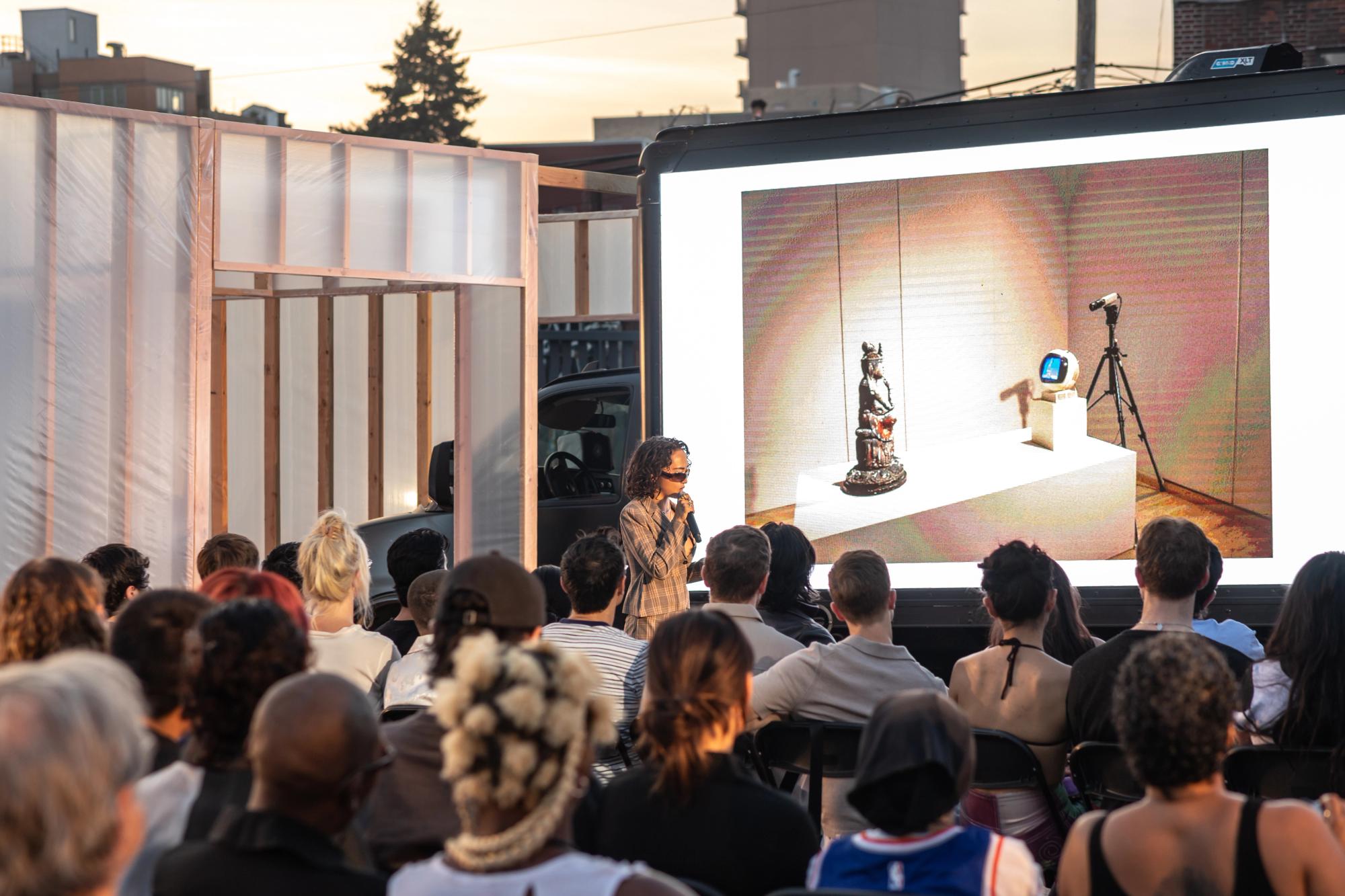
Opening lecture of CFG-20260717, featuring curator Angelique Rosales Salgado and a projection of TV Buddha by Nam June Paik. Photo by Rachel Keane. Courtesy of CFGNY, Amant and The Kitchen.
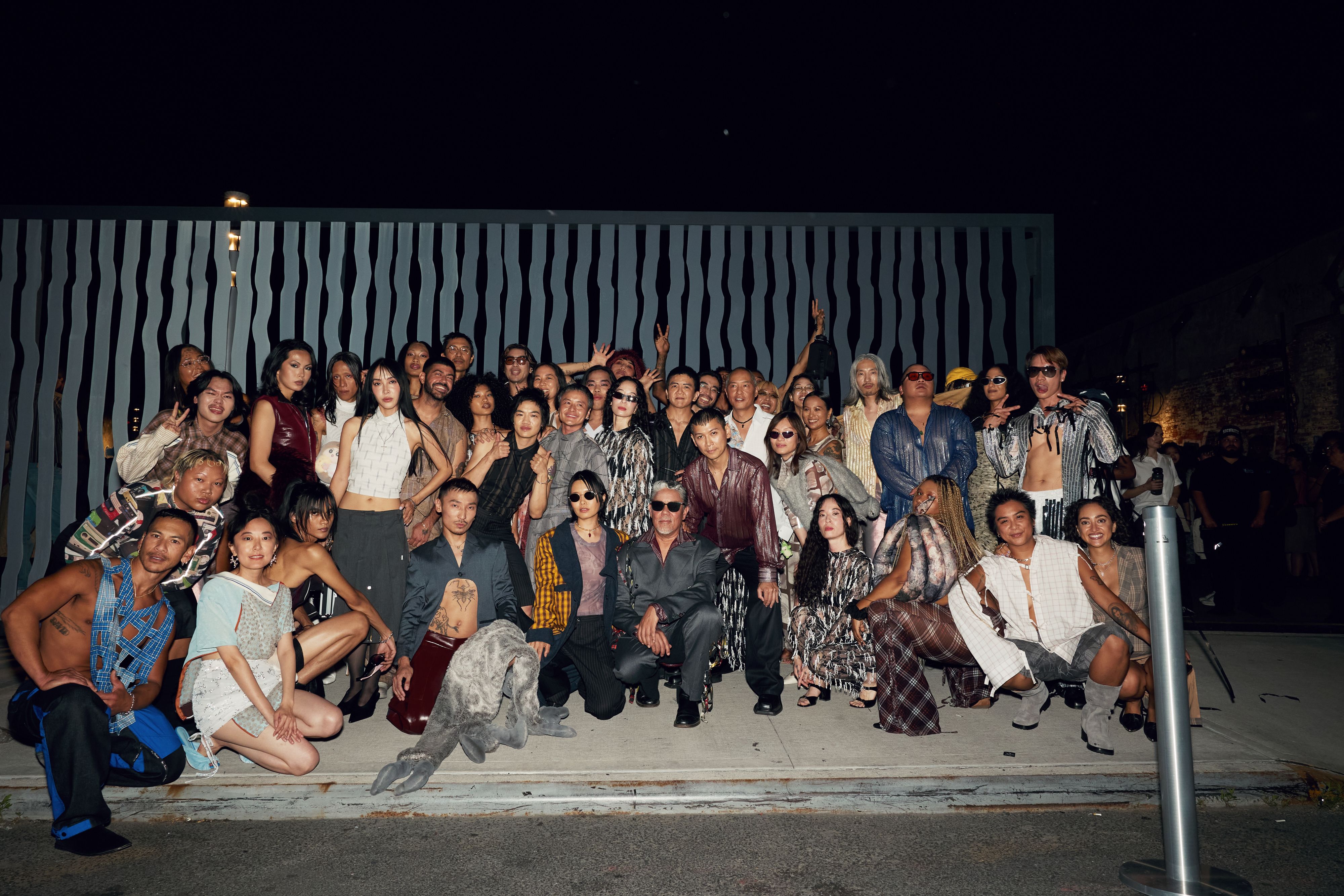
Group photo featuring the 40 looks produced for CFG-20260717, designed by CFGNY and styled by Avena Gallagher. Photo by Pablo Gonzalez. Courtesy of CFGNY and Amant.
“Vaguely Asian” is the central conceit of CFGNY, the New York-based art collective that, since 2016, has used clothing, photography, sculpture, performance, and design to explore gender, identity, and the unstable aesthetics of the Asian diasporic experience. To celebrate its ten-year anniversary, the collective, now consisting of Daniel Chew, Tin Nguyen, and Ten Izu, recently staged a performance-art-meets-runway show at Amant, the Brooklyn arts organization where CFGNY currently has an exhibition, Puddles into Pond.
The performance, titled CFG-20260717 and co-commissioned by The Kitchen, marked a capstone moment for CFGNY, which at the time of the show had work on view not only at Amant, but also at The Met’s Costume Institute and the Whitney. Ostensibly a runway show for the collective’s fifth collection, the event unfolded as a kind of pop-up theater, beginning with a talk-show segment and lecture accompanied by video art before segueing into a dizzying array of models and performers.
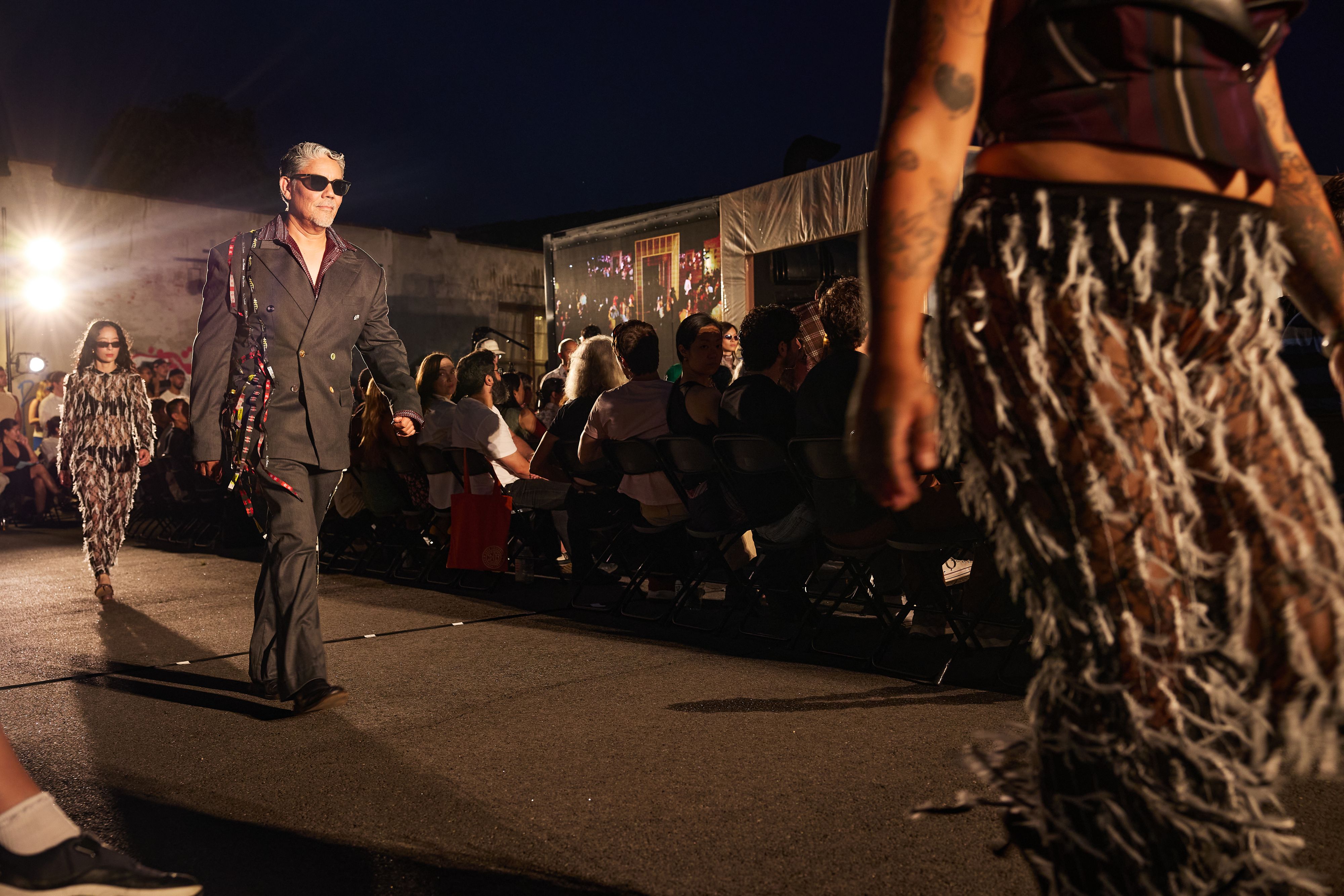
CFG-20260717. Photo by Pablo Gonzalez. Courtesy of CFGNY, Amant and The Kitchen.
CFG-20260717 took place in Amant’s outdoor lot amid a scaffolding-like installation of plywood and plastic, materials that frequently appear in the collective’s work, including in exhibitions such as Fake Fashion III at the Stedelijk Museum in Amsterdam, Refashioning at Japan Society in New York, and Emporium at Marsèll in Milan (a collaboration with PIN–UP). The pavement became a catwalk, with over 30 new looks styled by Avena Gallagher. Produced in Ho Chi Minh City, Vietnam, the garments also revisited silhouettes from previous collections in new materials and patterns: the collective’s iconic bootleg bump dress, a riff on Comme des Garçons’ famous bump dress, embedded with a stuffed animal in white stretch mesh; its signature apron skirt, updated in metallic sheen fabric; and a closing striped button-down shirt and pants set, hand-threaded with cassette tape for a nostalgic undertone of club culture-meets-kawaii. Ambient and techno music by Basement resident and X-TRA.SERVICES founder LYDO heightened the mood with pulsing sound.
Surrounding the central scaffolding, the seated audience faced inward toward a parked, multi-sided LED box truck. The screens cycled through archival footage and video portraits by early artists experimenting with the PortaPak, the portable video camera introduced by Sony in 1967 (Joan Jonas was one of the first to own one in the U.S.). These images alternated with a live feed of performers Zhi Wei, Shaobo Han, and Cynthia Leung, who reinterpreted the flashing imagery through movement and dance choreographed by Elliott Reed. Also in the mix was a vigorous hair-brushing performance by Ahn Vo, satirizing Marina Abramović’s 1975 work Art Must Be Beautiful, Artist Must Be Beautiful.
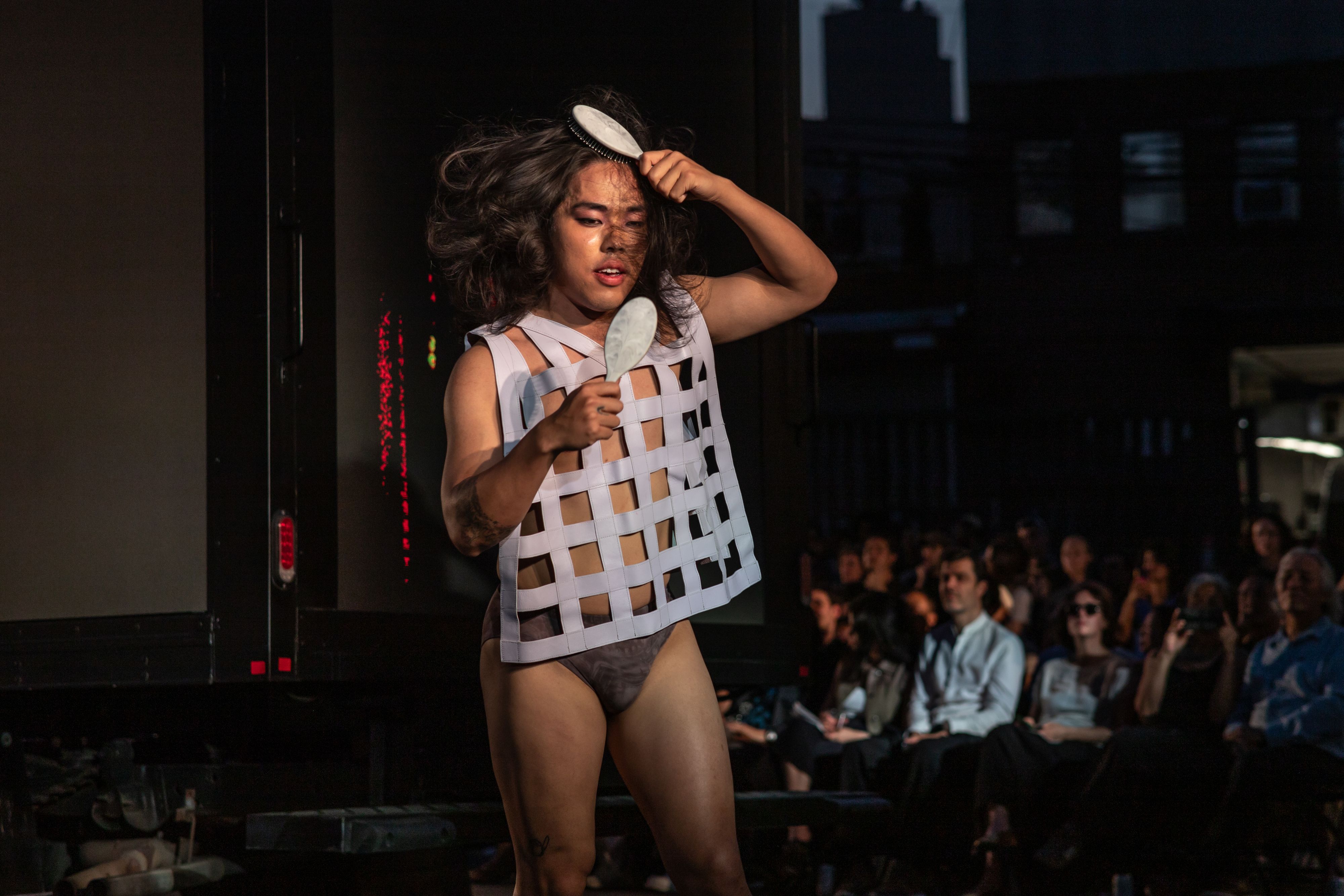
Performance by Ahn Vo in CFG-20260717. Photo by Rachel Keane. Courtesy of CFGNY, Amant and The Kitchen.
CFGNY’s opening lecture traced the history of video art through the Sony PortaPak, explaining how the portable camera helped artists circulate individual perspectives and political consciousness outside traditional media channels. That legacy included figures such as Theresa Hak Kyung Cha and Nam June Paik, whose work unfolded against the backdrop of the Vietnam War, the first widely televised conflict. It also ran through The Kitchen, founded in 1971 as a platform for experimental video, performance, and media art. CFGNY reactivated that legacy through multi-year conversations with The Kitchen curator Angelique Rosales Salgado, who was CFG-20260717’s co-commissioner and “talk show” host.
The PortaPak emerged as an entry point for the show through CFGNY’s conversations with curator Barbara London and Christina Yang, The Kitchen’s Media Director in the early 2000s, whose NYU dissertation examined camera world-making and New York’s avant-garde scene in the 1970s and 80s. “One thing CFGNY knows how to turn out is research,” Salgado says. “We thought, how do we bring that history and legacy of the artists, a lot of them women, femme-presenting, queer, immigrant, into the room too?”
Opening lecture of CFG-20260717, featuring curator Angelique Rosales Salgado and a projection of TV Buddha by Nam June Paik. Photo by Rachel Keane. Courtesy of CFGNY, Amant and The Kitchen.
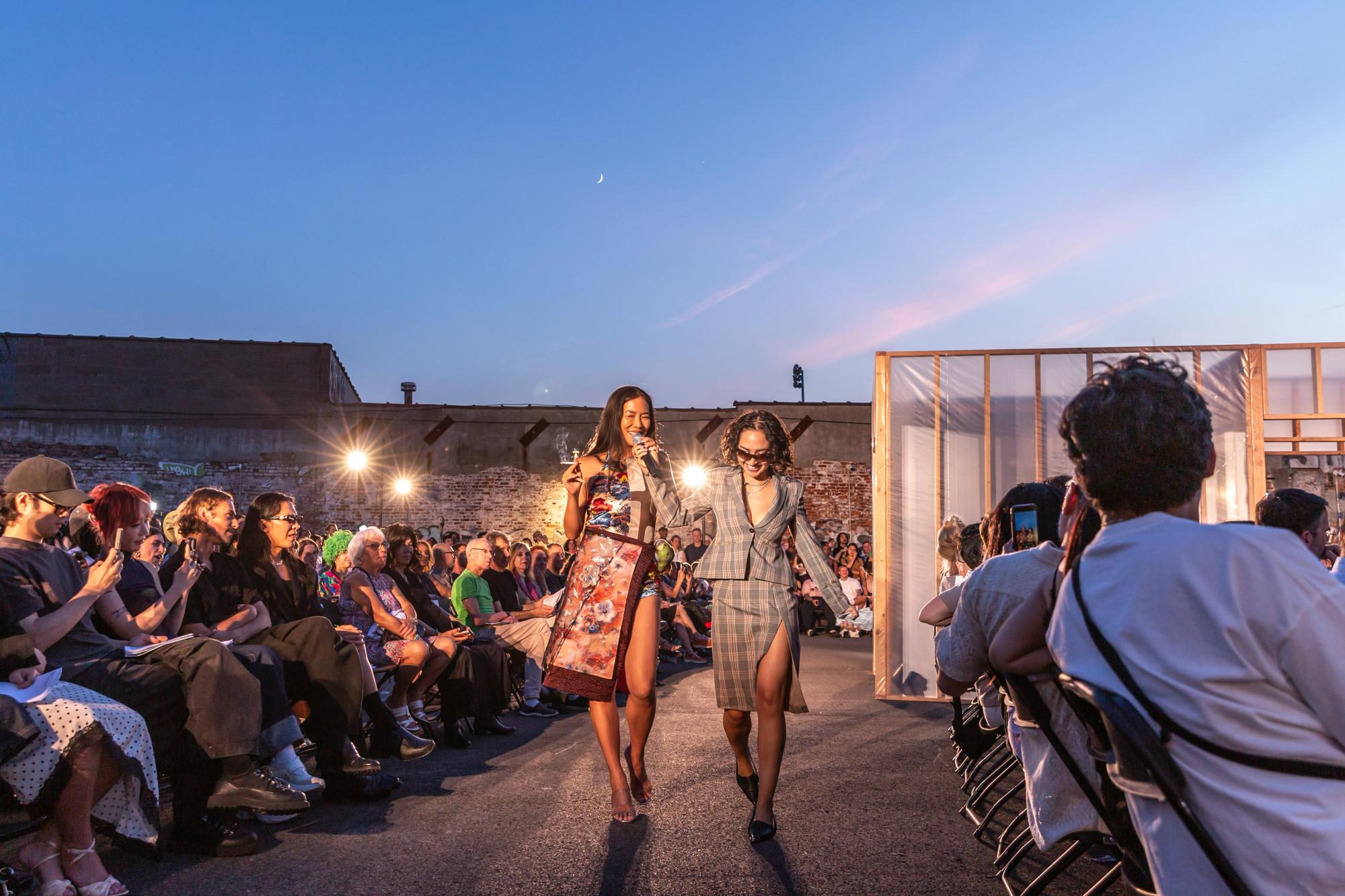
Performer Cynthia Leung and curator Angelique Rosales Salgado in CFG-20260717. Photo by Rachel Keane. Courtesy of CFGNY, Amant and The Kitchen.
CFGNY’s ethos centers this democratized but differentiated mix of perspectives, an interest that dovetails with the PortaPak’s own dissemination of the power to document. That unfixity extends even to the collective’s name: CFGNY started as an acronym for Concept Foreign Garments New York. Later, they sometimes said it stood for Cute Fucking Gay New York. For CFG-20260717, it became shorthand for Can’t Forget Gossip Needs You. Wearing a CFGNY powersuit, mic in hand, Salgado circled the parking lot, exchanging art-world lore with performers, including former Kitchen alumni. She also posed more provocative questions, asking one performer if they ever had sex on camera.
The models and performers formed a star-studded cast of close friends and former collaborators, with appearances by Industry actor Ken Leung; artists Sung Tieu, Lotus Kang, Paul Pfeiffer, and Diane Severin Nguyen; actor and editor Blake Abbie; chefs Anthony Ha and Chakriya Un; and others. Even audience members were invited to join and strut. Viewers on one side of the LED truck, which showed close-ups of archival imagery, models, and garments, couldn’t know whether they were seeing the same images as those seated elsewhere. At the same time, audience members contributed their own angles to the performance, filming and posting the spectacle on social media and participating in the creation of a communal archive. “There is always the question of what the best seat at these shows is. There was no best seat. It’s very much about everyone’s perspective as a whole,” said Tin Nguyen after the performance.
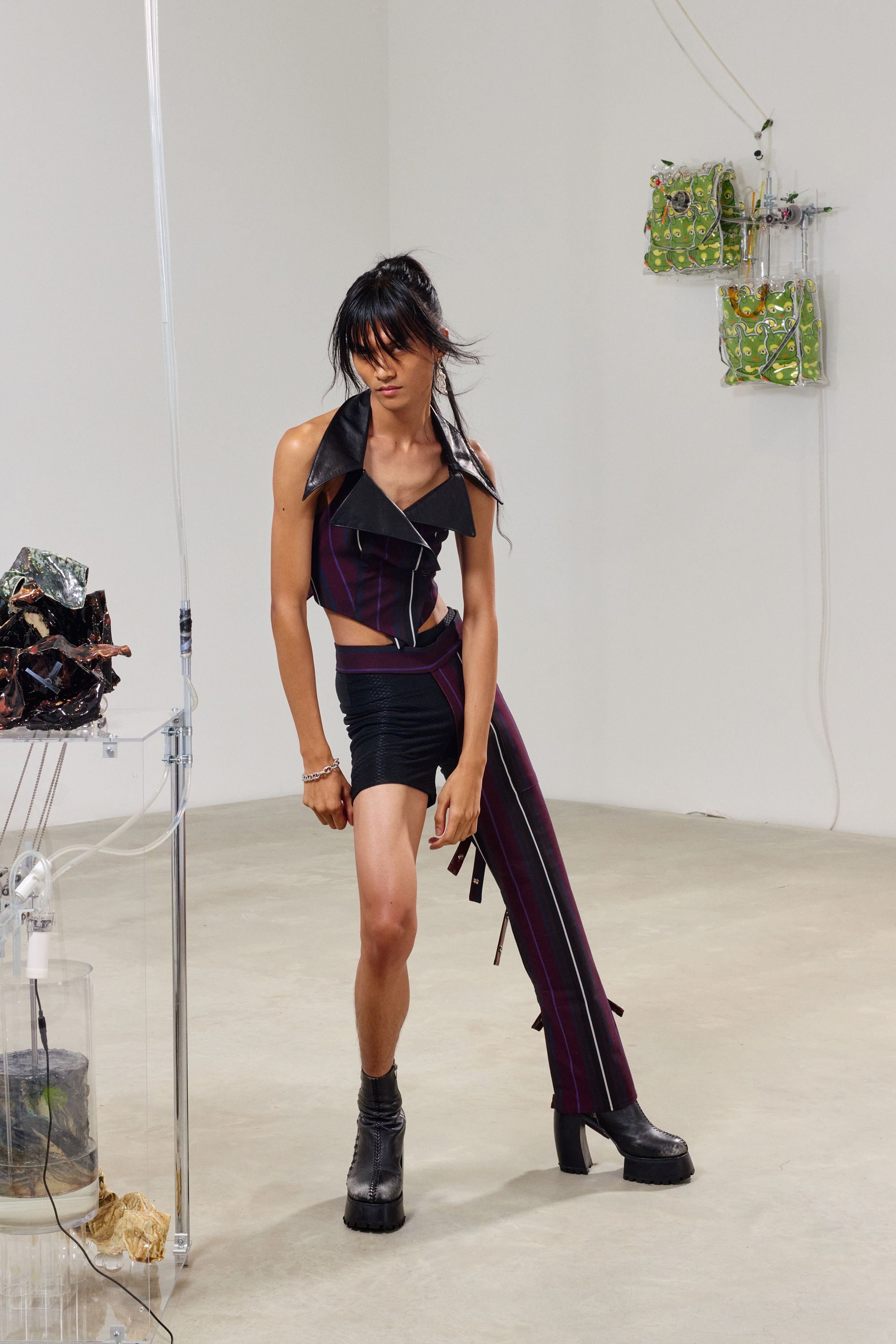
Look 14, modeled by Apollo Bual. Photography by David Brandon Geeting. Courtesy CFGNY and Amant, Brooklyn, NY
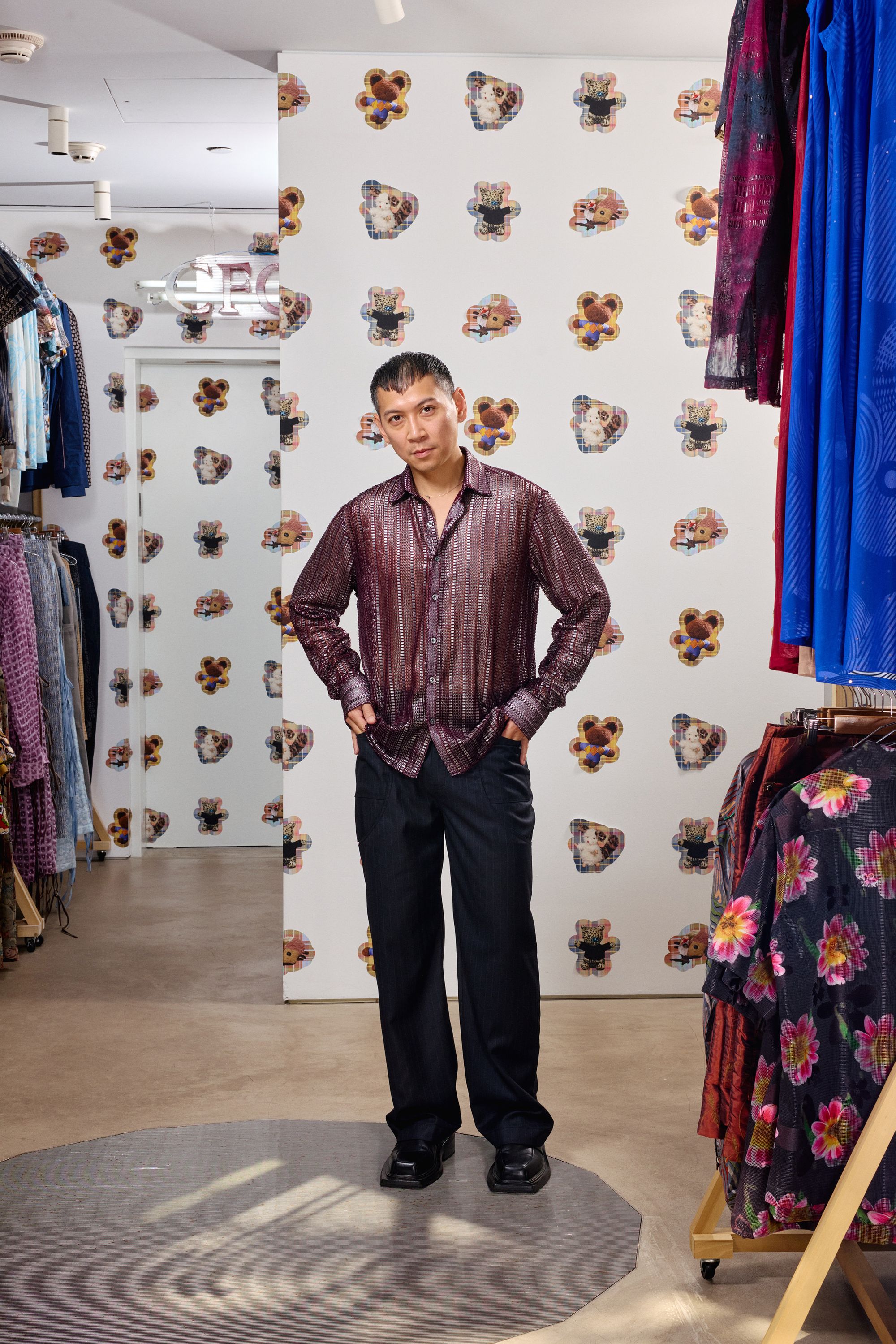
Look 01 modeled by Tin Nguyen. Photography by David Brandon Geeting. Courtesy CFGNY and Amant, Brooklyn, NY
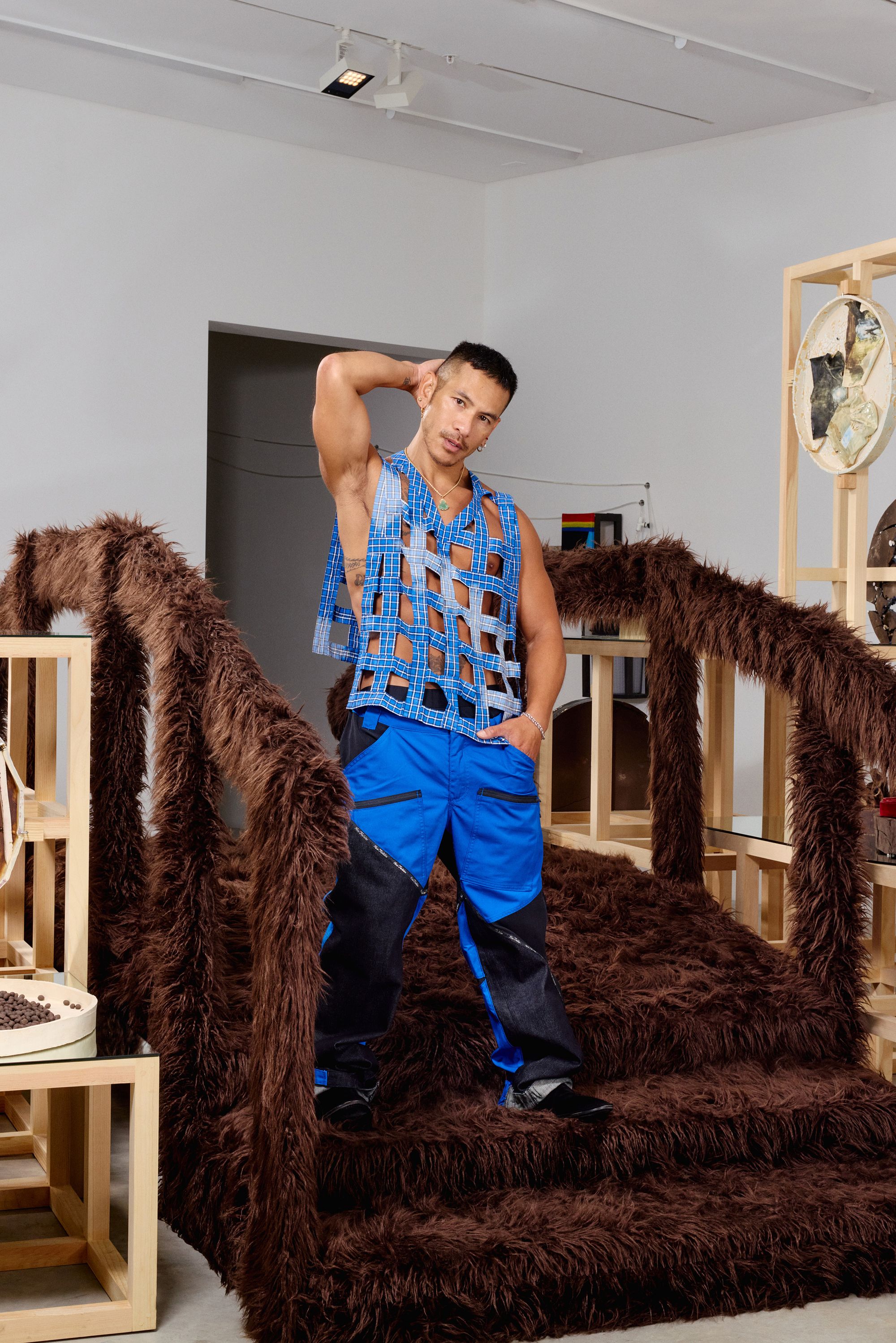
Look 32, modeled by Tony Voong. Photography by David Brandon Geeting. Courtesy CFGNY and Amant, Brooklyn, NY
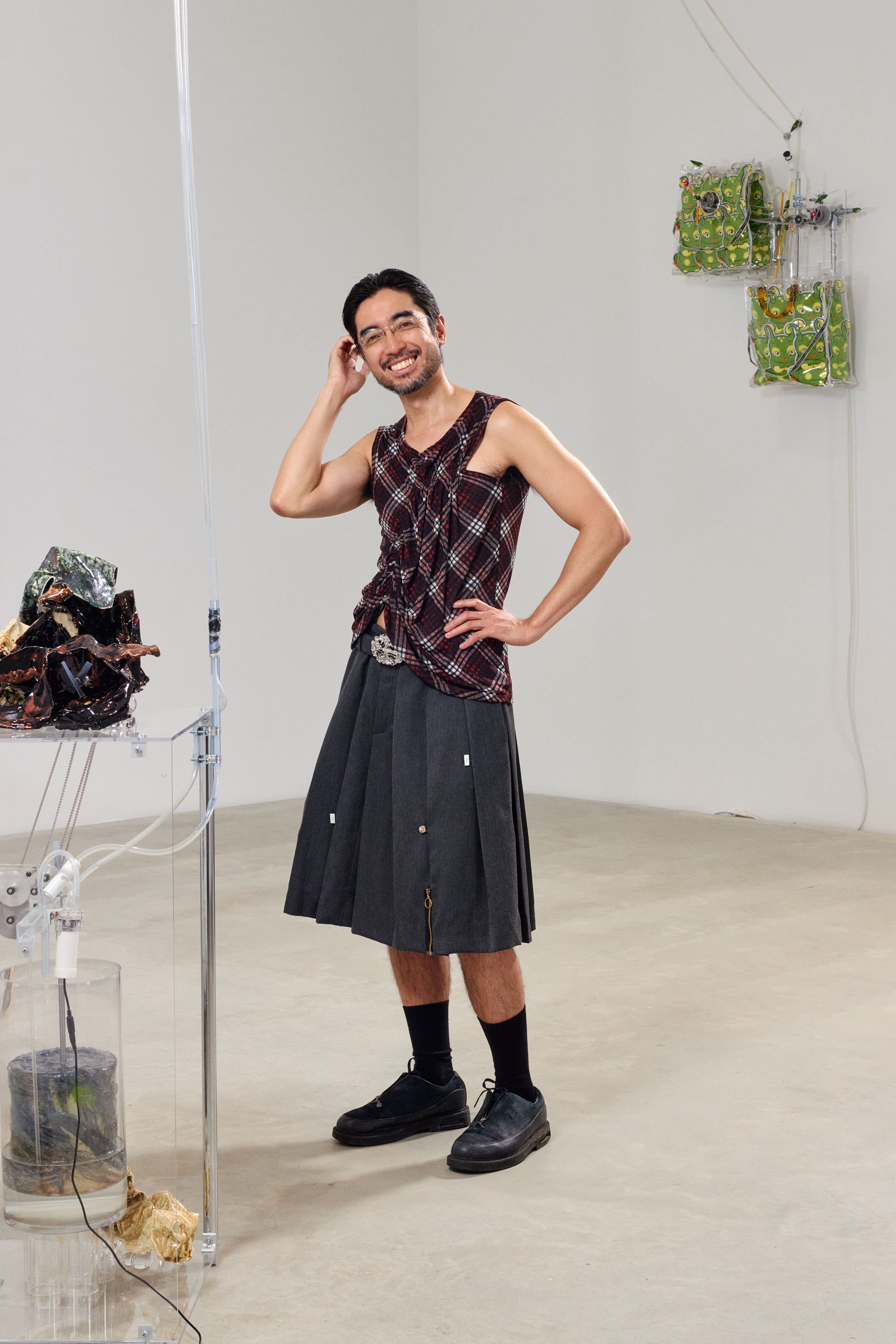
Look 04, modeled by Daniel Chew. Photography by David Brandon Geeting. Courtesy CFGNY and Amant, Brooklyn, NY
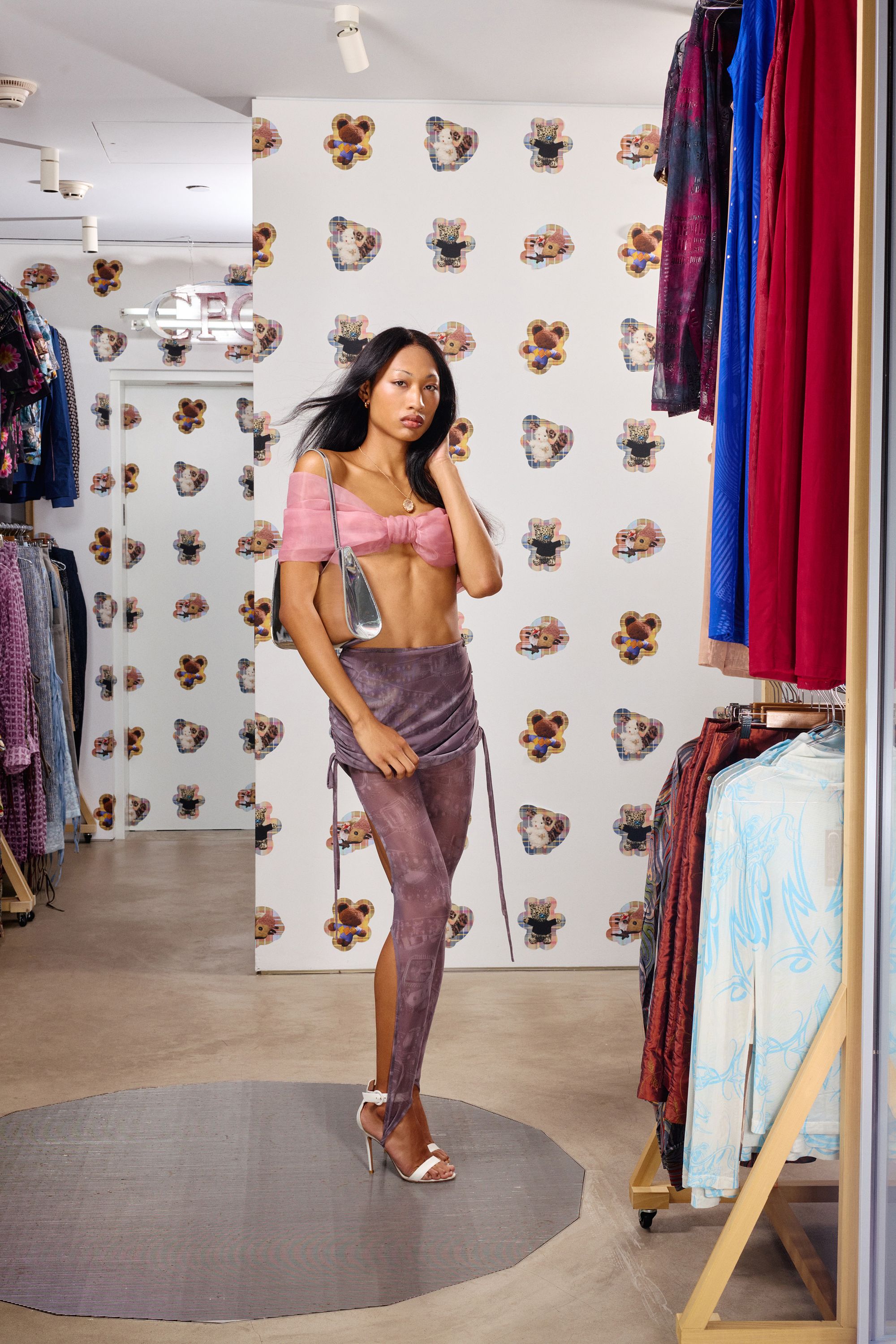
Look 07, modeled by Perle. Photography by David Brandon Geeting. Courtesy CFGNY and Amant, Brooklyn, NY
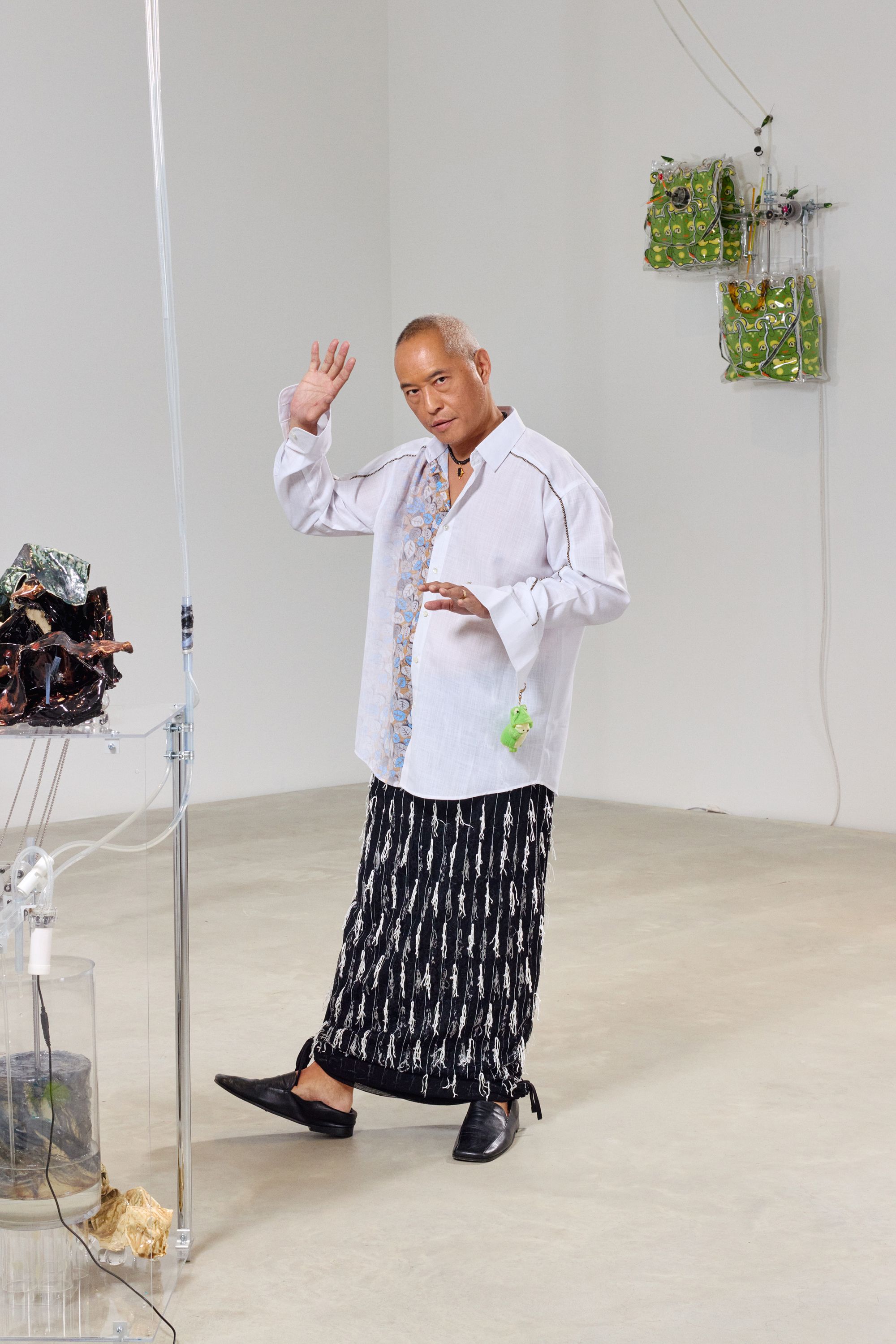
Look 25, modeled by Ken Leung. Photography by David Brandon Geeting. Courtesy CFGNY and Amant, Brooklyn, NY
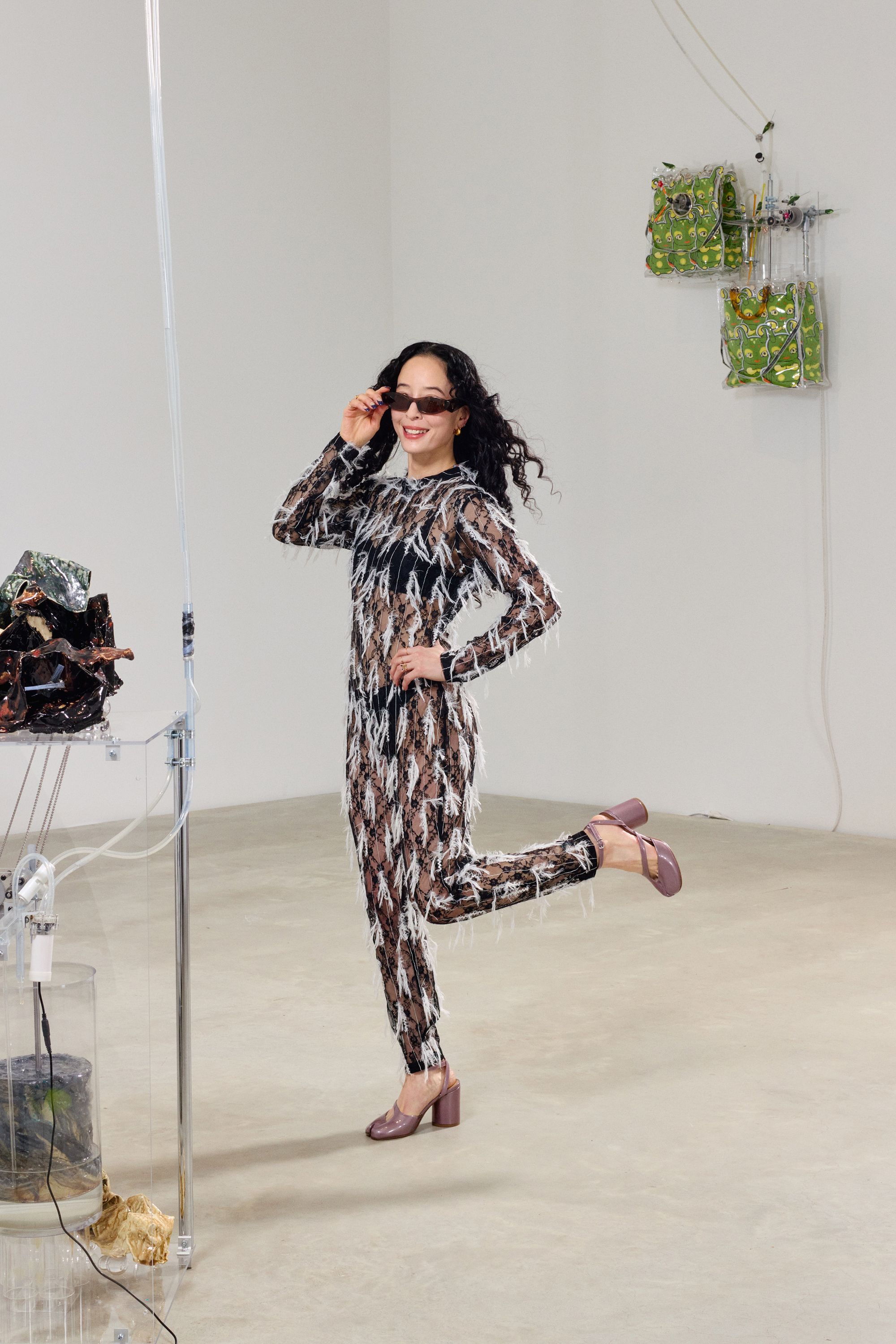
Look 39, modeled by Lotus Kang. Photography by David Brandon Geeting. Courtesy CFGNY and Amant, Brooklyn, NY.
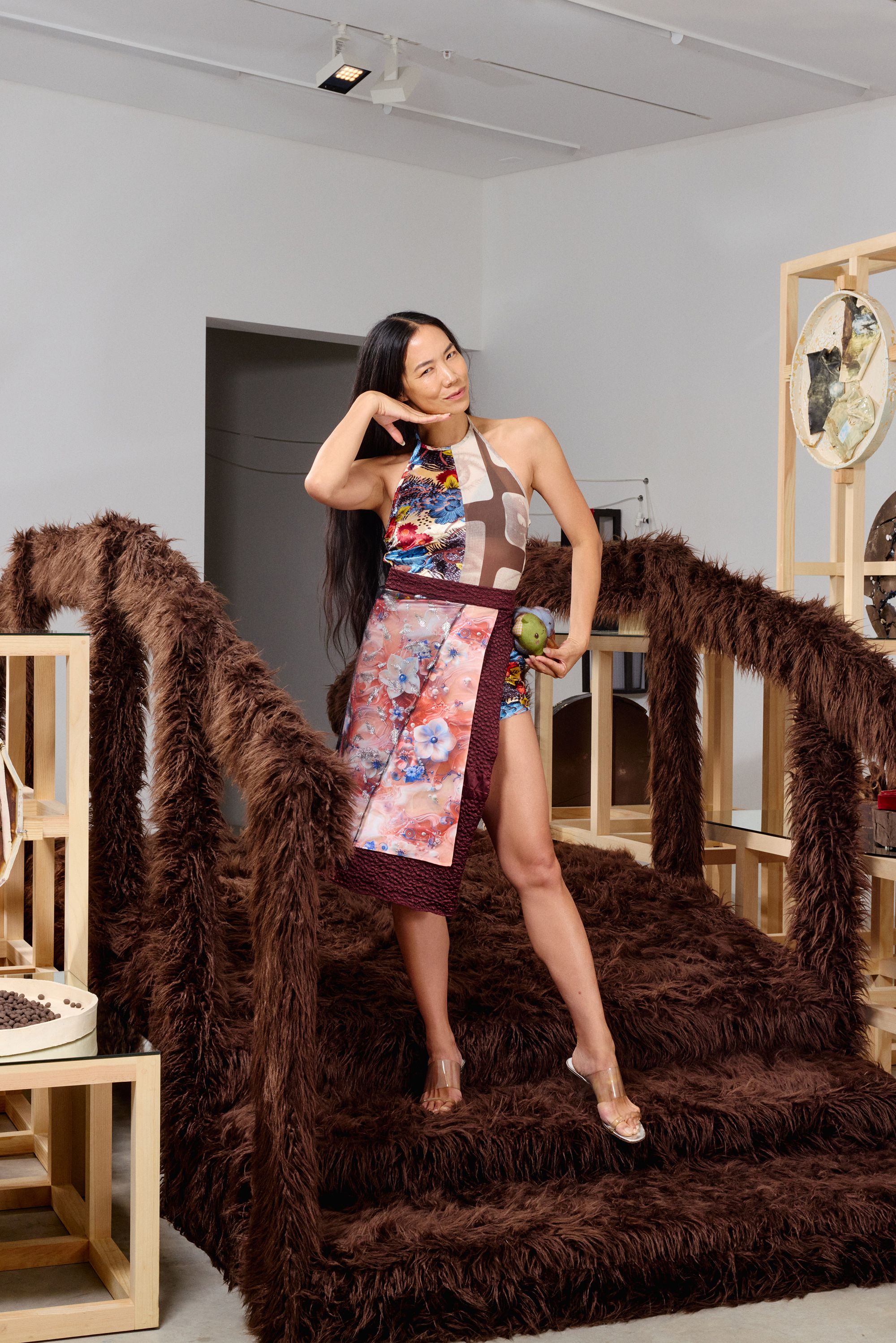
Look 11, modeled by Cynthia Leung. Photography by David Brandon Geeting. Courtesy CFGNY and Amant, Brooklyn, NY.
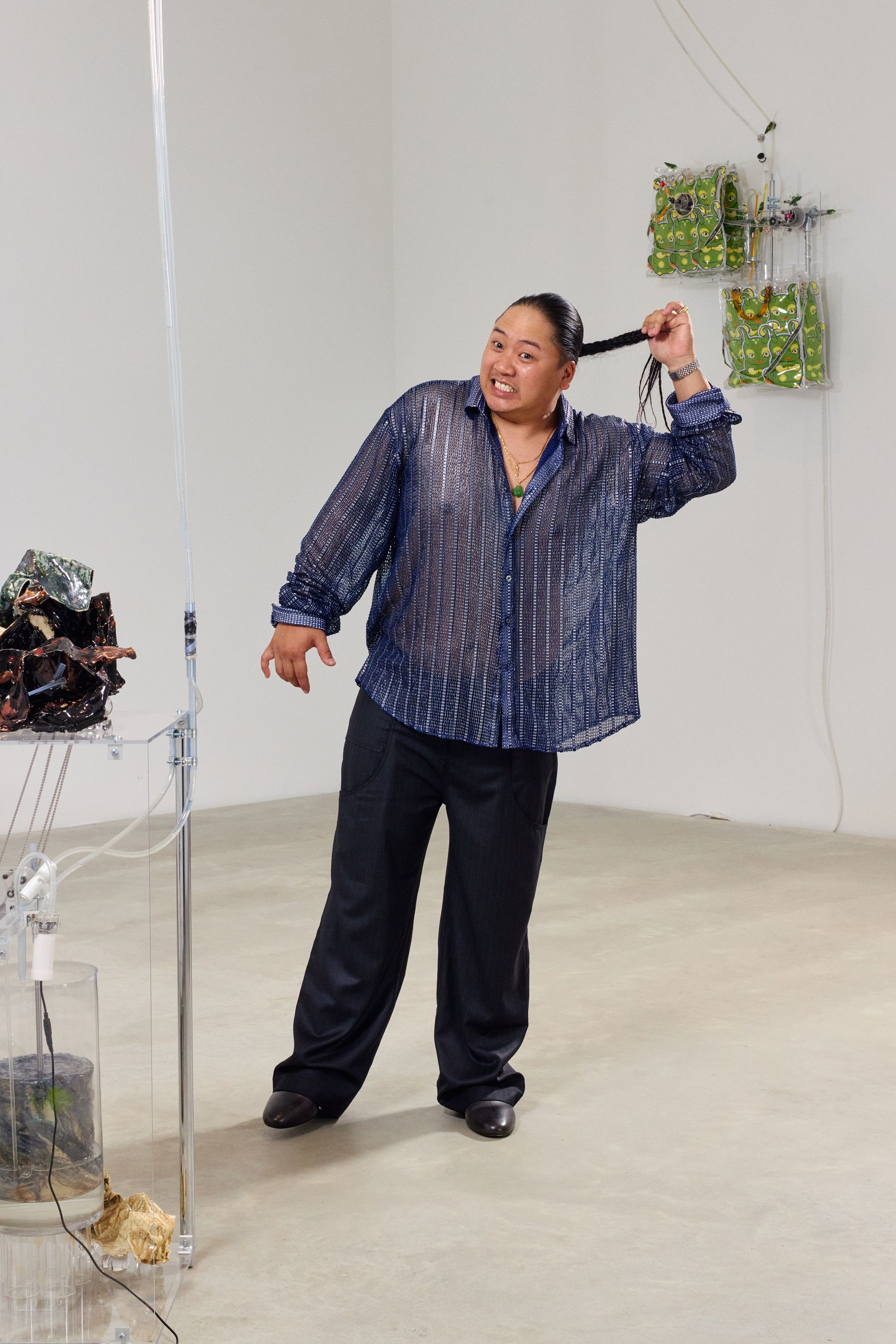
Look 27, modeled by Anthony Ha. Photography by David Brandon Geeting. Courtesy CFGNY and Amant, Brooklyn, NY.
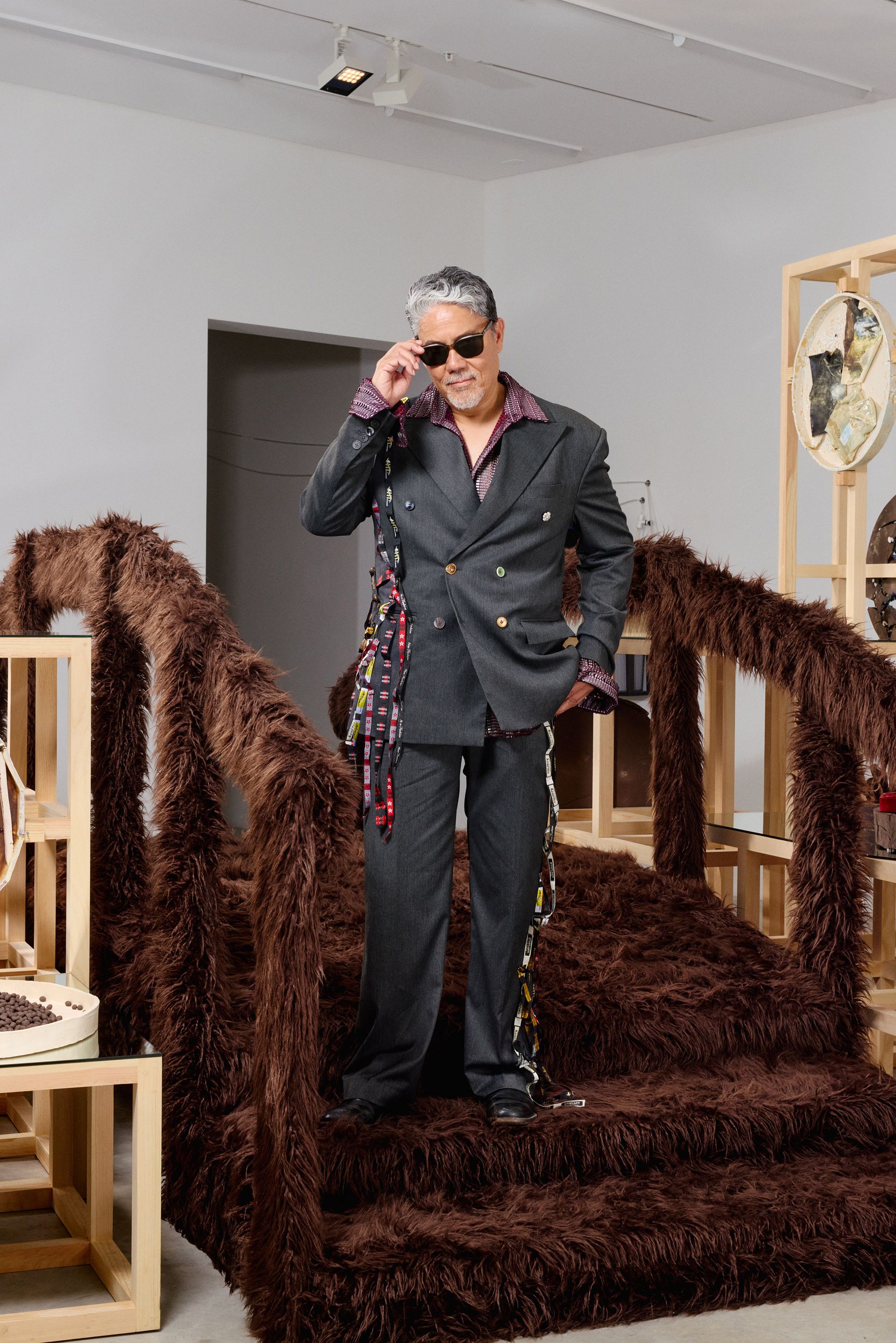
Look 37, modeled by Paul Pfeiffer. Photography by David Brandon Geeting. Courtesy CFGNY and Amant, Brooklyn, NY.
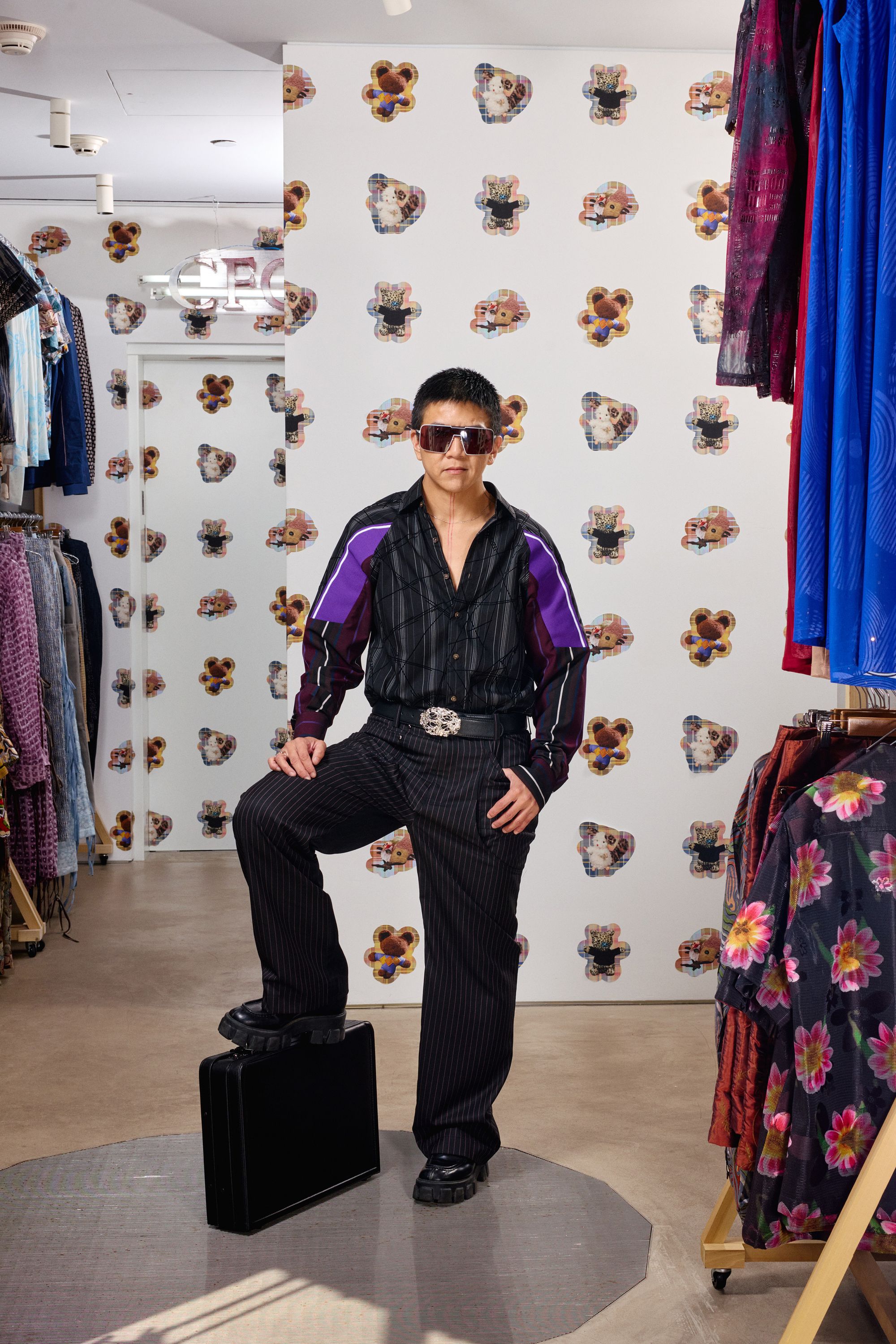
Look 35, modeled by Cole Lu. Photography by David Brandon Geeting. Courtesy CFGNY and Amant, Brooklyn, NY.
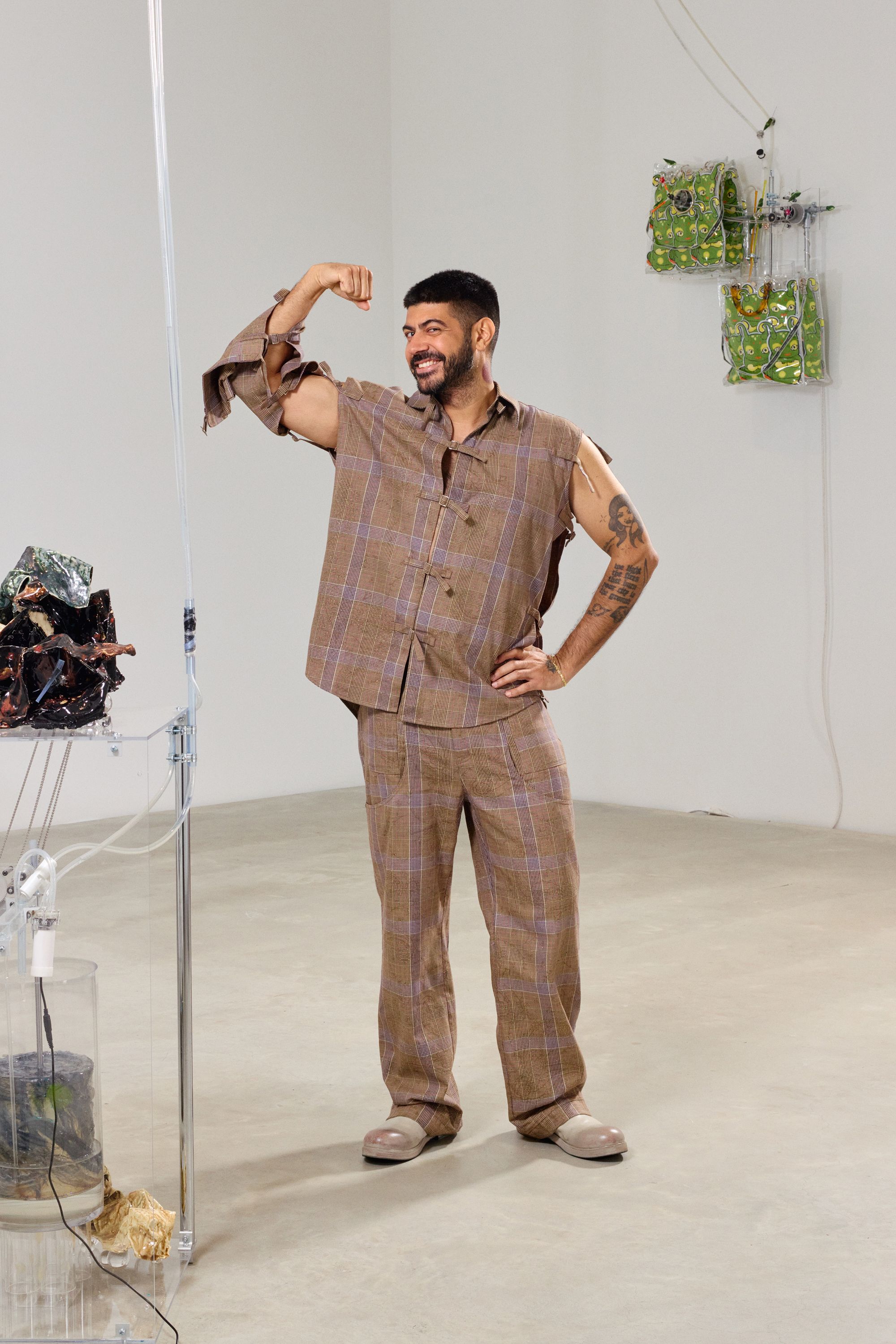
Look 29, modeled by Nick Sethi. Photography by David Brandon Geeting. Courtesy CFGNY and Amant, Brooklyn, NY.
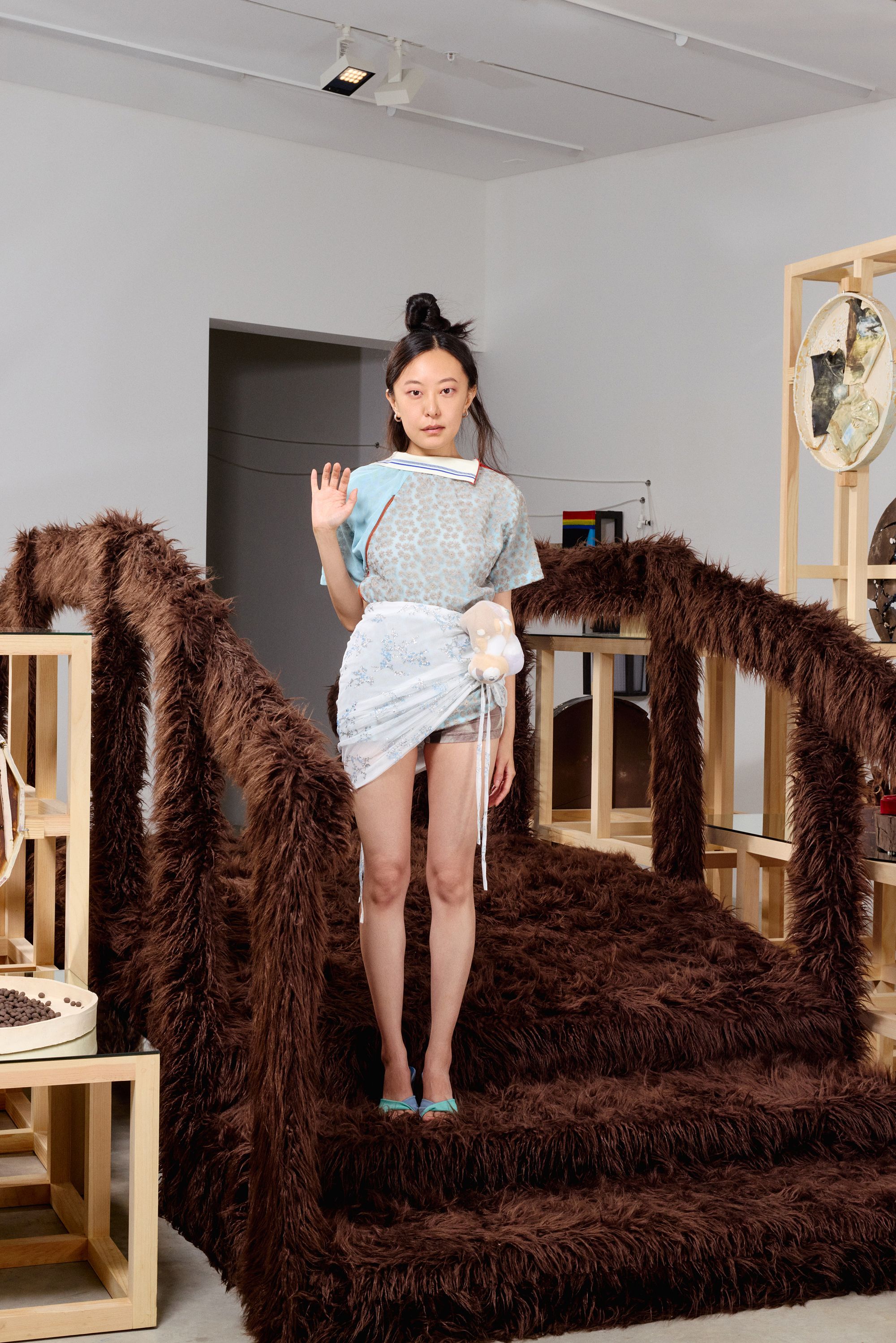
Look 24, modeled by CiCi Wu. Photography by David Brandon Geeting. Courtesy CFGNY and Amant, Brooklyn, NY.
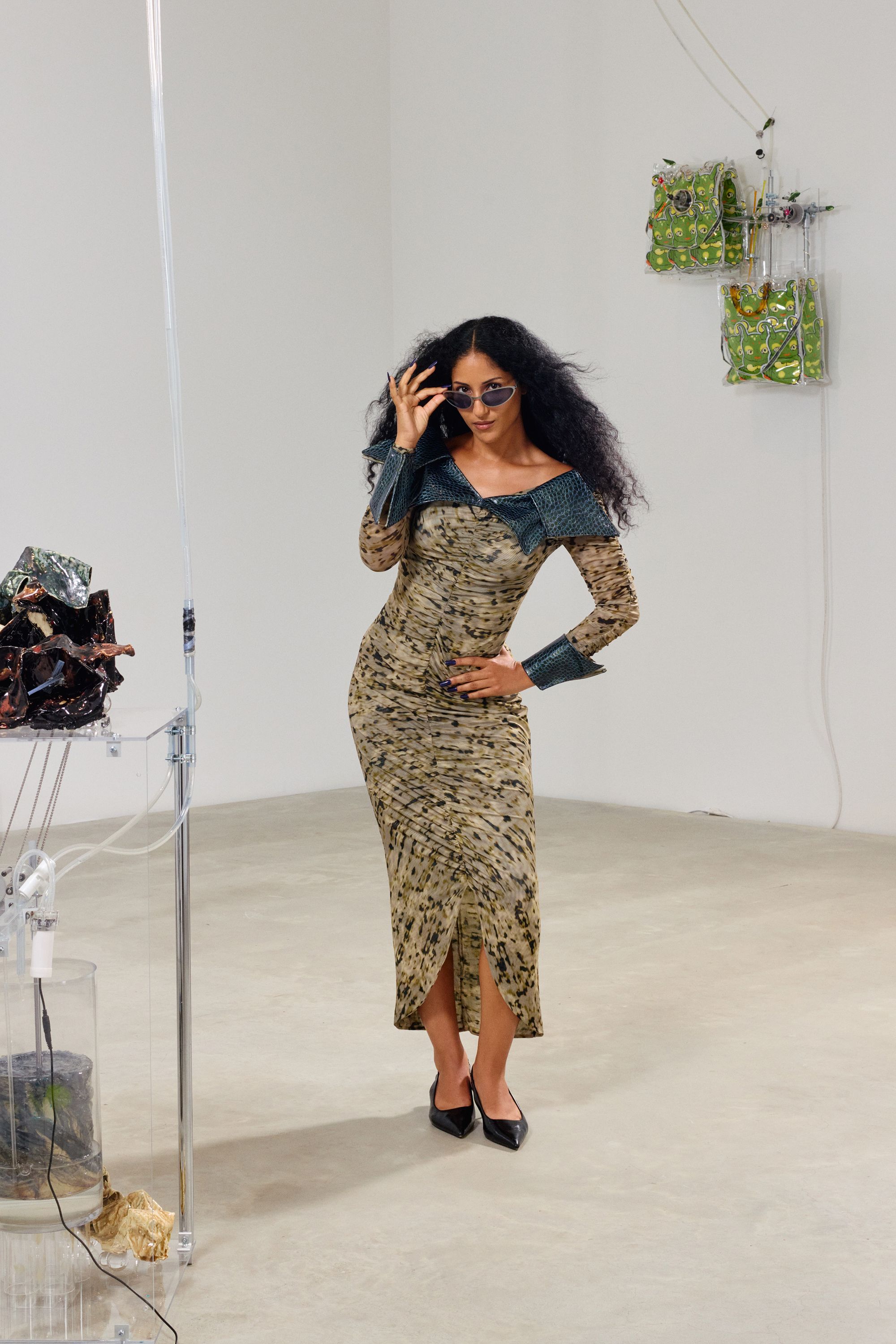
Look 28, modeled by Farah Al Qasimi. Photography by David Brandon Geeting. Courtesy CFGNY and Amant, Brooklyn, NY.
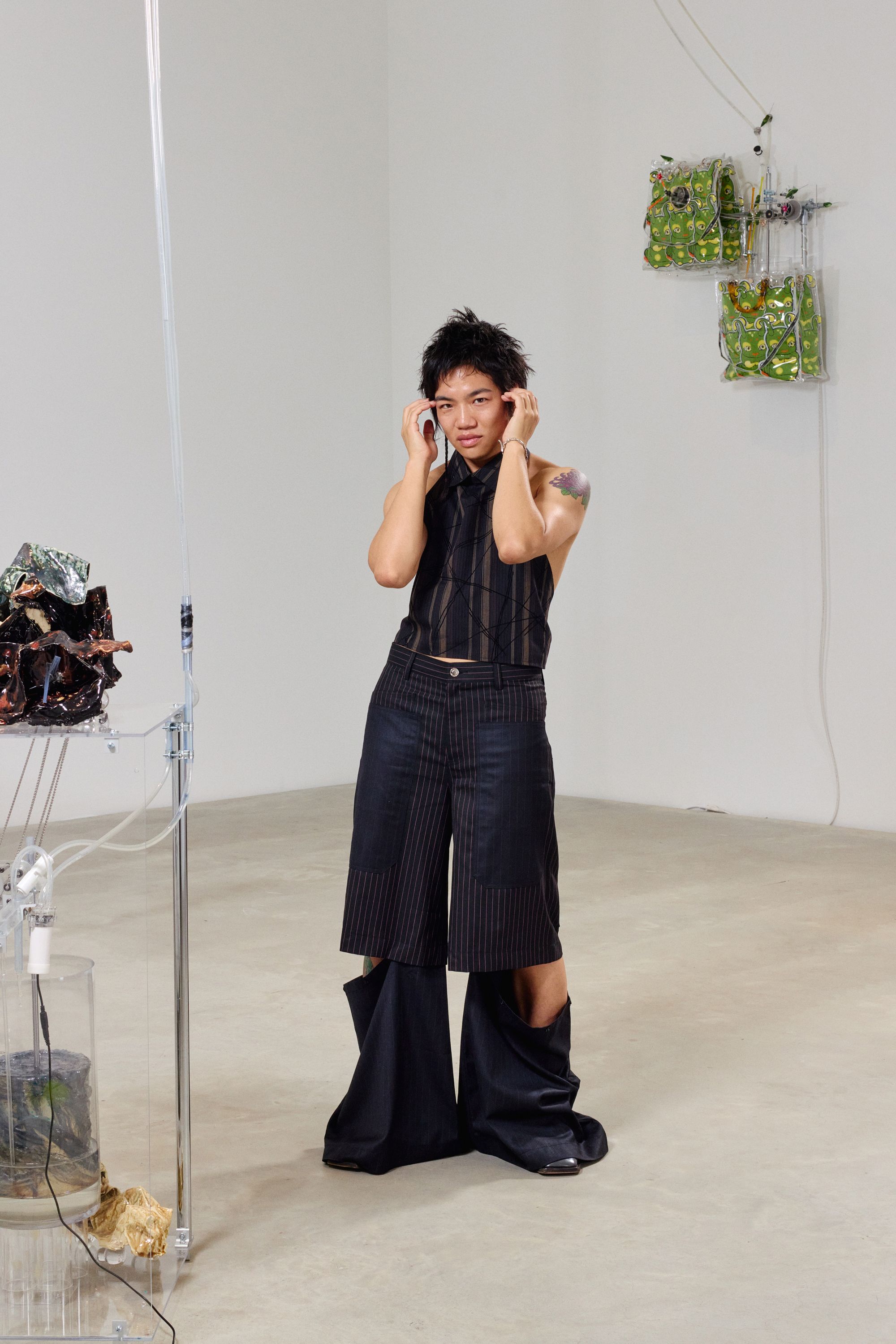
Look 03, modeled by Ten Izu. Photography by David Brandon Geeting. Courtesy CFGNY and Amant, Brooklyn, NY.
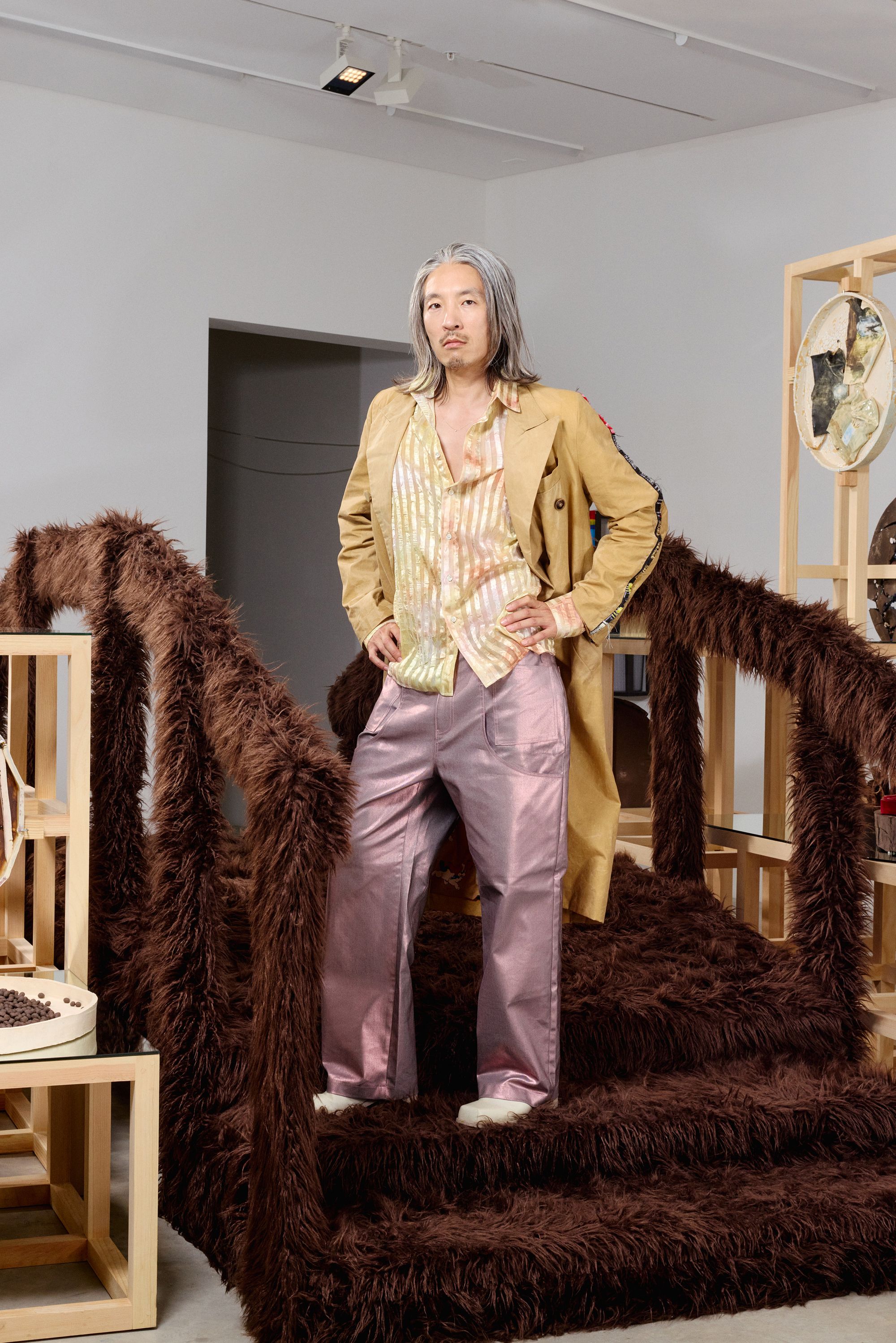
Look 21, modeled by Stewart Uoo. Photography by David Brandon Geeting. Courtesy CFGNY and Amant, Brooklyn, NY.
CFG-20260717 did not end at the edge of the runway. Fluid, flexible, and as shape-shifting as CFGNY’s acronym, the collective’s practice extends beyond any one exhibition or performance into a network of friends, collaborators, references, and recurring characters. In that sense, Joseph Beuys’s idea of “social sculpture,” society as a collective work of art, rings especially true for CFGNY. Many names and faces mold its vision, and its collaborative ethos recalls Bernadette Corporation and ORFI, the 90s avant-garde groups that brought subversive, anti-corporate statements to the runway. (Connections to both collectives still surface in CFGNY’s orbit today.) As if another piece of the puzzle were sliding into place, the afterparty moved from the lot to Zoli, the 10,000-square-foot Brutalist, midcentury-modernesque restaurant connected to Amant’s arts campus, with a DJ set by Bobby Beethoven. There, the characters and perspectives that have defined a decade of CFGNY kept circulating, celebrating and continuing to shape history.
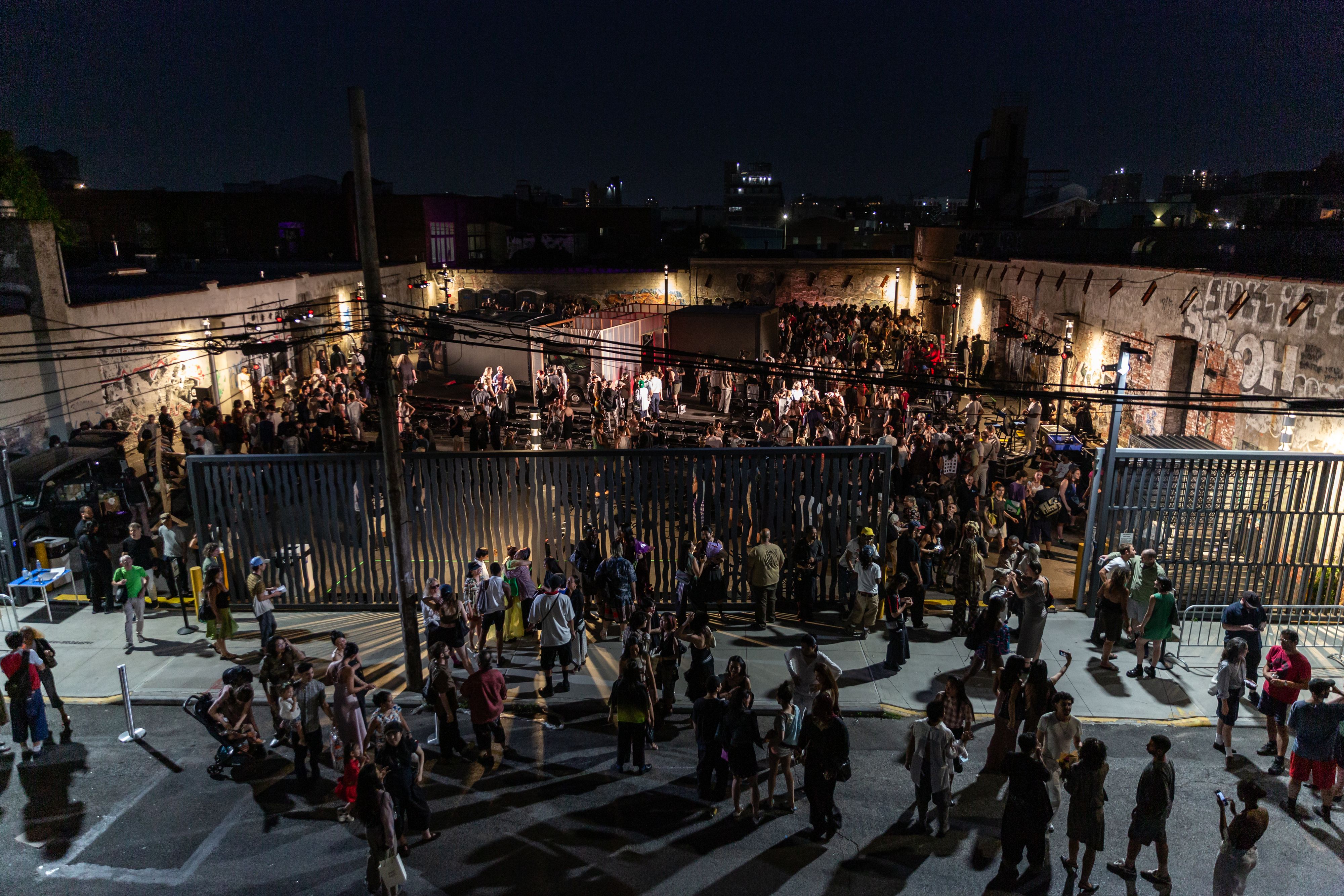
The crowd gathered in Amant's parking lot for CFG-20260717. Photo by Rachel Keane. Courtesy of CFGNY, Amant and The Kitchen.