20 YEARS ON THE STREETS
Revisiting Konstantin Grcic’s Miura Stool Through the Lens of Florian Böhm
by Julie Klein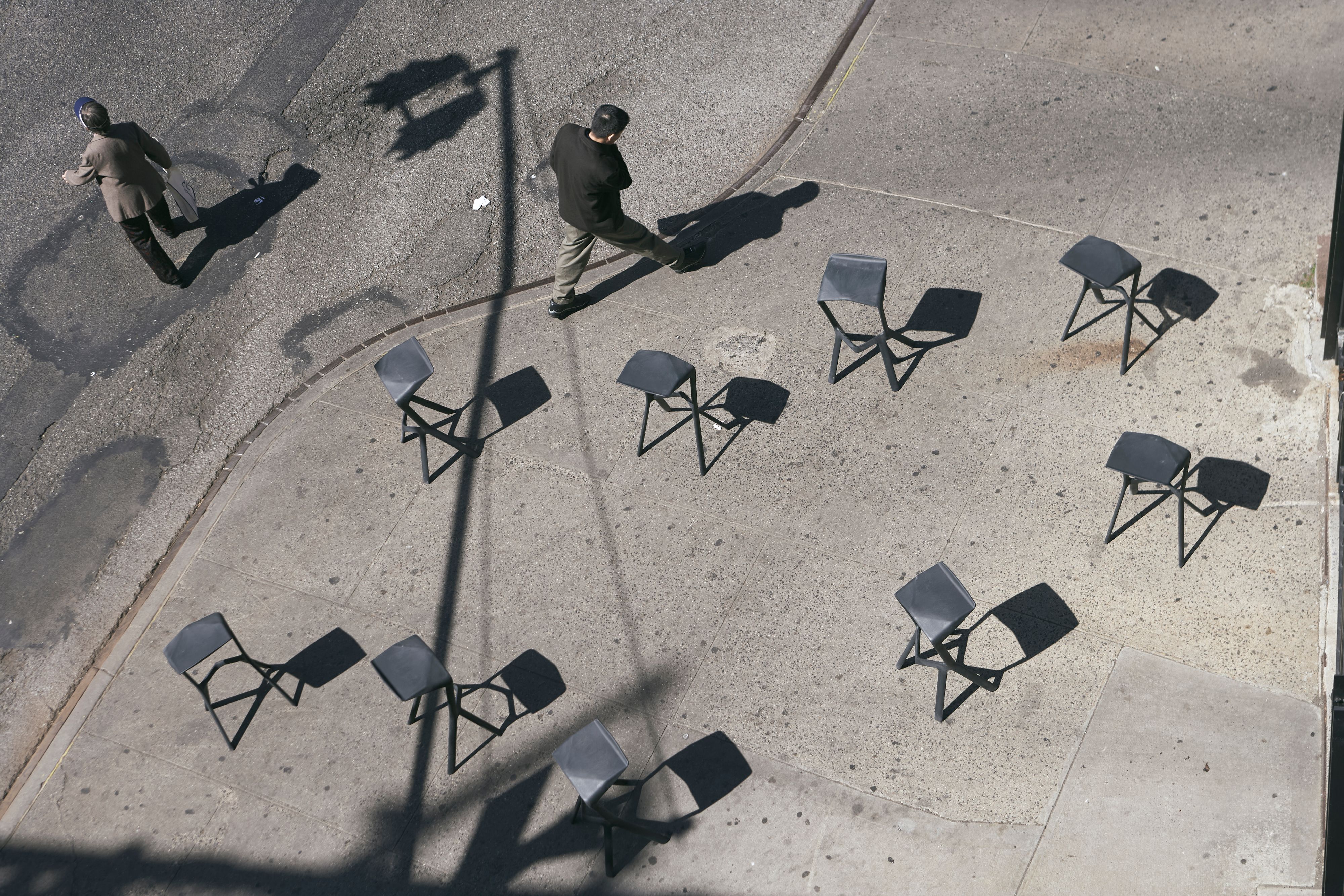
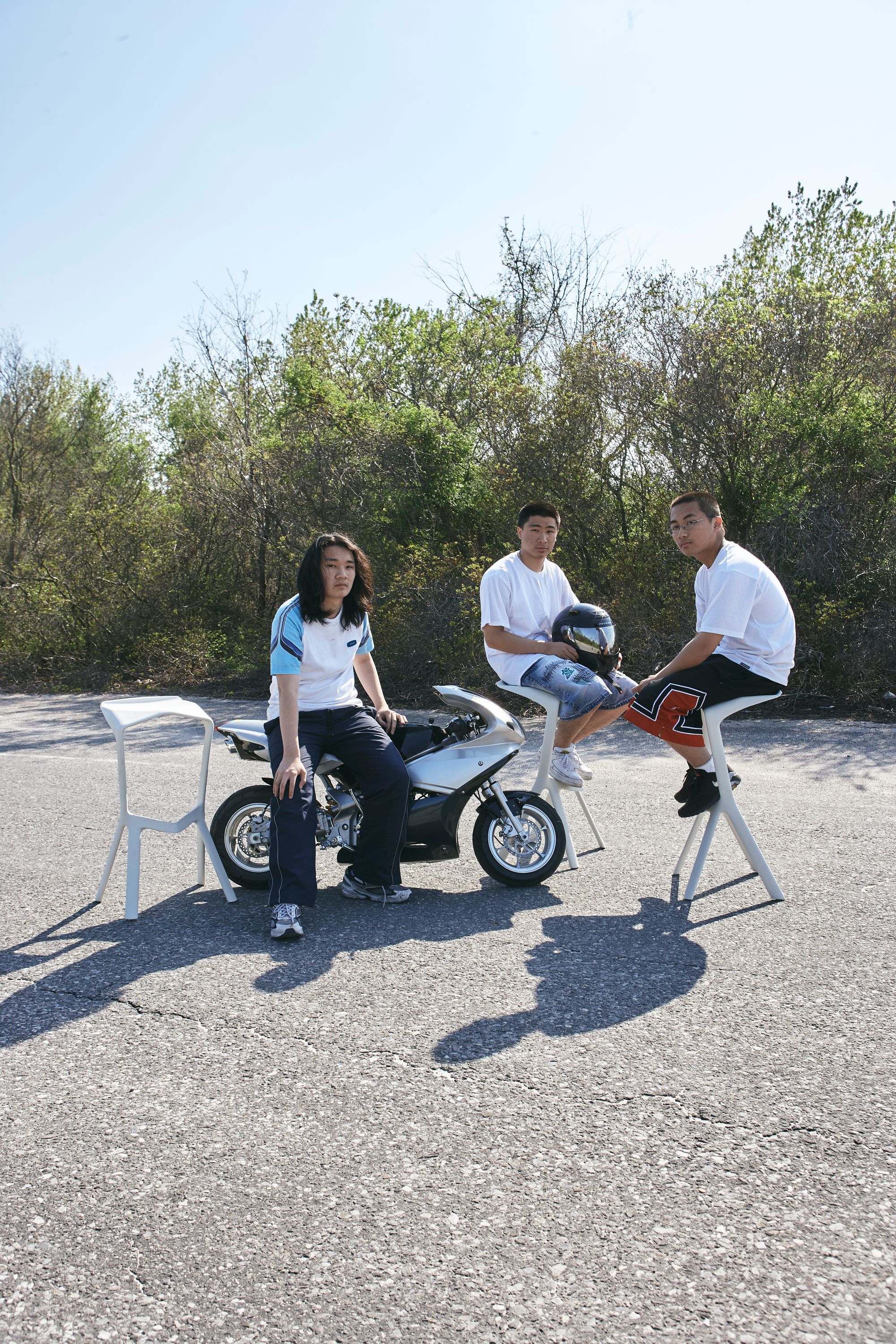
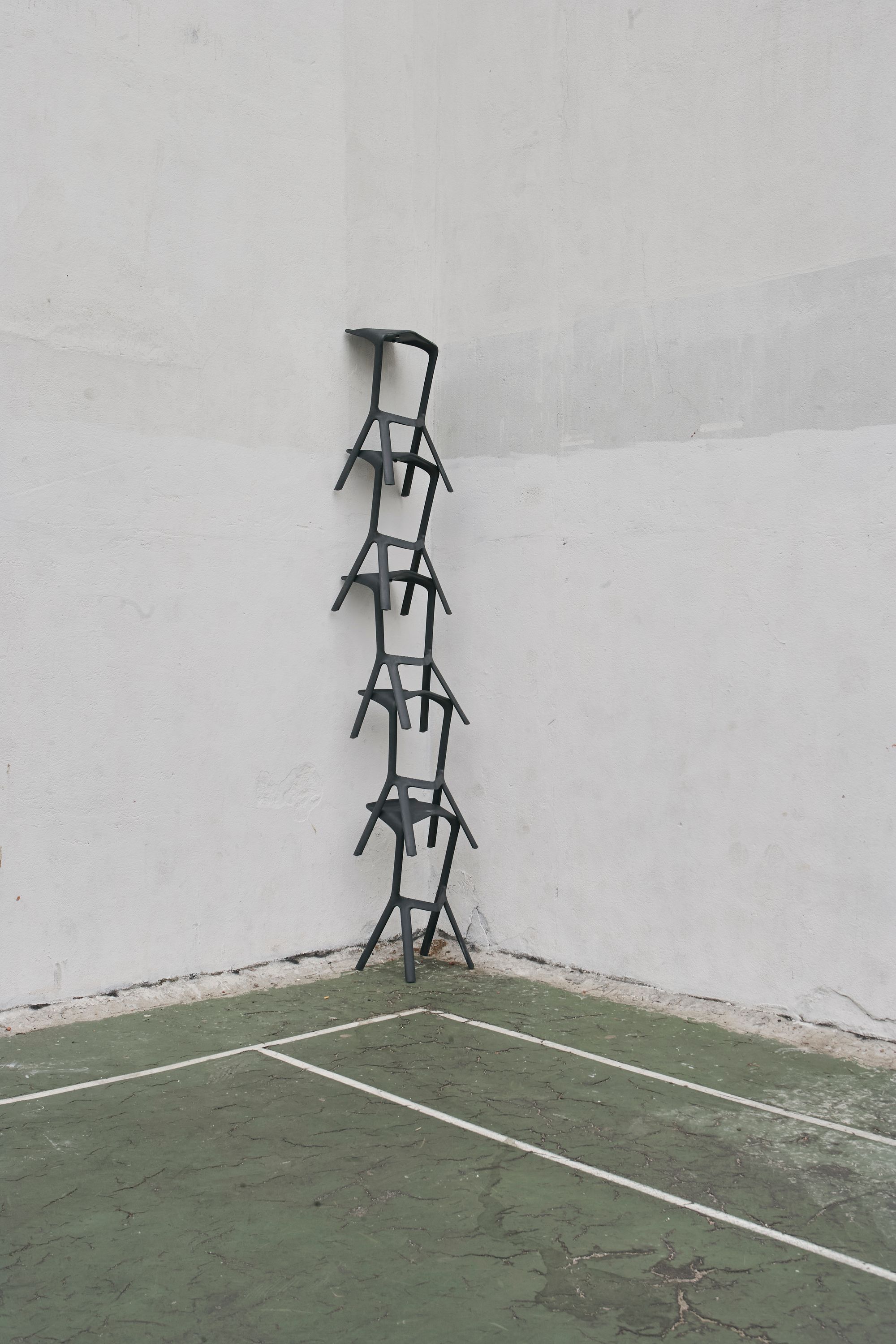
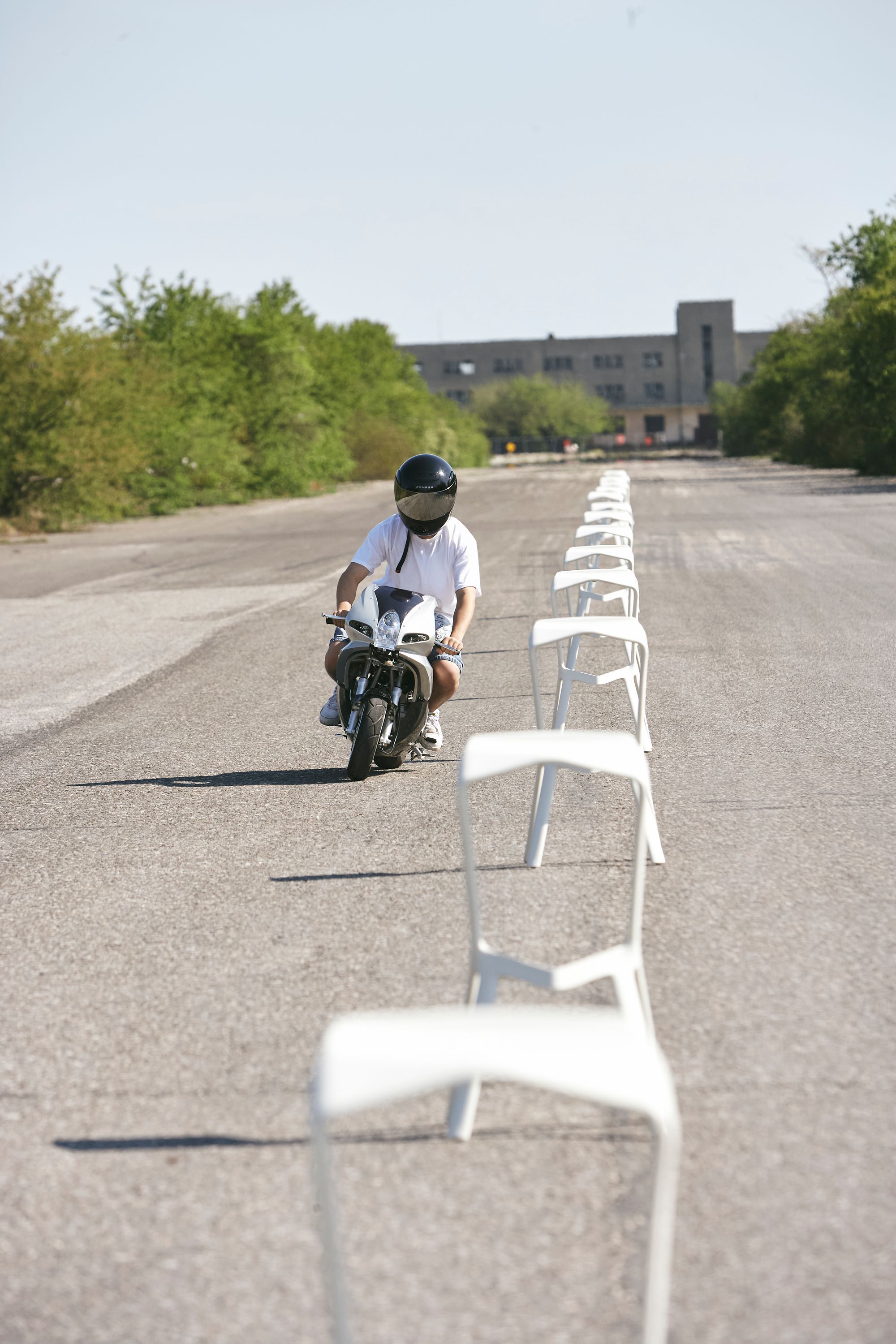
Konstantin Grcic’s Miura stool photographed by Florian Böhm in 2006.
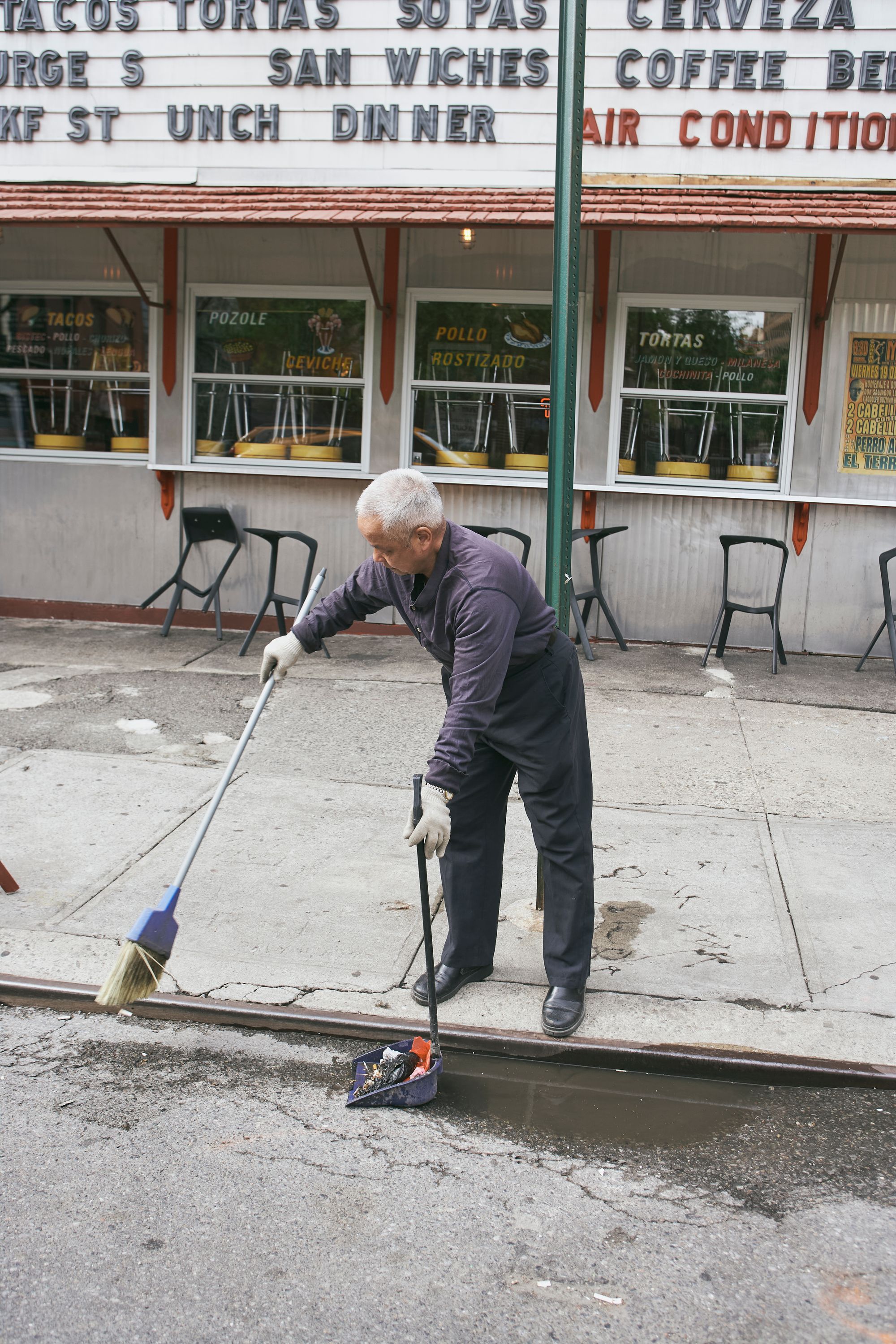
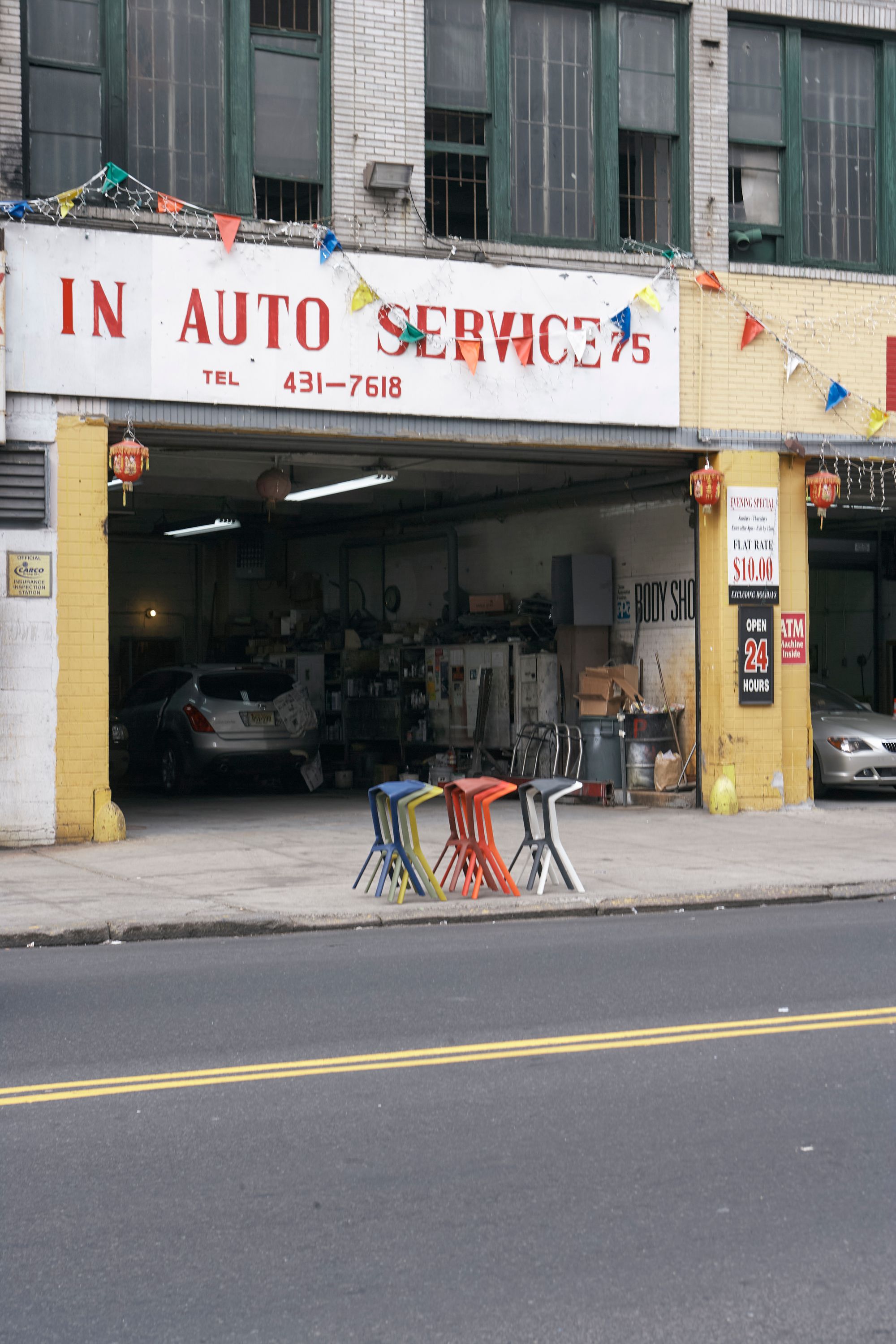
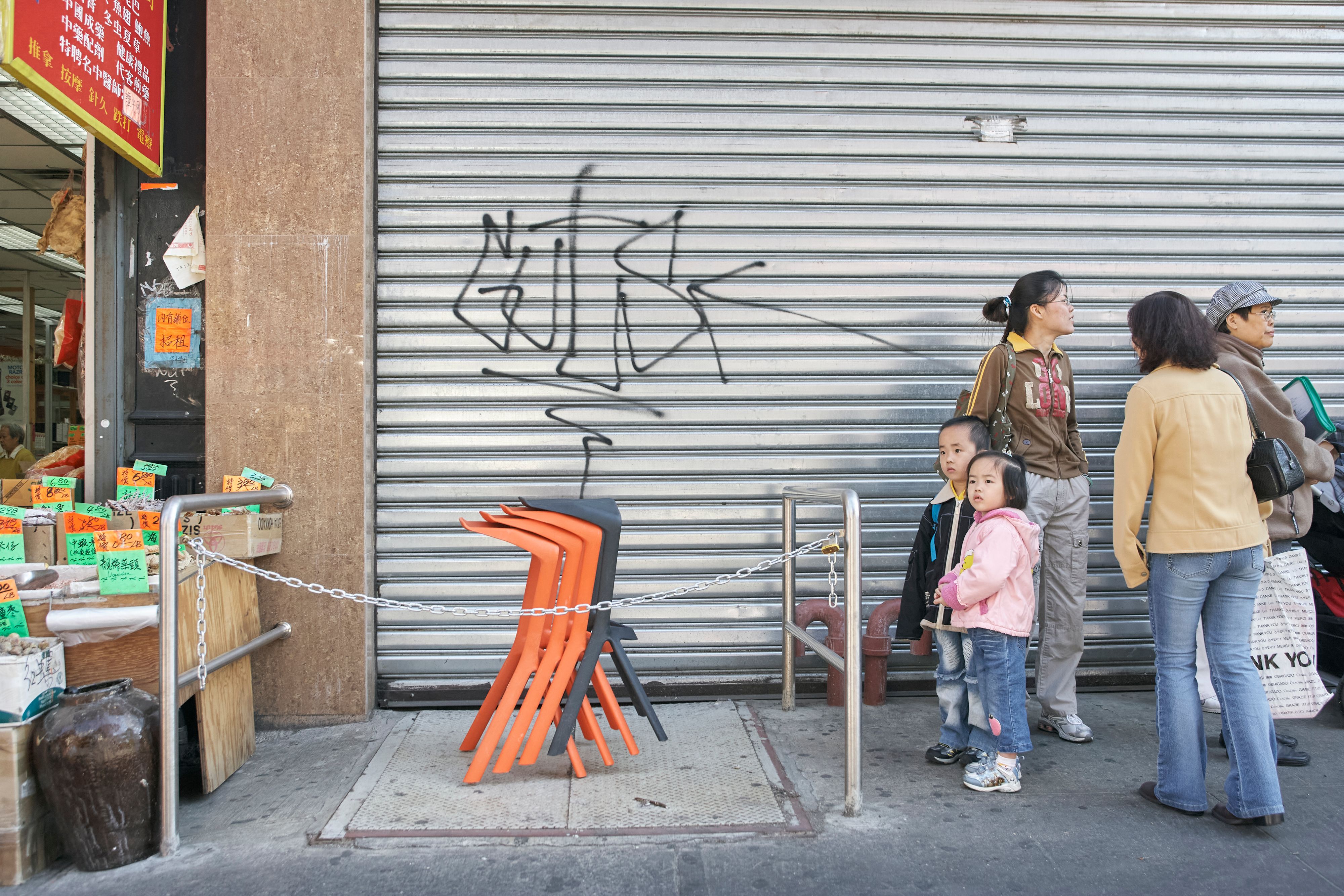
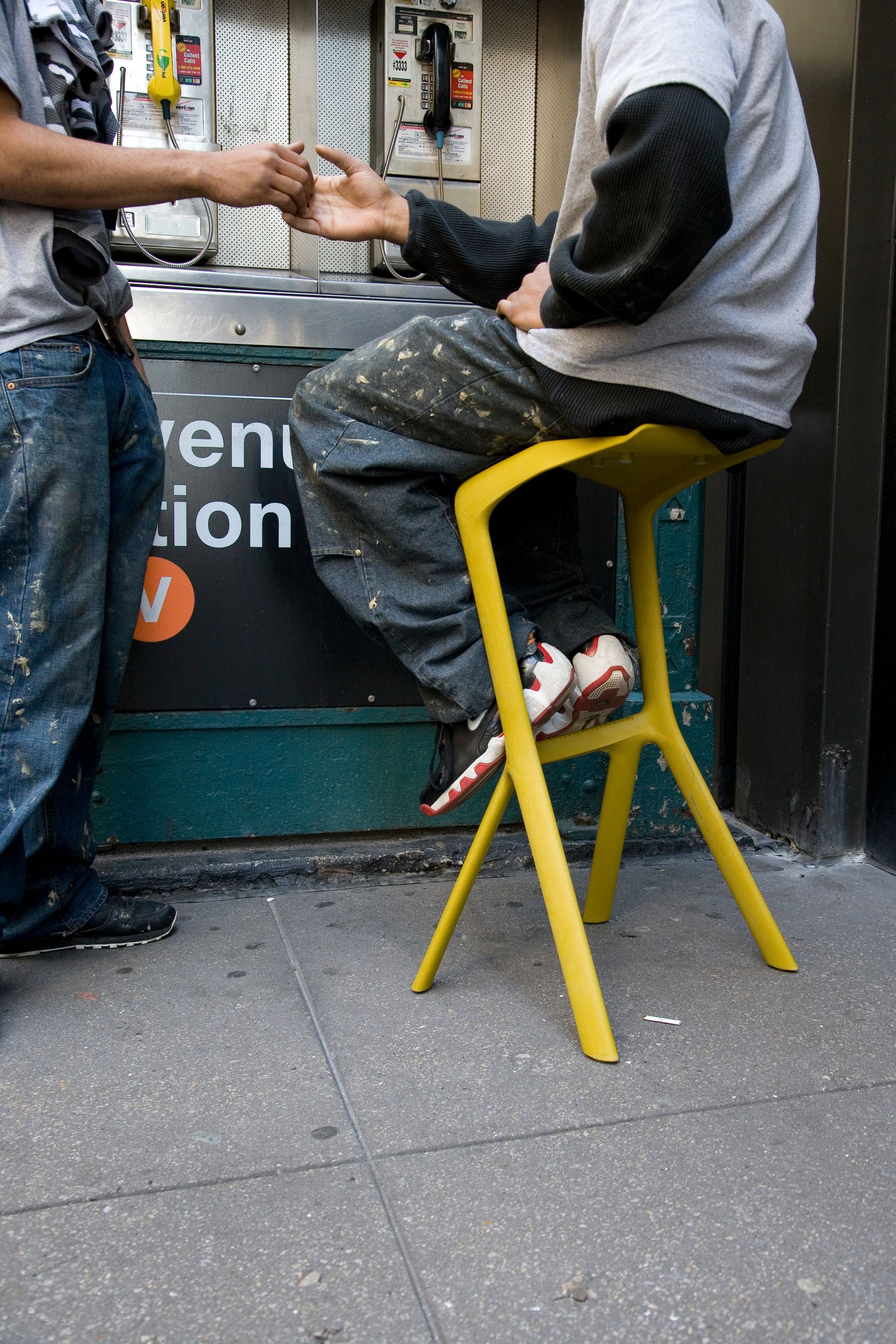
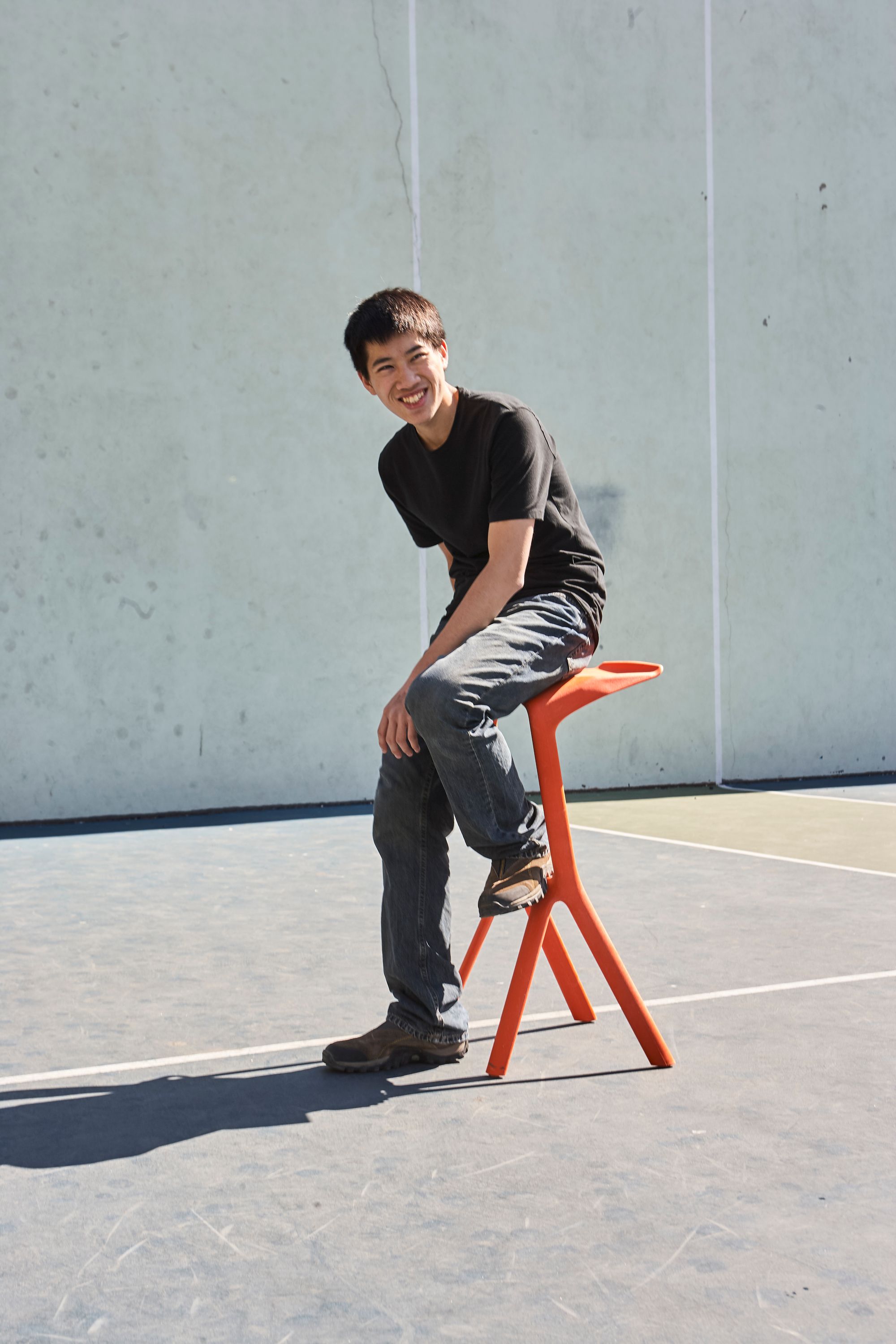
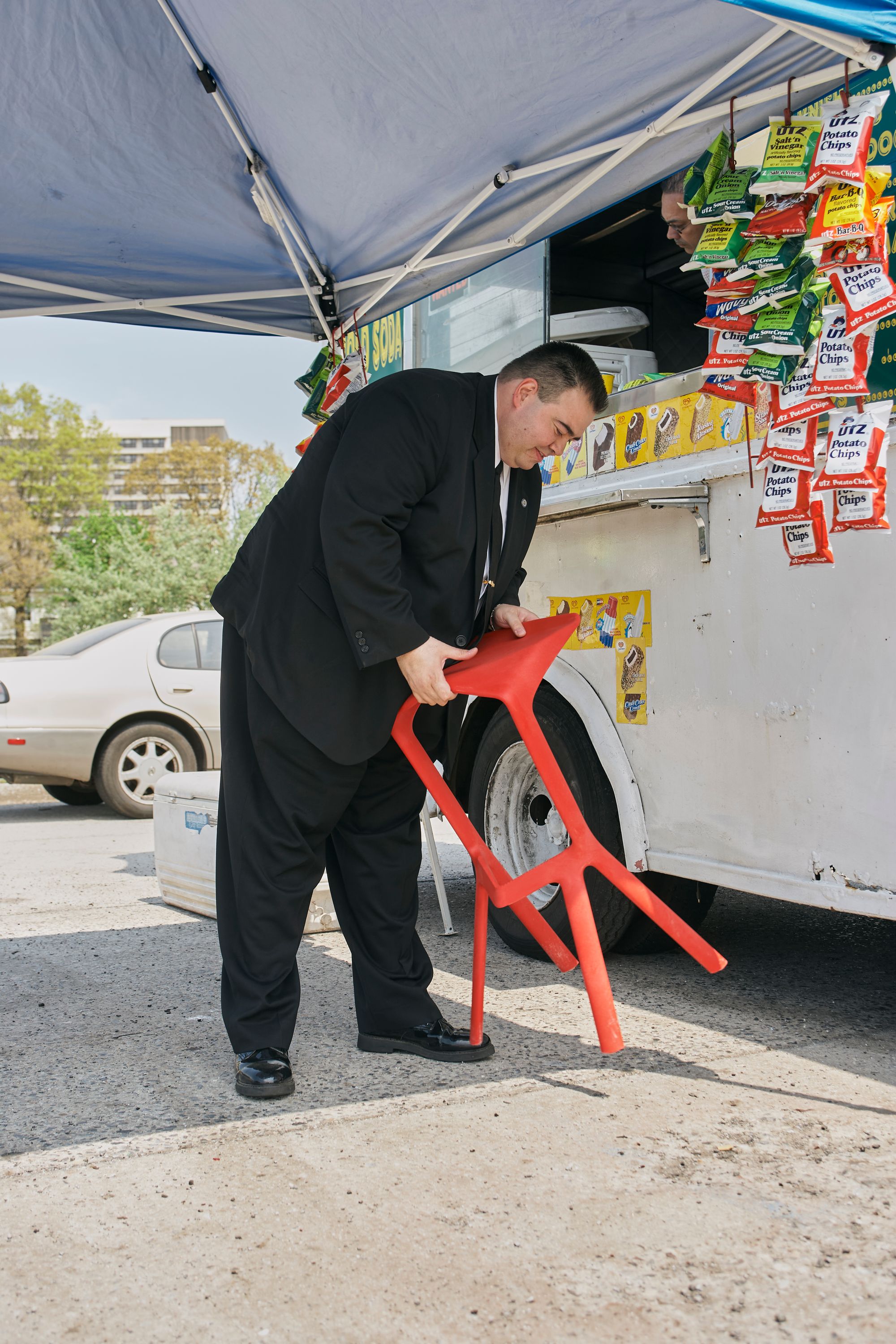
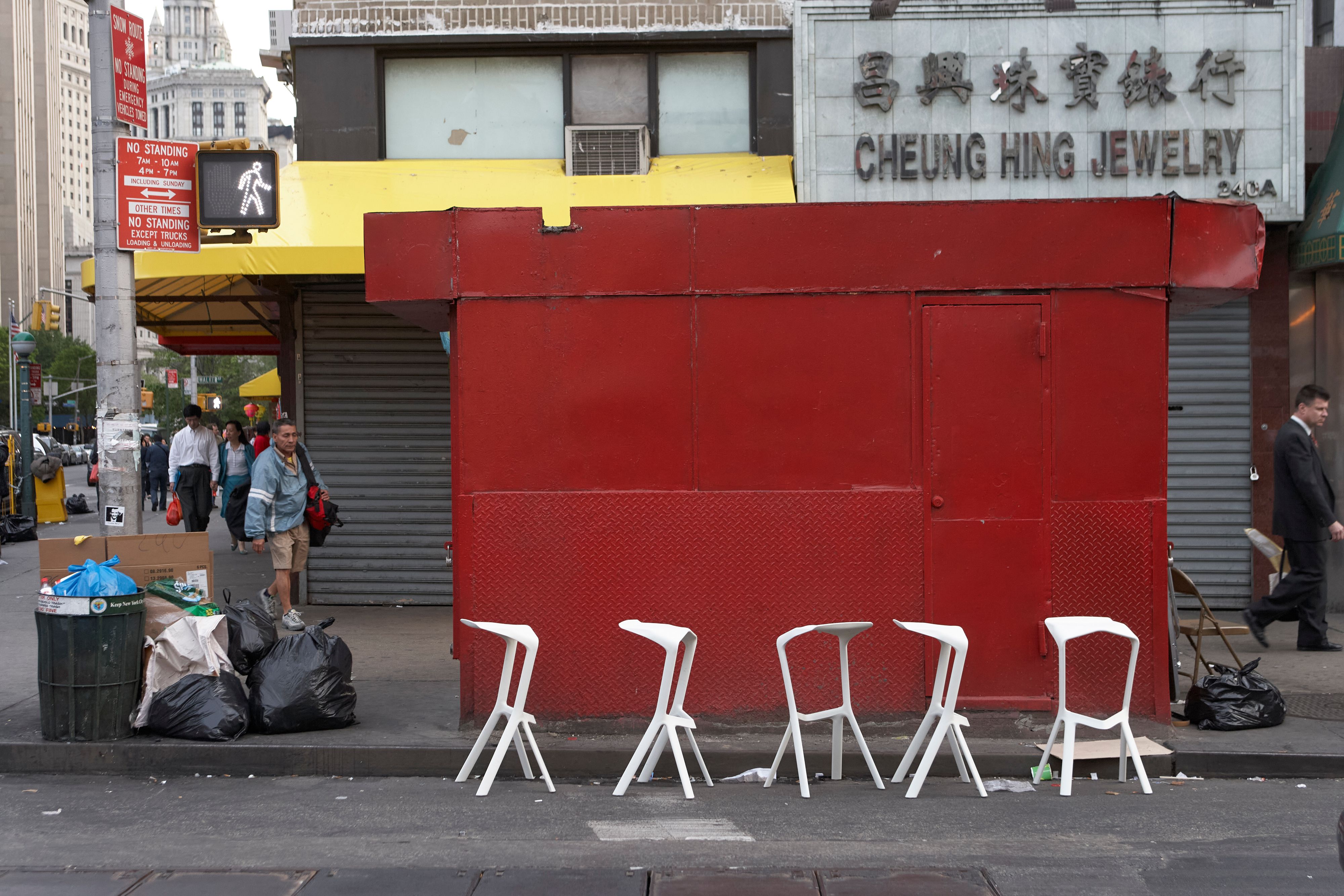
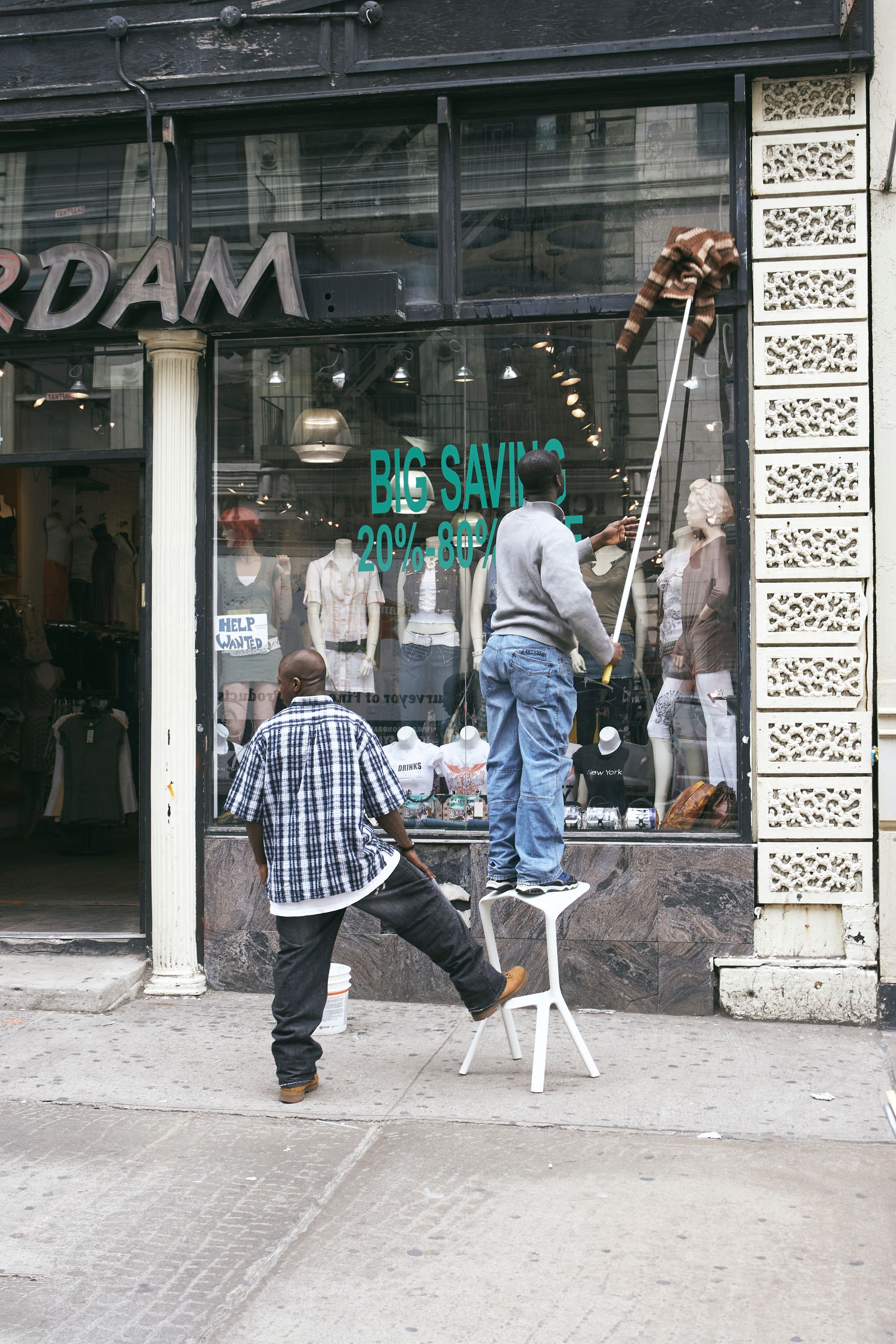
Konstantin Grcic is responsible for many of the 21st century’s most indelible objects, and the Miura stool is one of them. First released in 2005, it quickly became emblematic of a new kind of industrial thinking — rigorous yet playful, utilitarian yet sculptural. Nearly two decades later, PIN–UP has unearthed a selection of rare, never-before-seen photographs by Florian Böhm from 2006, originally shot for a book, capturing the Miura on the streets of Manhattan, Brooklyn, and the Rockaways: images of a New York that feels both familiar and strangely distant, and of a design object that quietly defined an era.
To understand why the Miura still matters today, it helps to look at its designer. Over the past three decades, Grcic has reshaped industrial design. He first drew attention in the mid-1990s with sculptural pieces for ClassiCon and, of course, the Mayday lamp for Flos (1999) — a semi-portable light inspired by mechanics’ worklights. Mayday remains a bestseller, and for good reason: it demonstrates Grcic’s distinctive mix of playful appropriation, practical utility, and technical precision. It’s what earned him a reputation as the “Castiglioni of the new millennium,” a designer for whom ergonomics, material innovation, and cultural reference converge in a single object — whether it’s a chair, a table, or, say, a nylon fishing jacket for Prada.
Photography by Florian Böhm.
Among the many brands Grcic works with, Plank holds a special place. The Italian family business, long committed to experimental yet precise design, treats seating as the ultimate test of a designer’s intelligence. In a single object, the Miura balances experimentation with the deliberately familiar, drawing from sports, mass culture, and utilitarian forms while embedding a deep knowledge of twentieth-century design history. When Grcic delivered the Miura to Plank, it also shifted the company’s trajectory, paving the way for a series of now-iconic pieces — including the cantilevered Myto chair (2007, now in MoMA’s collection alongside the Miura and Mayday) and the lounge-hybrid Avus (2011), to name just two.
In retrospect, Grcic’s early-2000s work — and the Miura collection especially — foreshadowed the millennial fascination with “normcore” and generic consumer design, making him the aesthetic‘s accidental godparent, but without any of the detachment. He wasn’t designing with broader cultural trends in mind. “I designed the stool within the scope of my own abilities, without much awareness of the wider global context in which it would one day be viewed,” he says.
Photography by Florian Böhm.
Photography by Florian Böhm.
Photography by Florian Böhm.
Photography by Florian Böhm.
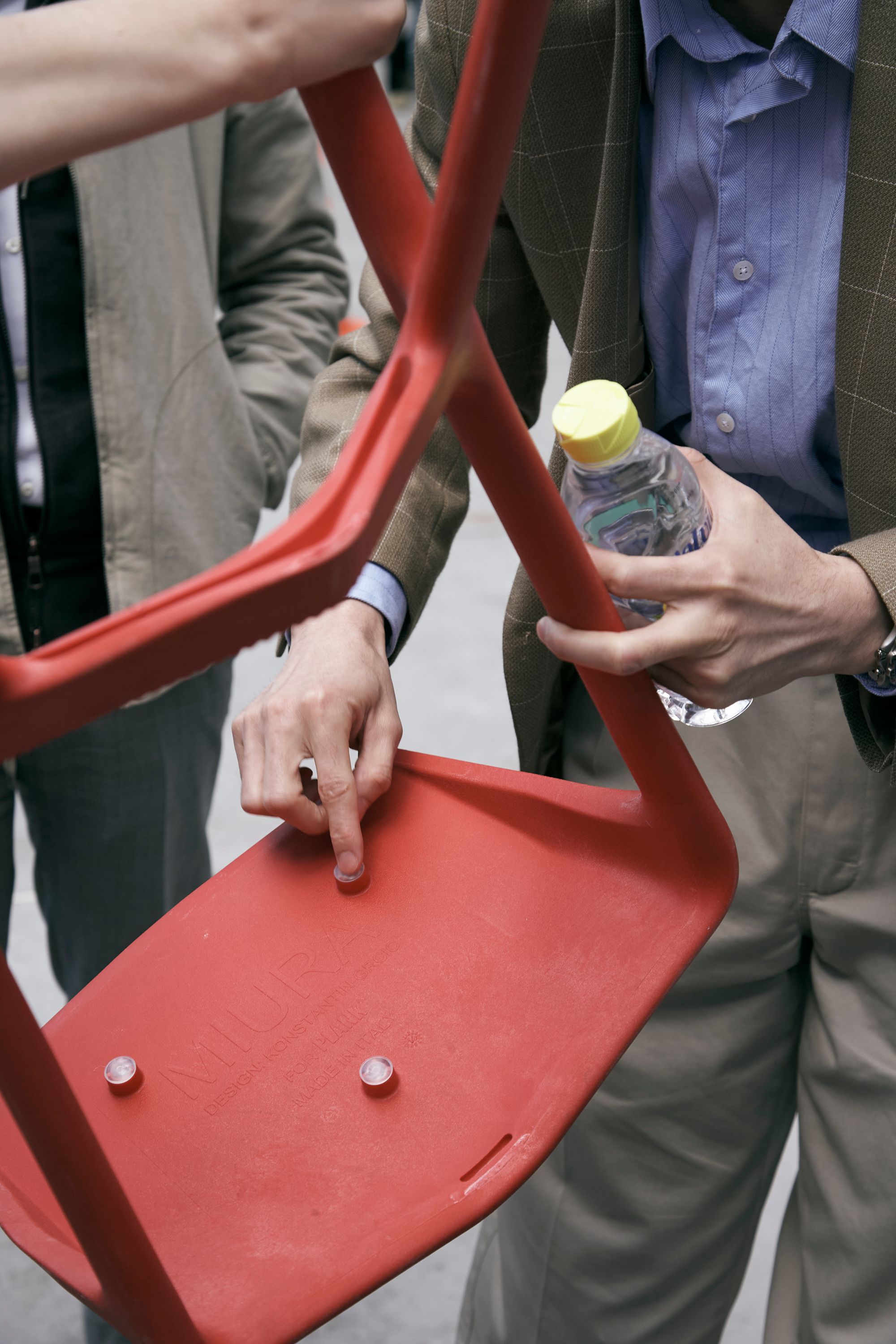
Photography by Florian Böhm.
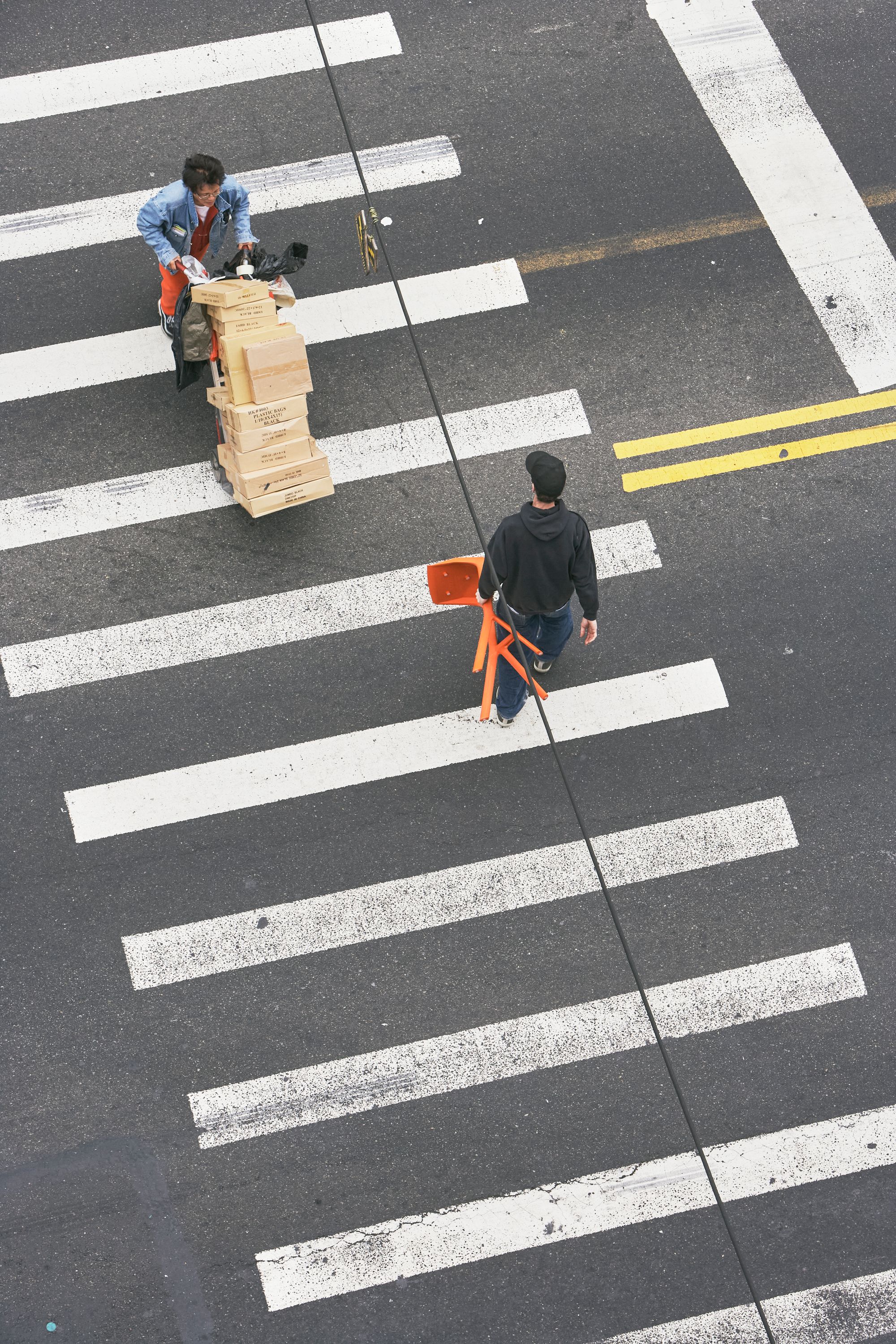
Photography by Florian Böhm.
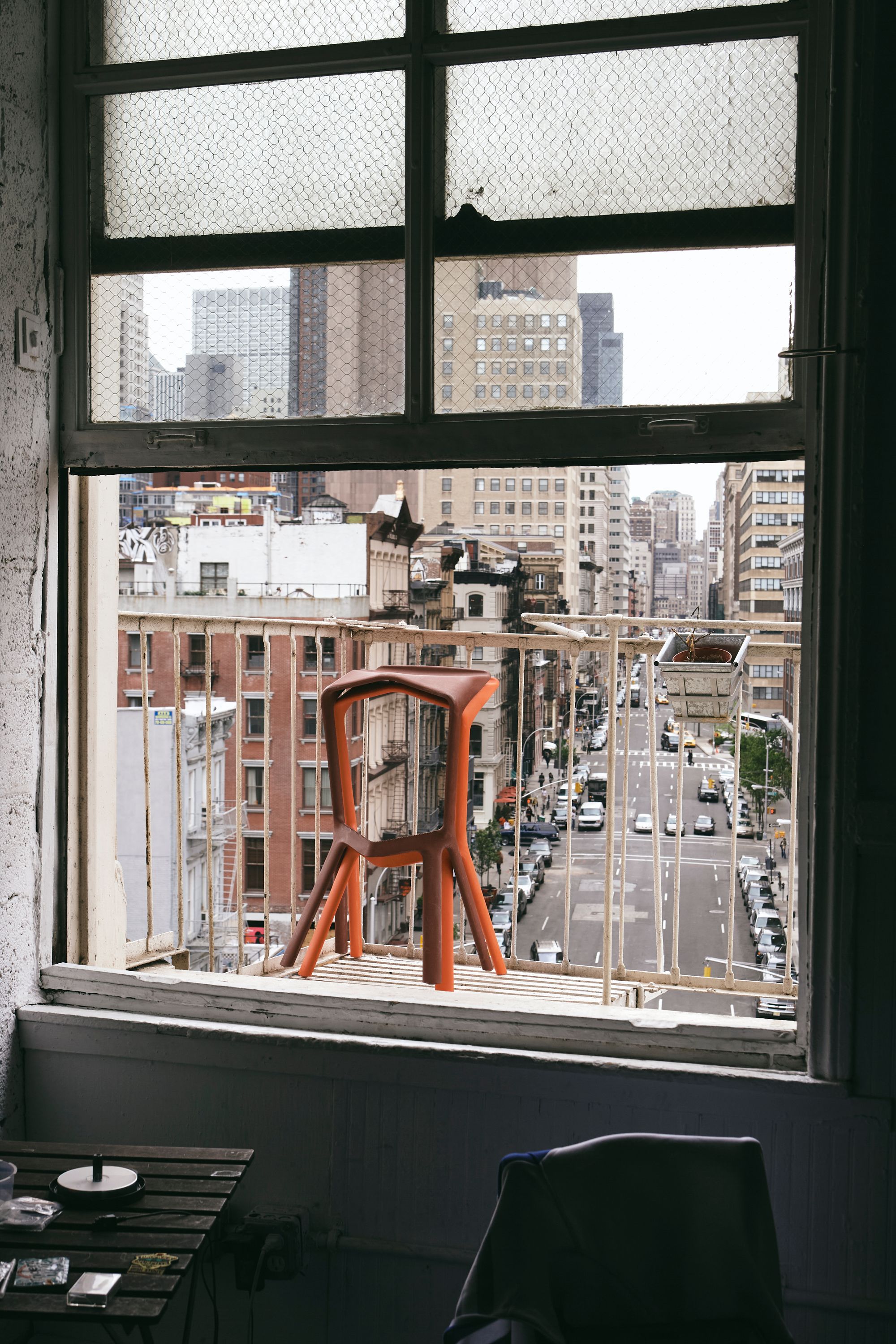
That same lack of cynicism and quiet sense of joy runs through both the objects and the photographs themselves. “I remember living with dozens of Miura stools in my small apartment on Spring Street for weeks,” Böhm recalls, “feeling a bit like a dog sitter, taking the stools out for a walk every day.” They shot thousands of images across New York, injecting the chairs into the urban landscape, roaming the city with a trolley and staging small, abstract interventions to disrupt pedestrian flow. Unexpected moments followed — helping window cleaners on Broadway reach higher windows, improvising scenes in Brooklyn, even meeting Elmo from Sesame Street. “Looking back, it was a rare moment of complete creative freedom — playful, improvised, and free from external pressure or social-media expectations,” Böhm recalls. “What began with almost nothing became one of my most productive projects.”
Today, Grcic remains as active as ever: creative director of Mattiazzi, a position he shares with Böhm, developing his own line 25kg, and continuing collaborations with brands including BD Barcelona, Flos, Kettal, Laufen, Magis, Muji, and Vitra. And yet Böhm’s photographs from twenty years ago reveal just how thoroughly Grcic’s approach has already seeped into the mainstream — so thoroughly, in fact, that its lineage is no longer always recognized. “Florian’s photographs evoke a gentle yearning for the ease and freedom of that era,” Grcic reflects.
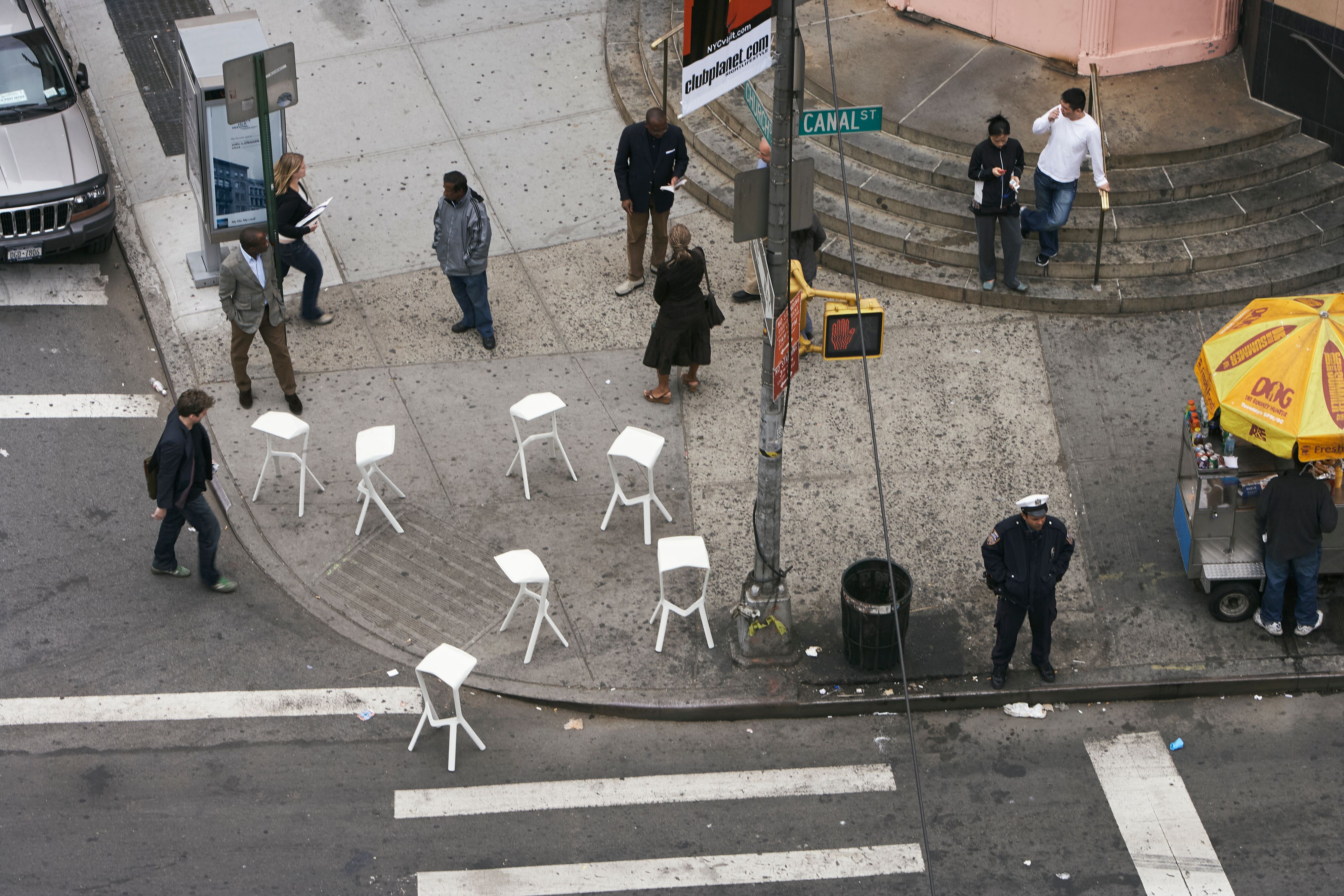
Photography by Florian Böhm.
Photography by Florian Böhm.
Photography by Florian Böhm.
Photography by Florian Böhm.
At a moment when hyper-bourgeoisification in object design seems to be standing on its last brass leg, Grcic’s hyper-focus on form, material, and cultural intelligence feels more relevant than ever. It is a reminder to younger contemporaries to not revel in nostalgia, but to look more carefully at the world around them. As Grcic once told PIN–UP, “Looking to the future doesn’t start from a blank sheet of paper; in order to see the future we must first assess what there is right in front of us.”
Photography by Florian Böhm.
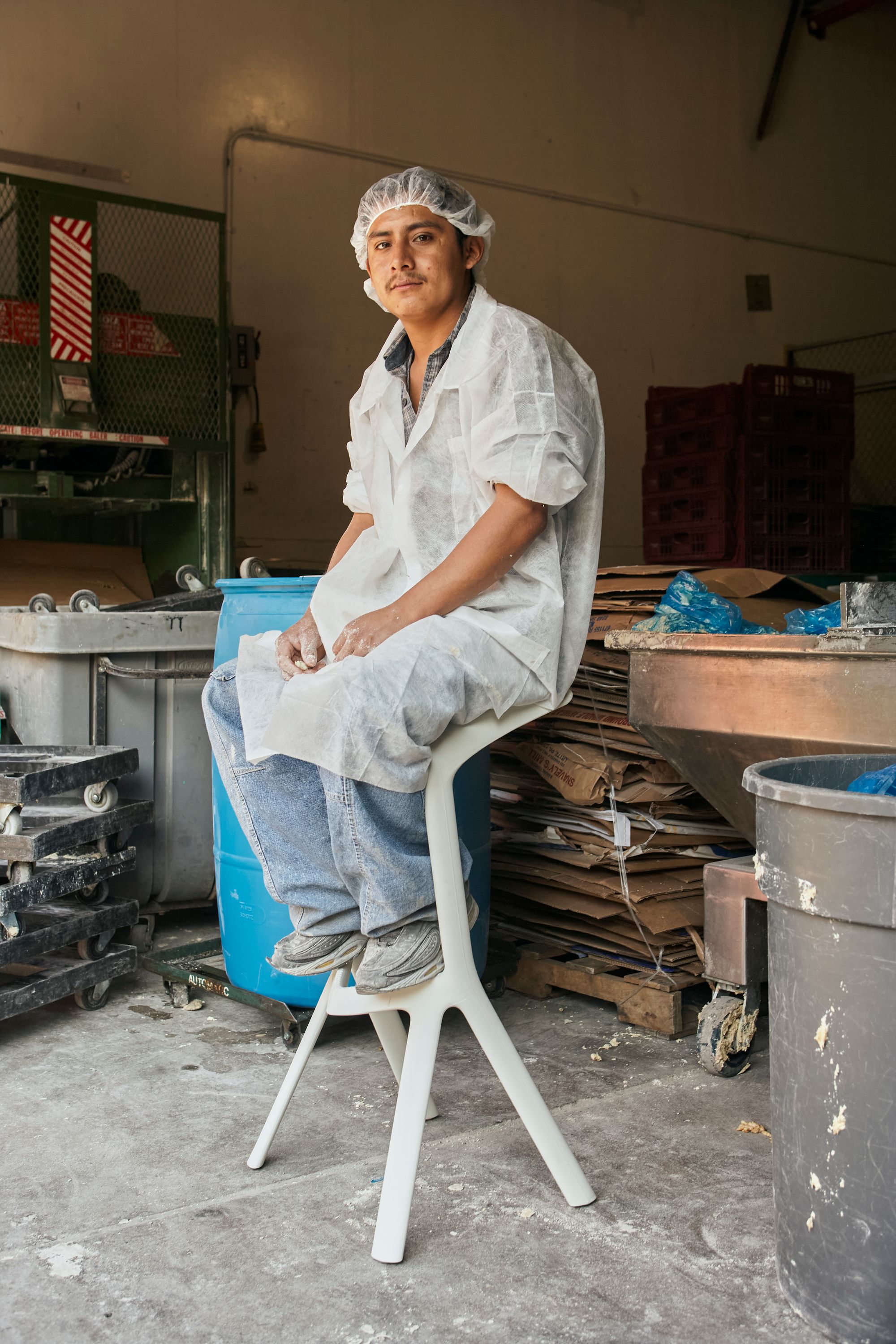
Photography by Florian Böhm.

Photography by Florian Böhm.
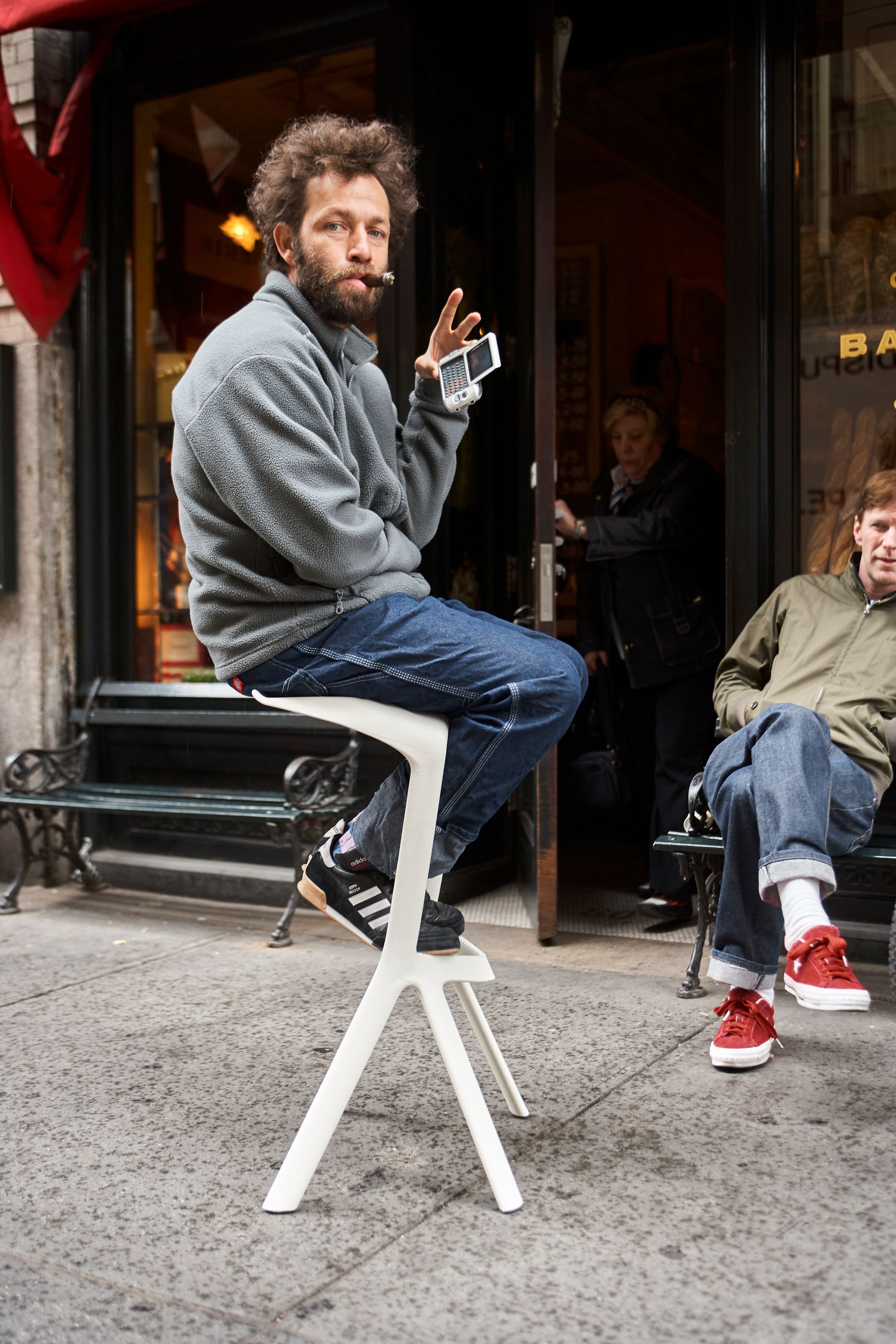
Photography by Florian Böhm.
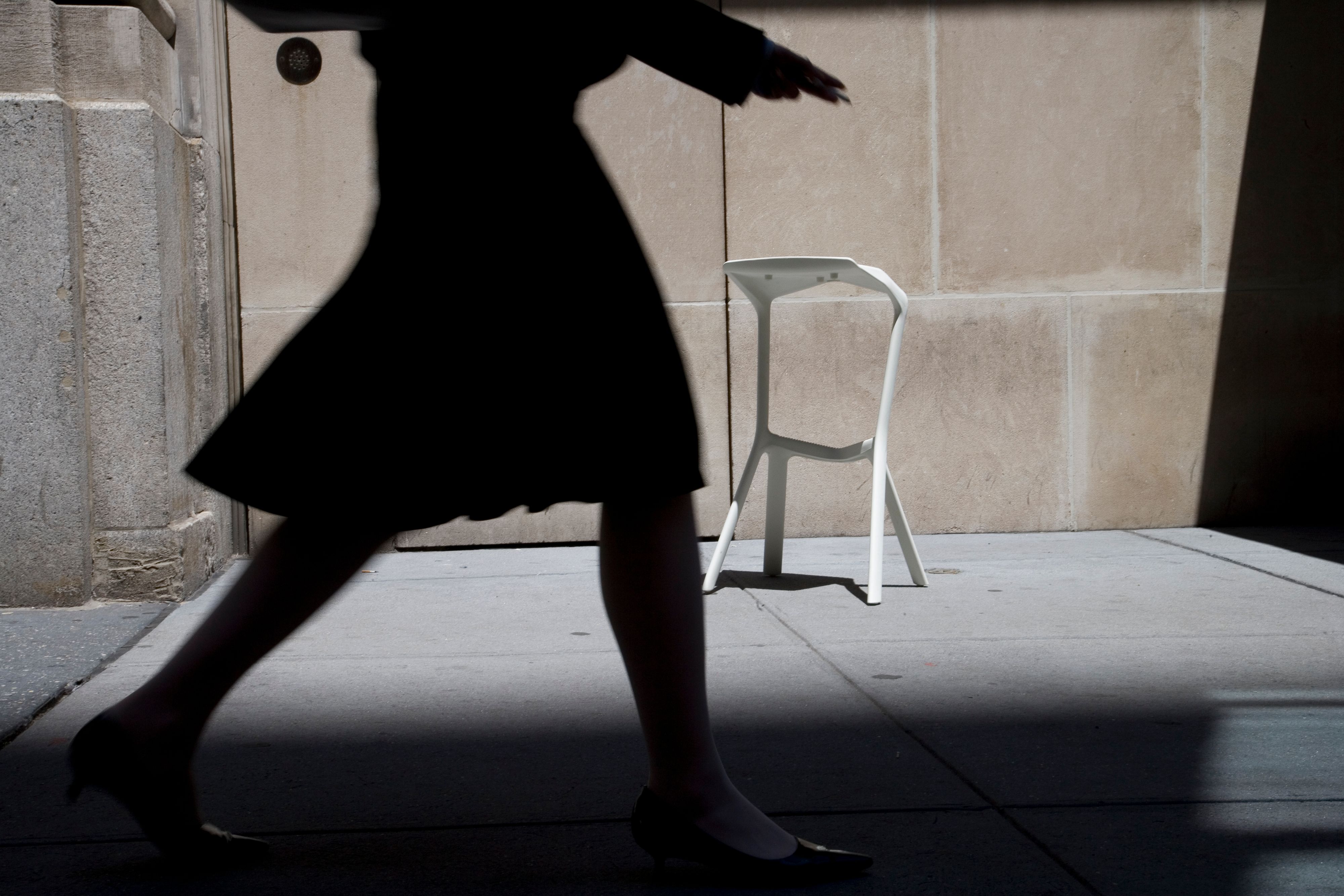
Photography by Florian Böhm.