MOLTENI&C

A Family in Chairs

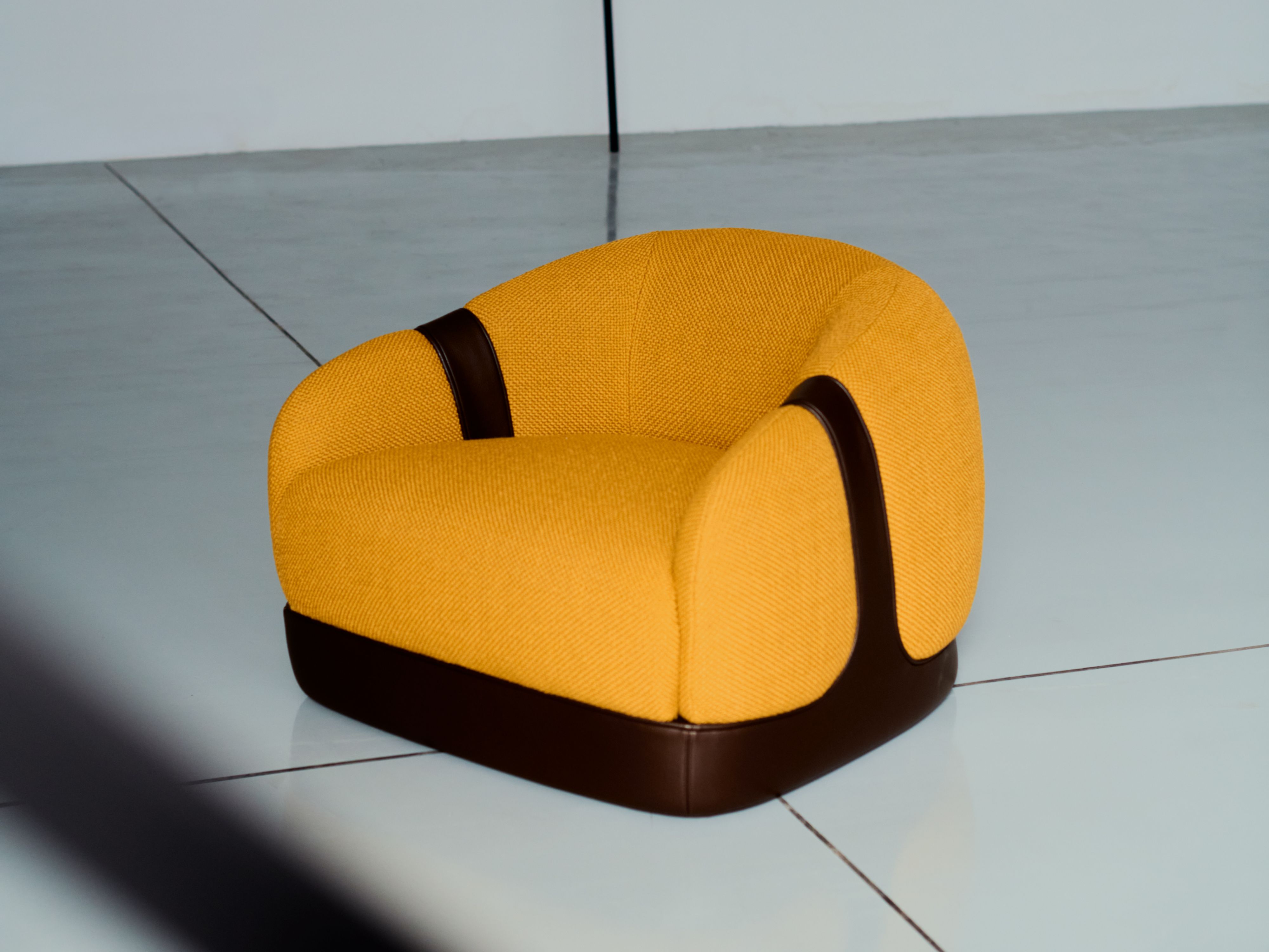
CRISTIÁN MOHADED, CORSETTO ARMCHAIR, 2026
Corsetto is a very sculptural piece. The leather structure wraps the chair almost like a corset, embracing the generous volume of the seat. It gives the object a balance between softness and strength — a cocoon-like comfort, but with a very clear personality. Cristián is based in Buenos Aires and brings a very young, direct approach to objects. When we first saw his work — including a project he had done for Loro Piana — we immediately felt that his sensibility could contribute something new to the Molteni world, and that it would also resonate well with the vision Vincent Van Duysen has developed for the collection. This is also one of his first projects produced in series with an industrial manufacturer. Before that he had mainly worked on made-to-order pieces, including projects for Louis Vuitton. For Corsetto he developed around ten prototypes before we arrived at the final balance of structure and comfort. The name itself carries a sensual note from history, but the object remains very versatile. It can shift from neutral tones to more vibrant colors while maintaining its sculptural presence. It might even evolve into a sofa in the future.”

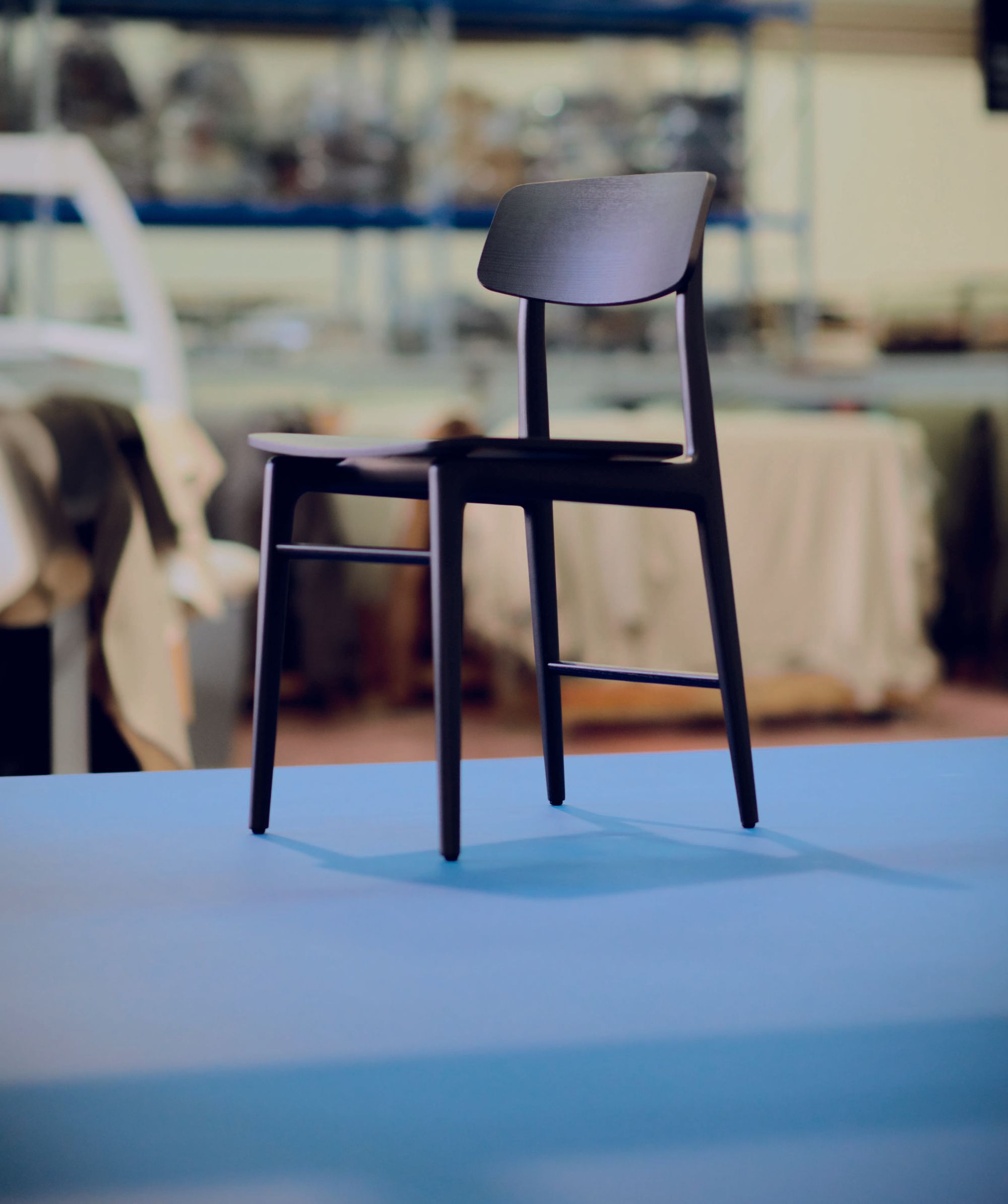
At the Molteni&C headquarters in Giussano, in the Brianza region north of Milan — the historic heart of Italy’s furniture industry — chairs tell the story of a family. Not just the Molteni family, who have run the company since its founding in 1934, but a larger design family formed over decades through collaborations with architects and designers from around the world. Photographed by Arianna Lago inside the factory where they are made, the chairs assembled in this series trace that lineage. From masters such as Afra and Tobia Scarpa and Aldo Rossi to more recent voices including Patricia Urquiola, Jasper Morrison, Michael Anastassiades, and, most recently, Argentinian designer Cristián Mohaded, each piece reflects a moment in the evolving dialogue between Molteni&C and the designers it invites into its orbit. For Molteni&C, chairs have always been a privileged object. Few pieces of furniture require such a balance of engineering, comfort, proportion, and character. They must respond not only to the body but also to shifting ways of living — something architects, with their acute awareness of social change and spatial needs, often understand instinctively. That is why Molteni&C has long cultivated close relationships with architects, including Vincent Van Duysen, who ten years ago became Molteni&C’s creative director. Van Duysen has created a more unified vision of the home for Molteni&C — one in which objects, architecture, and atmosphere form one coherent world. Each of the 13 chairs in this selection is introduced through the personal reflections of Giulia Molteni, Chief Marketing Officer of the Molteni Group and daughter of chairman Carlo Molteni. Her words reveal how these objects form a kind of extended kinship: some rooted in Italian design heritage, others bringing new perspectives from different parts of the world, all contributing to the evolving identity of Molteni&C.

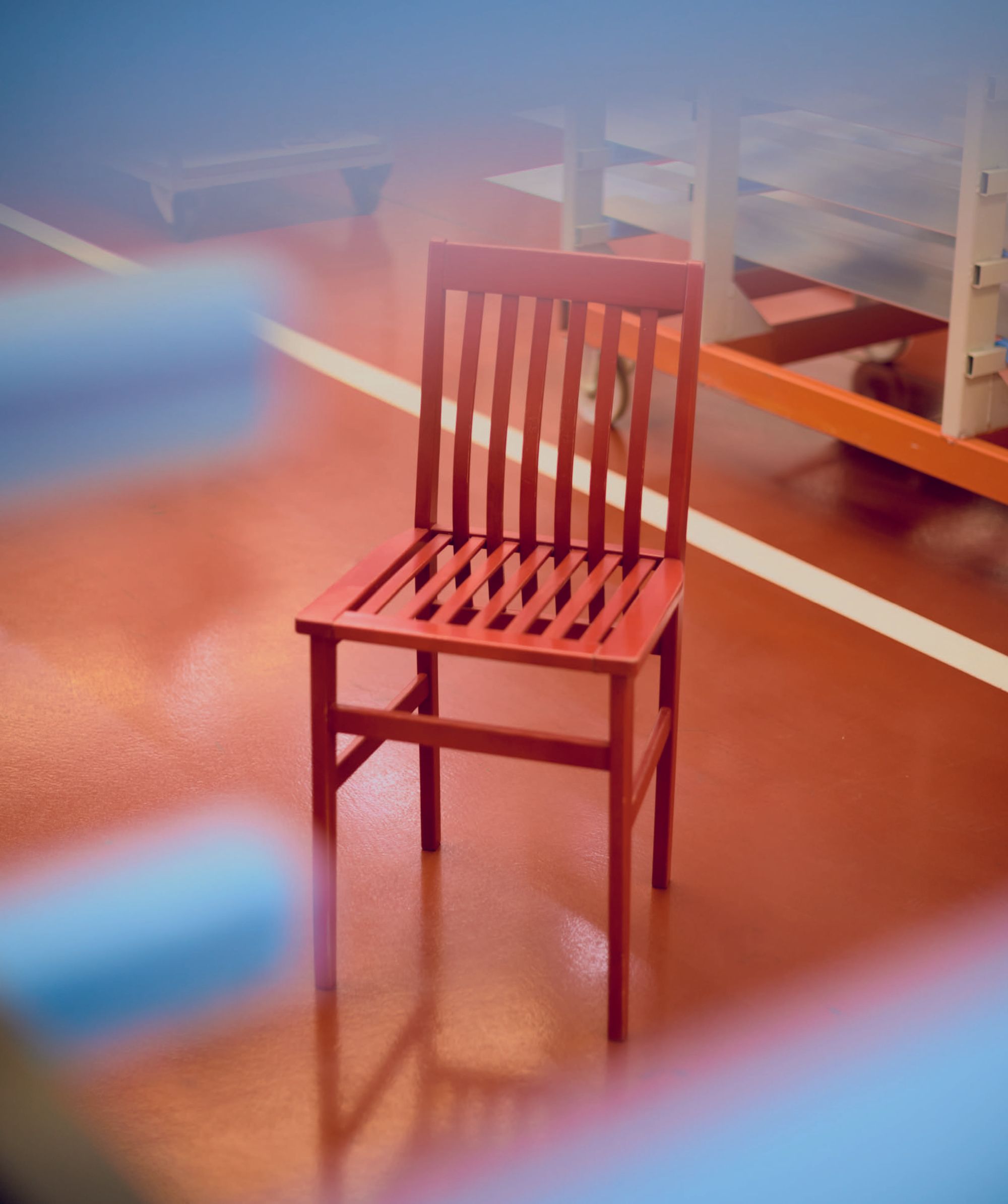
ALDO ROSSI, MILANO CHAIR, 1988

“Aldo Rossi was very important for Molteni&C. He introduced us to Luca Meda, and he also designed the Molteni family funeral house, so there was a deep personal relationship. I don’t remember him very well — he passed away when I was too young — but his presence was very strong in the company, and in the family. His Milano chair became a kind of manifesto of that period. At one point we even had a 30-meter-tall version installed in the company garden. It was very much in the spirit of Rossi: an object that also becomes a piece of architecture and a statement about the city of Milan. The Milano is also very interesting technically. The wooden strips of the backrest are not fixed but fitted into the frame, allowing a small flexibility because the human body naturally wants to bend. At the moment it is not in production, because it is quite complex to adapt to contemporary industrial manufacturing, but we are still studying how it might return.”
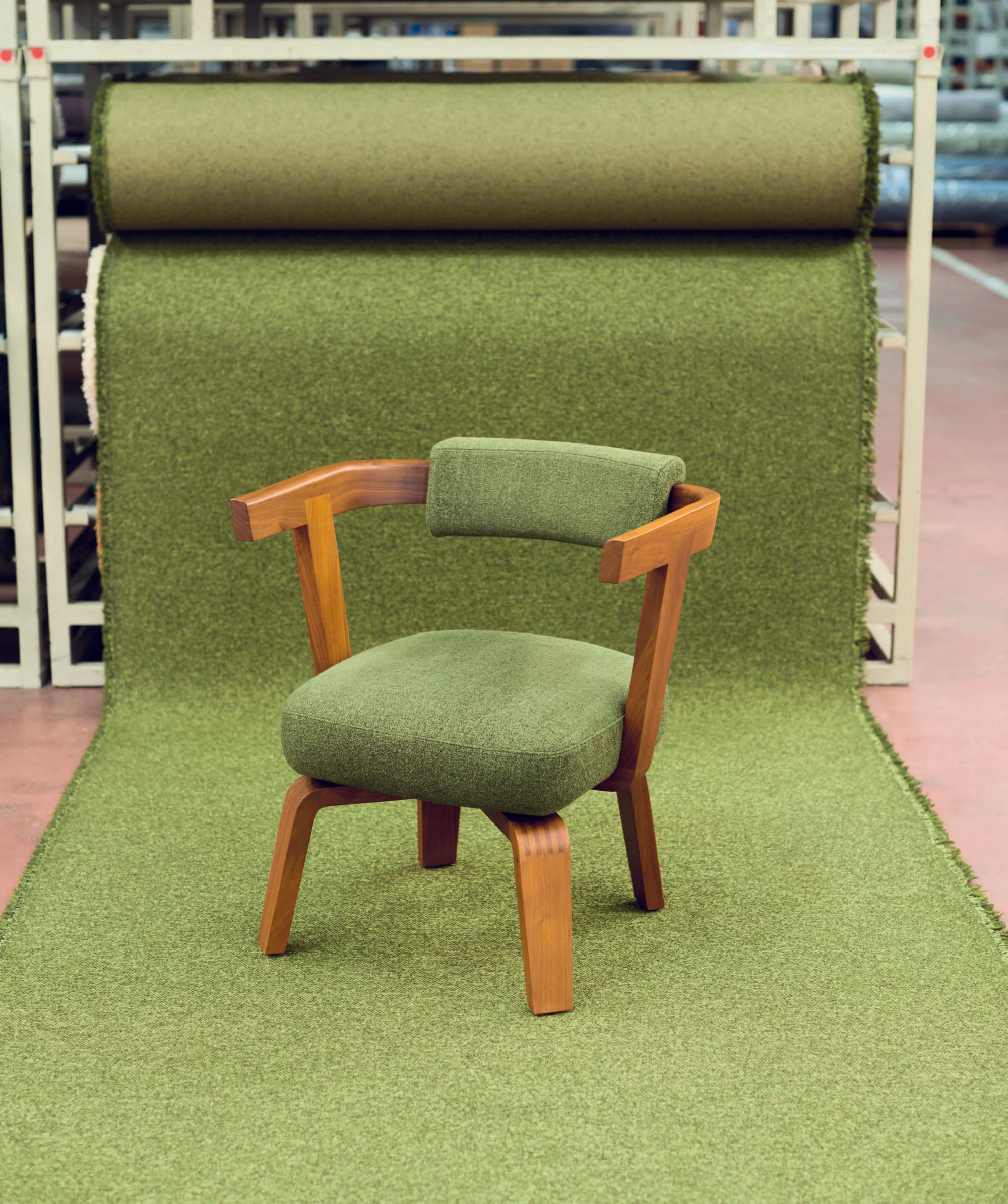
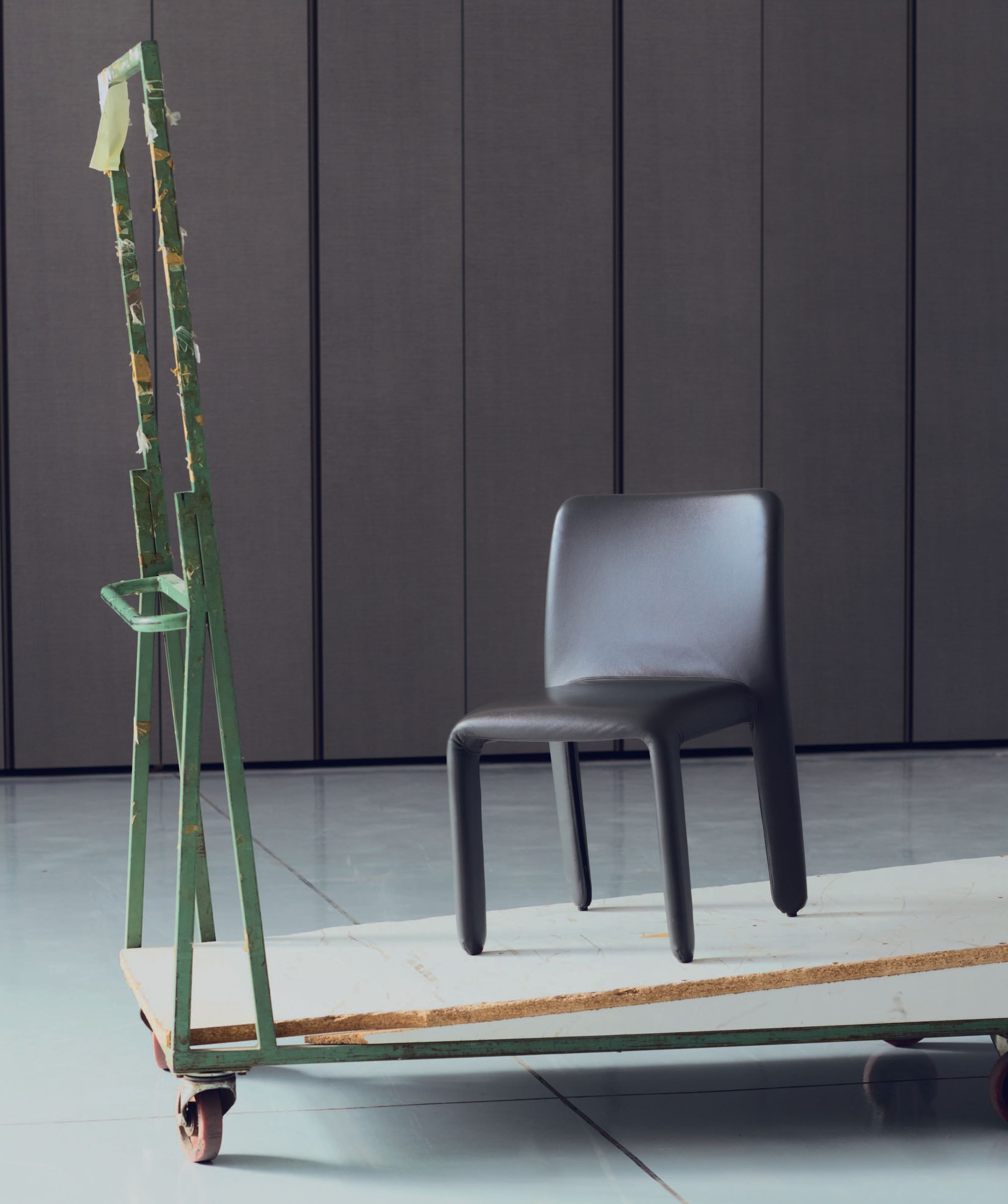
HERZOG & DE MEURON, PORTA VOLTA ARMCHAIR, 2023
“Herzog & de Meuron approach furniture in a very architectural way. They think about objects as part of a composition, in dialogue with the surrounding space. This chair originally came out of a specific architectural project: the reading rooms for the National Library of Israel in Jerusalem. For that project our office company UniFor worked very closely with Herzog & de Meuron, producing many custom elements — from partition systems to fixtures — so the collaboration developed very naturally. The chair was designed for people who might sit and read for many hours, so comfort was absolutely essential. The armband and removable backrest went through around ten different prototypes before we arrived at the right solution. They developed the first mock-ups in 3D and brought them to us, and together we refined the chair over more than a year. Later we adapted the design into living and dining versions for the Molteni&C residential collection. The name refers to Porta Volta, the neighborhood in Milan where the UniFor showroom, designed by Herzog & de Meuron, is located.

PATRICIA URQUIOLA, GLOVE-UP CHAIR, 2016
“Patricia Urquiola has been a very important designer for Molteni&C. She is a volcano of creativity and she brings enormous energy to the design process — working with her is always inspiring. The Glove-Up is the evolution of her earlier Glove chair, which introduced the idea of a structure that is ‘gloved’ by the fabric wrapping it. The chair has a very sinuous, soft character. The upholstery defines the shape, embracing the seat and backrest while keeping the overall structure extremely light. It’s a design that combines comfort with a very clear identity. Over time the project developed into a small family of upholstered pieces — including an armchair and even a bed, although the bed is no longer in production. The Glove-Up can be produced in both fabric and leather, which makes it very versatile within the Molteni&C collection.”

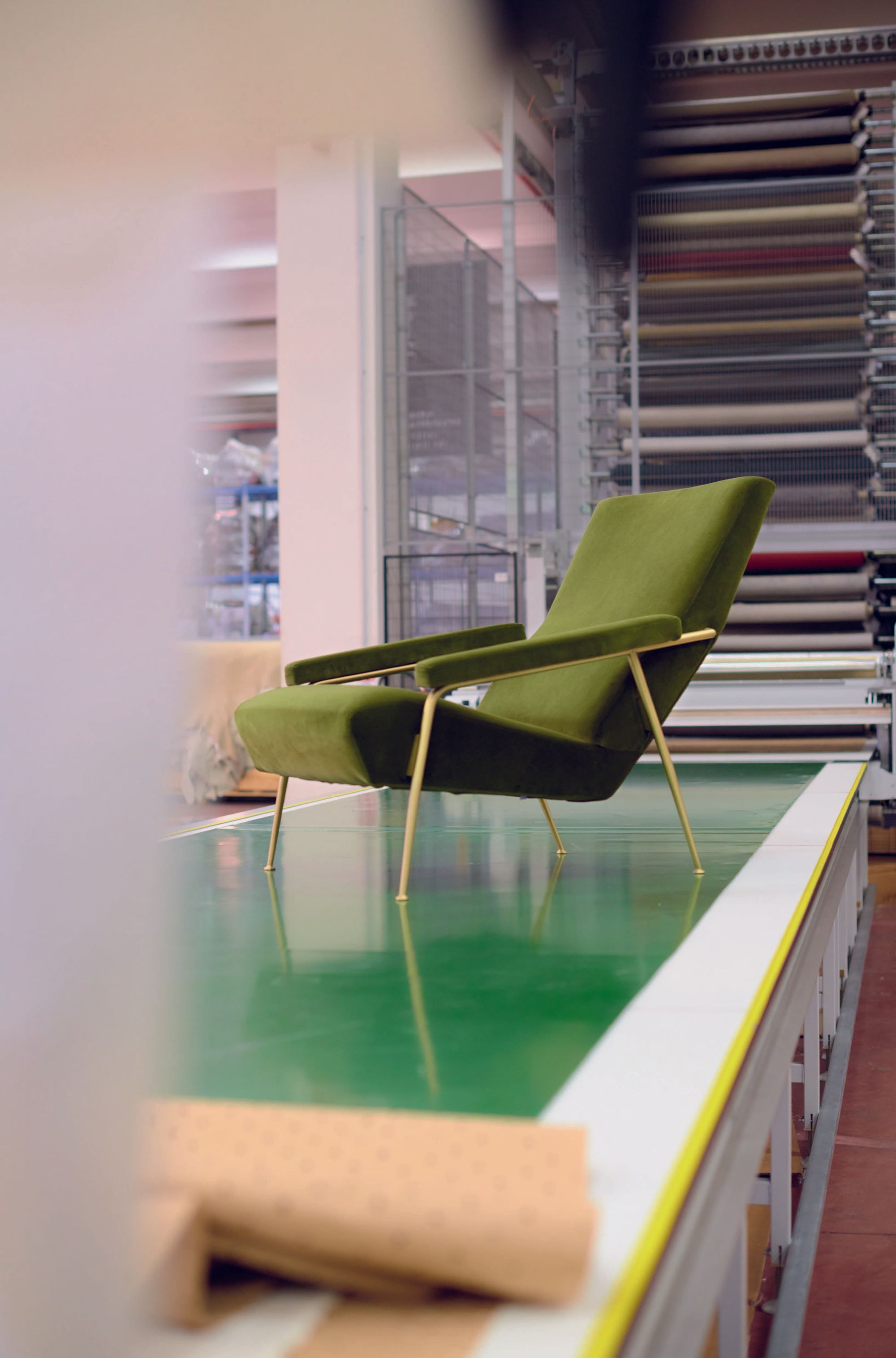
GIO PONTI, D.153.1 ARMCHAIR, 1953/2012
“This armchair was originally designed by Gio Ponti for his own home and studio on Via Dezza in Milan. Today it is one of the most successful pieces in our Gio Ponti re-edition collection. Our collaboration with the Gio Ponti Archives began in 2010. We worked closely with his grandson Salvatore Licitra, the curator of the archives. For us it was very important to bring back pieces that had never been produced in series, but that represent an essential part of Italian design heritage. Before putting any of them back into production, we spent a long time studying the archives, collecting original objects and prototypes to understand Ponti’s intentions as precisely as possible. This chair is a personal favorite of mine. I especially love the version upholstered in Punteggiato Rubelli, which Ponti used in his own house. I even have one in my bedroom. The bronze structure is very elegant, and there are wonderful letters from Ponti discussing the exact position of the armrests — whether they should angle slightly up or down.”

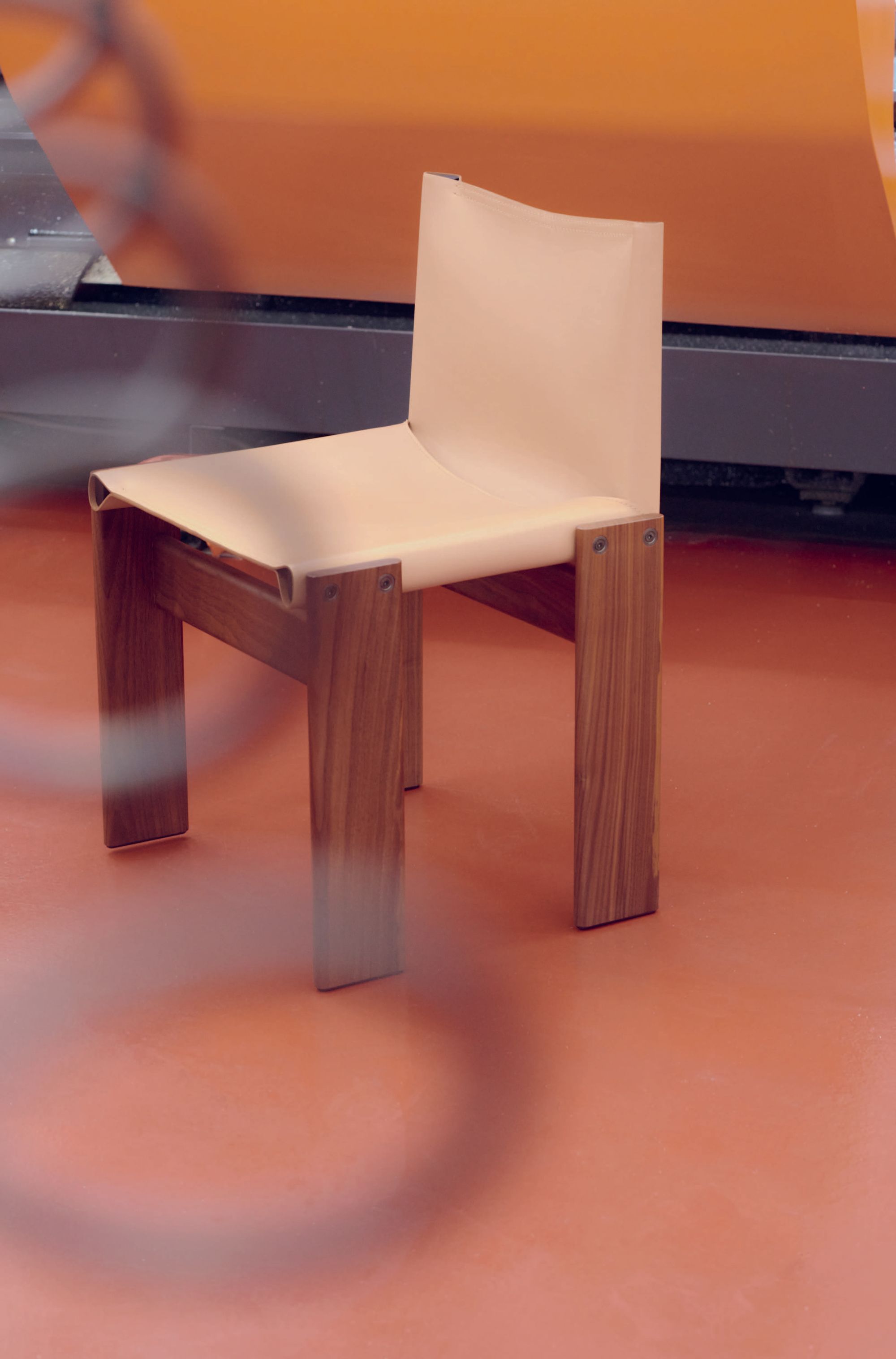
AFRA & TOBIA SCARPA, MONK CHAIR, 1973/2025
“The Monk was originally designed in 1973 for the Molteni family country house, which had been designed by Tito Agnoli. It was actually Afra and Tobia Scarpa’s first project for our family, and the chair reflects the very close relationship that developed through that. The design has a kind
of monastic simplicity, which is also where the name comes from. The structure is very clear: leather forms the seat and backrest, supported by slender steel tubes. Even the ‘M’ shape of the frame can be read as a small reference to Molteni, as can the name, Monk. I have very vivid memories of the Scarpas visiting our house. Tobia would often debate architectural details with my mother — I remember a long discussion about whether a window should overlook the garden. They would stay for lunch or dinner, and the atmosphere was always very lively. Today the Monk exists in both dining and lounge versions, and we recently also produced a special limited edition with Cabana magazine.”

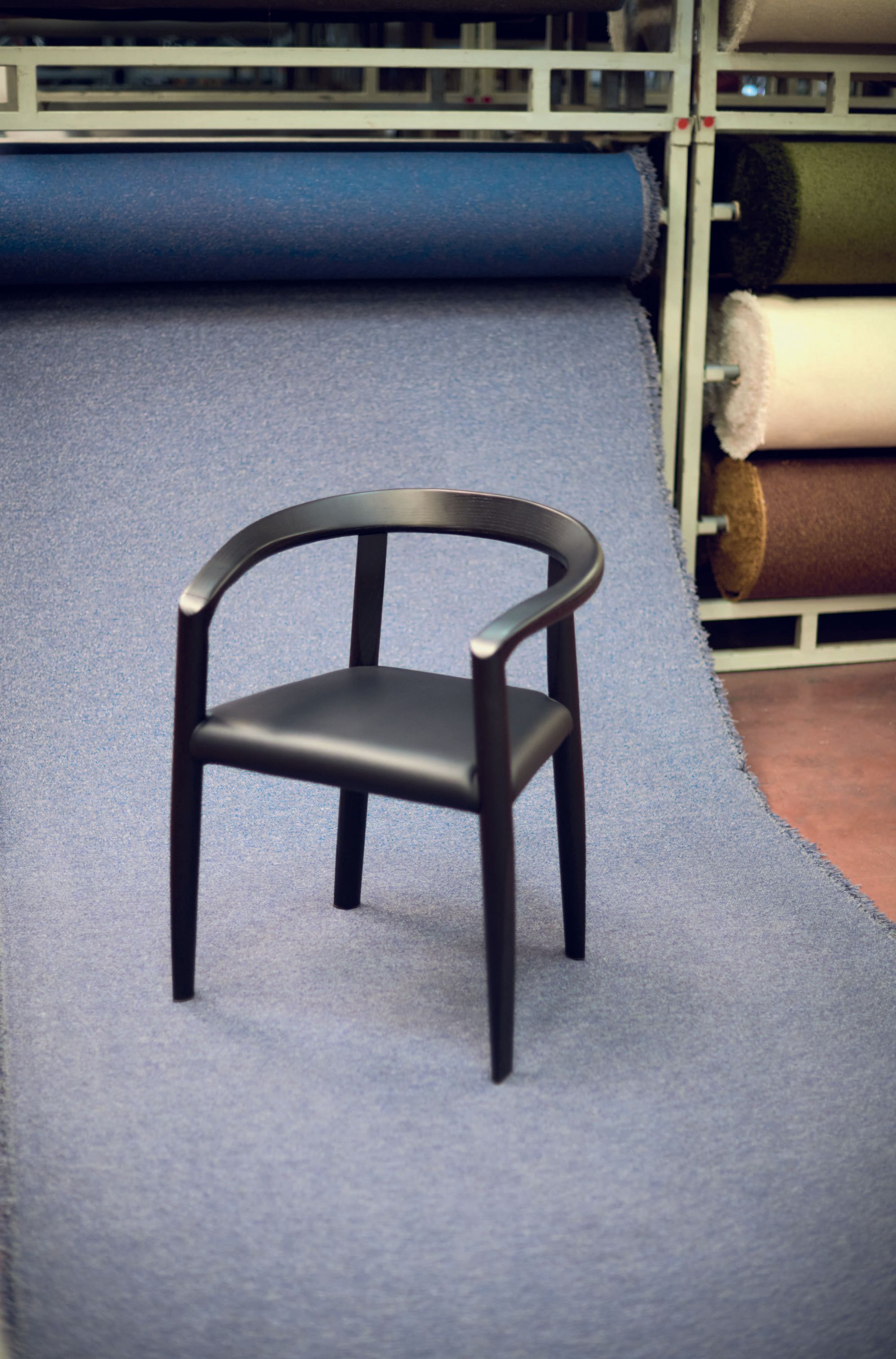
AFRA & TOBIA SCARPA, MISS CHAIR, 1986
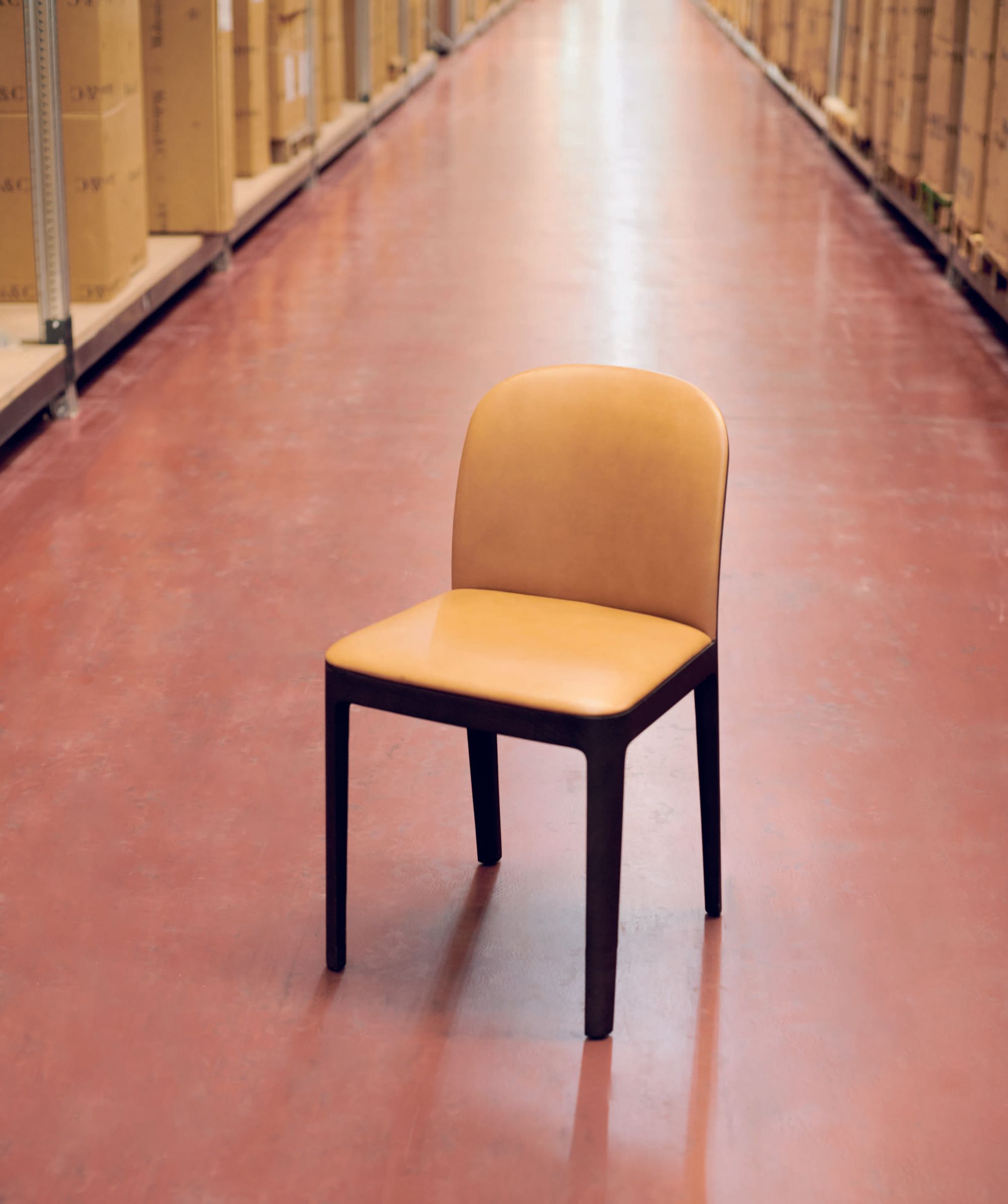
“The Miss is a very elegant chair. The legs are extremely slim but slightly splayed to ensure stability. The back legs continue upward to form the backrest, while the seat is inserted between the lines of the structure, creating a very light but precise construction. The design reinterprets the tradition of woven chairs, especially the Chiavarina chairs from Liguria. Afra and Tobia Scarpa translated that heritage of Italian craftsmanship into a more abstract and contemporary language. Originally the chair was produced in black with a woven seat, but later we introduced a leather version for greater comfort. Interestingly, the leather version now sells even more than the woven one. The name reflects the Scarpas’ sense of humor. Miss was imagined as the ‘signora’ of chairs: elegant and refined, almost like a lady.”

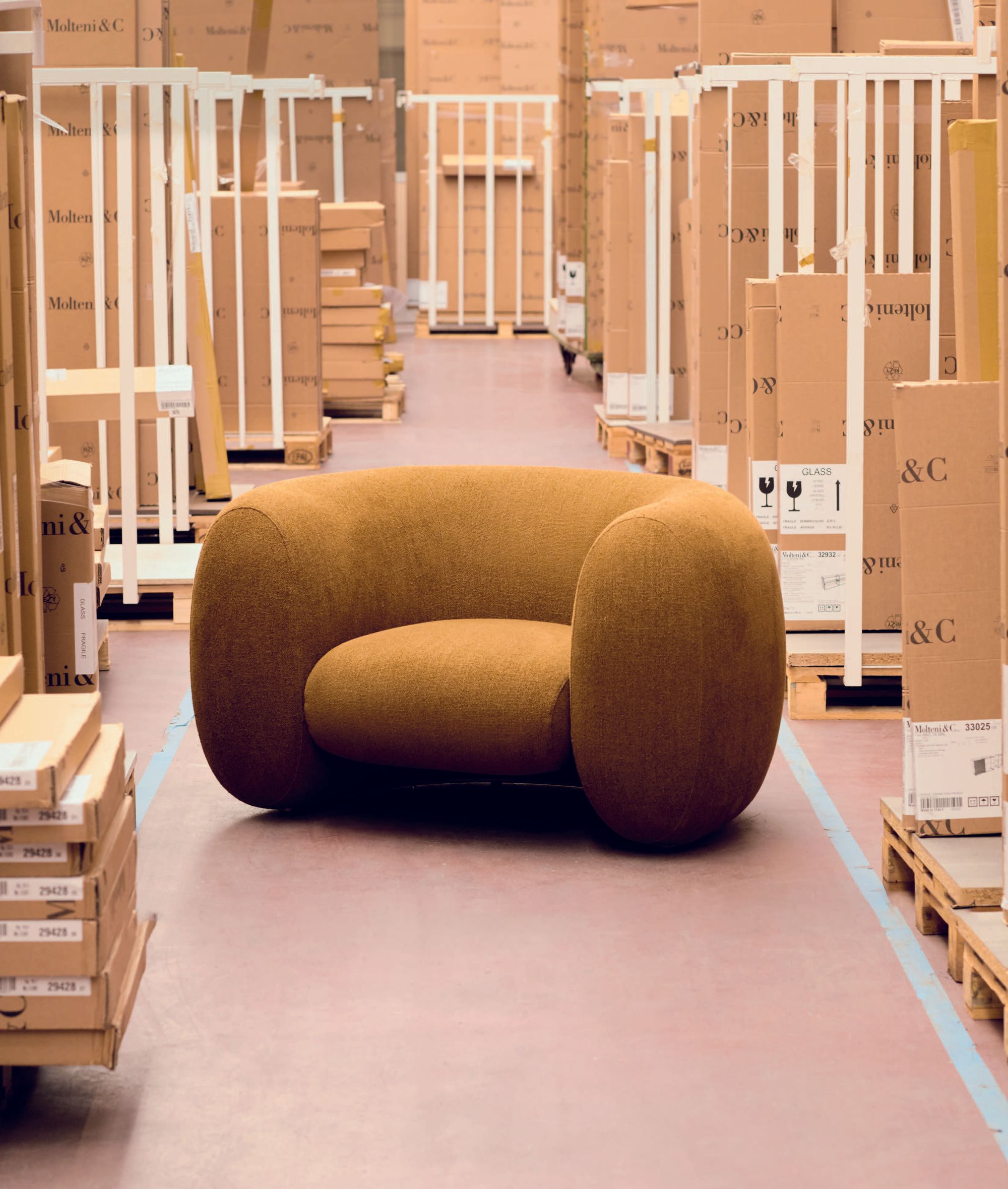
NAOTO FUKASAWA, CINNAMON ARMCHAIR, 2023
Cinnamon came from a very poetic idea. Around that time Naoto Fukasawa had just become a grandfather and was watching a lot of Japanese car-toons with his grandchildren. He was inspired by the personality of those big, gentle animals with large ears — characters that feel soft, welcoming, and protective. The Cinnamon is designed to embrace the body in that same way. When you sit in it, you feel almost wrapped by the shape, as if the object is welcoming you. Aesthetically it’s a very singular piece within the Molteni&C collection. The upholstery is made from an elastic jersey material, often presented in strong colors, which reinforces the softness and playful character of the design. This was our first project with Naoto Fukasawa. He’s since designed the Tuscany chaise longue for us, inspired by the rolling hills of the Tuscan landscape, and we are releasing a new project later this year.”

VINCENT VAN DUYSEN, JANET CHAIR, 2022
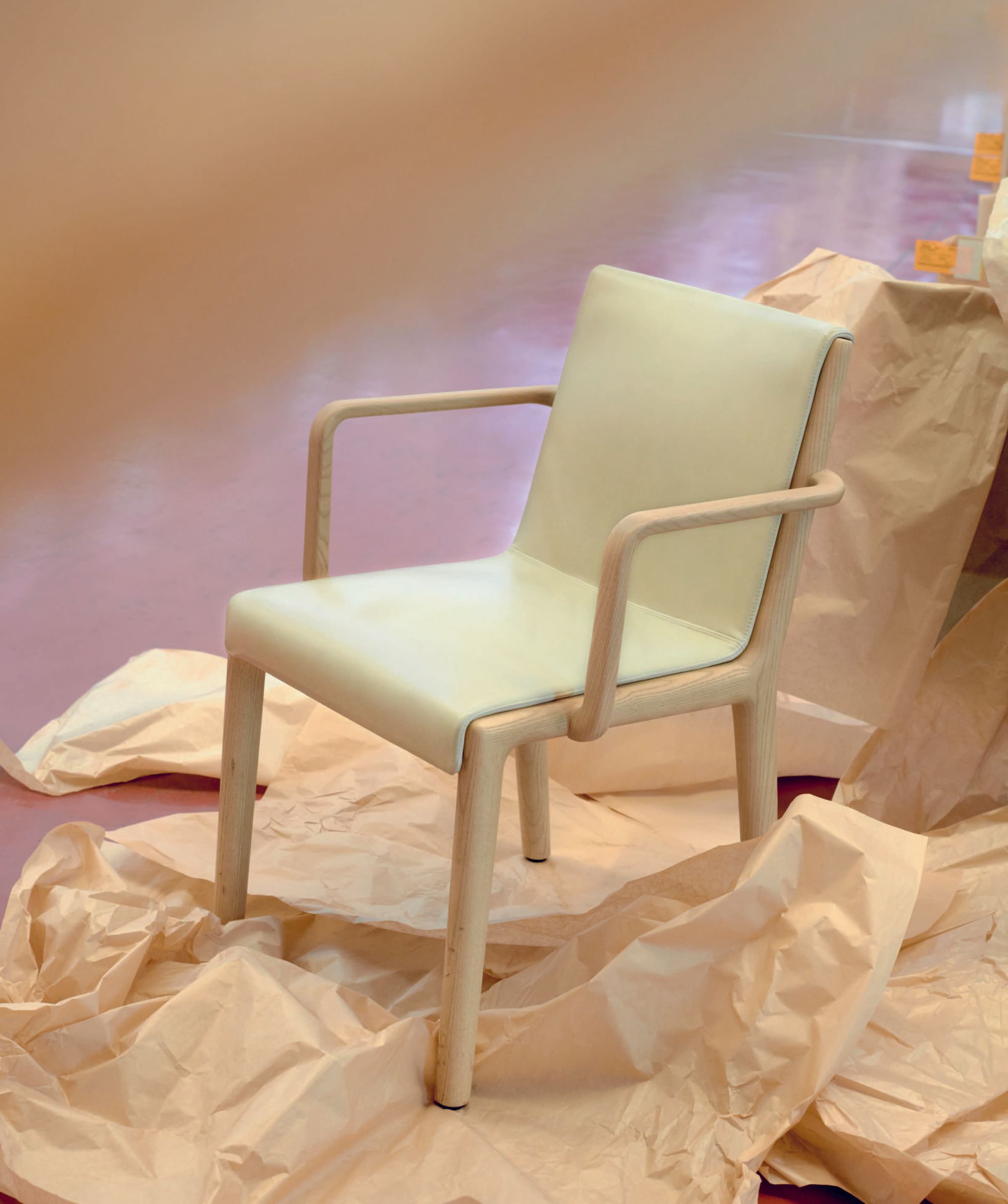
Janet was originally conceived in 2022 for the new Molteni Pavilion Vincent Van Duysen designed for the Molteni compound in Giussano, which is also home to our in-house restaurant operated by the Da Vittorio group. Vincent identified something that was missing in the Molteni&C chair family: a traditional chair with armrests, something very versatile that could work in many different interiors. The design reflects the Italian know-how of working with wood. The frame is made from solid wood with gently curved elements, which gives the chair very harmonious proportions. The leather upholstery adds softness and makes it extremely comfortable. It needed to be a chair that people could sit in for a long time. In many ways, the Janet chair represents Vincent’s vision for Molteni&C: elegant, understated, and able to live naturally alongside many different pieces in the collection.”

MICHAEL ANASTASSIADES, 1 2 3 CHAIR, 2024
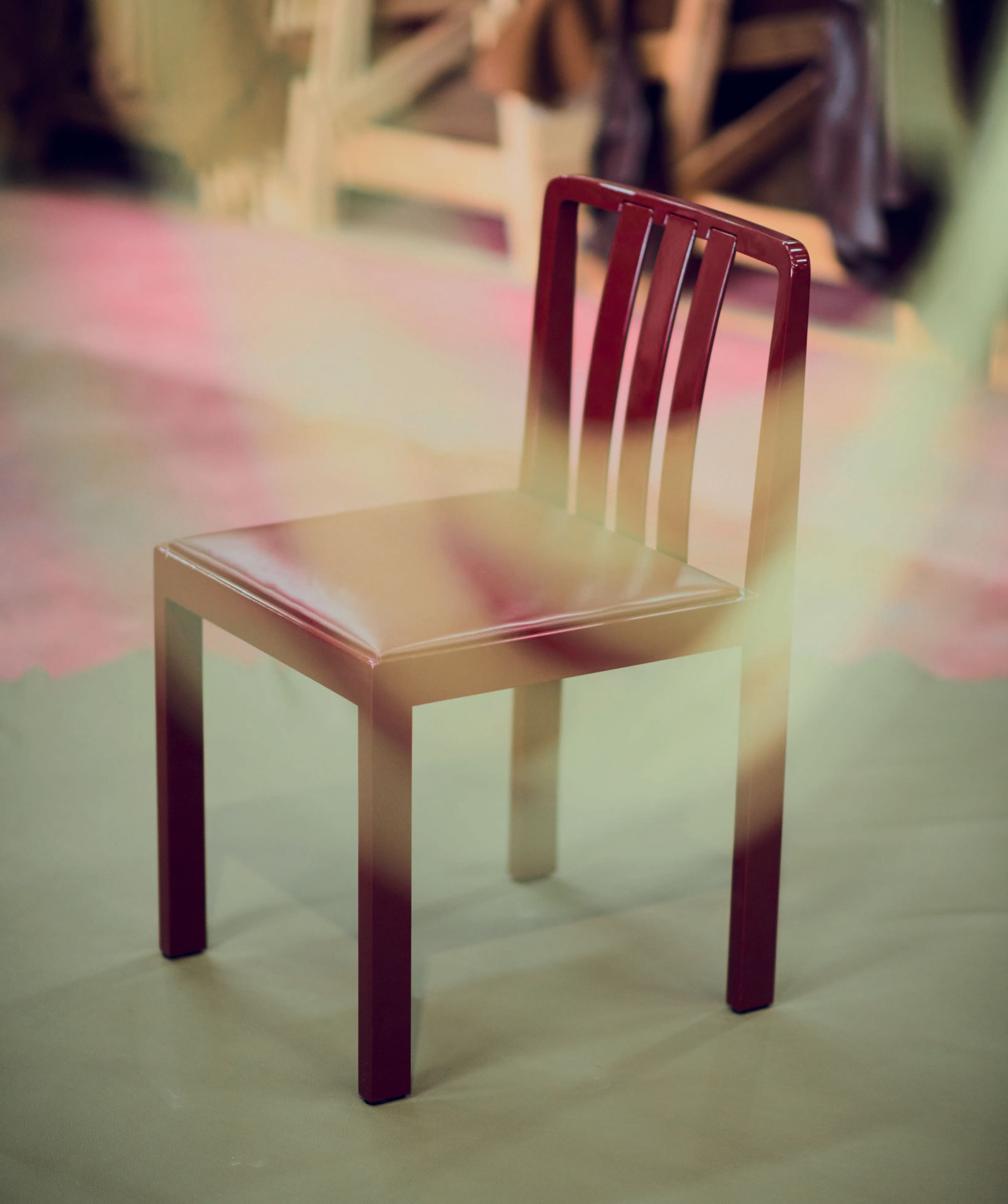
“Michael Anastassiades approached this chair almost as an exercise in subtraction: how much can you remove without losing comfort? With 1 2 3, the idea was to create rhythm and balance through the three slender backrests, resulting in a chair that feels extremely light. Michael is also very sensitive to the absence of material, and to the way light can pass through an object, which is why he has always loved chairs with open backs. That gives the chair a particular sense of transparency and grace. I sometimes joke that 1 2 3 is like if our Teatro and Milano chairs [by Aldo Rossi] had a baby. You can feel echoes of both pieces in the proportions and in the structure. The lacquered finish, available in black, burgundy, and green, is very shiny and precious. The result is a chair that feels almost meditative: reduced to the essential, but still very comfortable.”

VINCENT VAN DUYSEN, SOLEVA ARMCHAIR, 2025
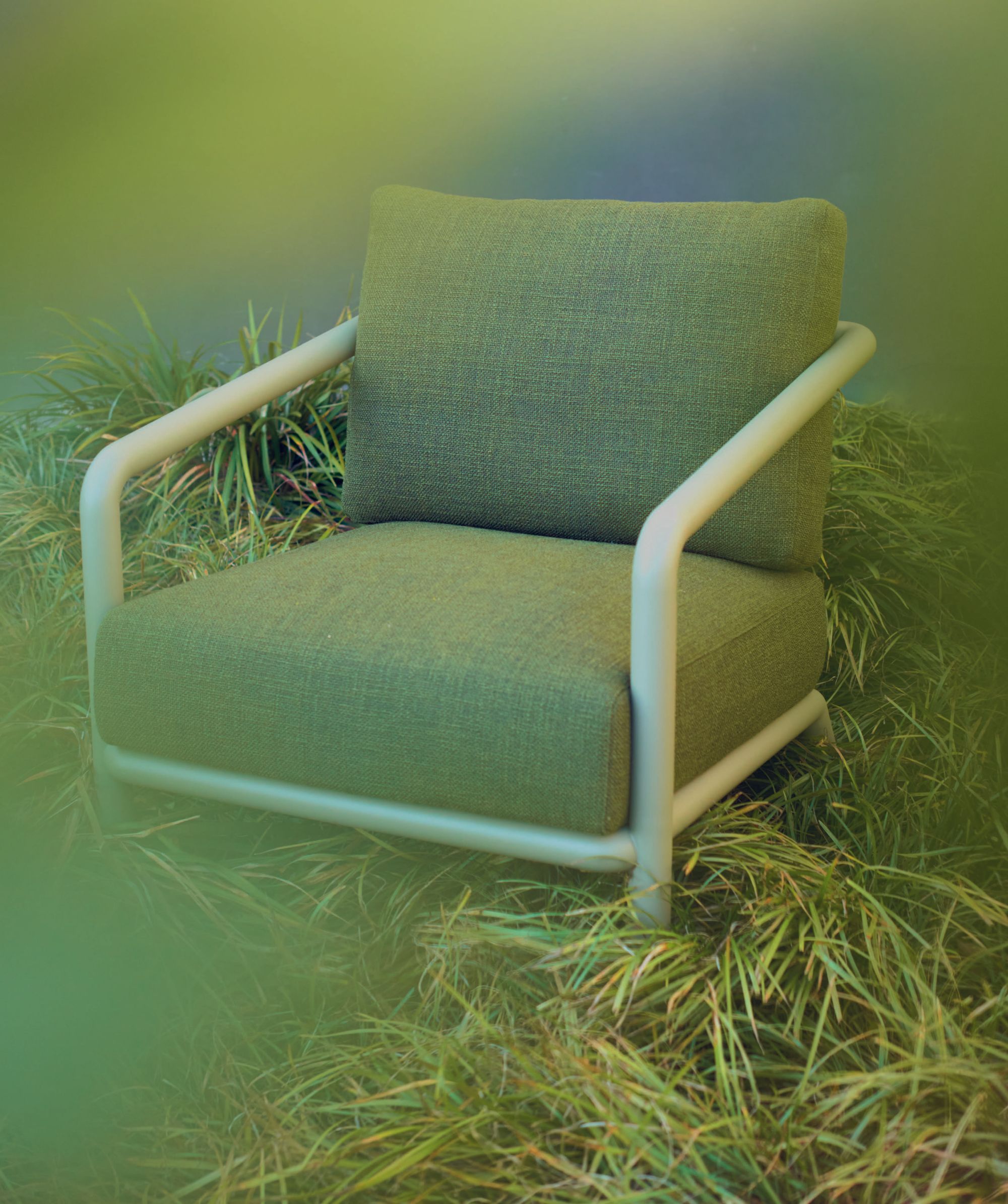
“This year marks ten years of collaboration with Vincent Van Duysen.
He worked with us back in 2010 with a project developed with UniFor, and follow that up with the success of his Gliss wardrobe, Ribbon bed, and Paul sofa in 2016. In the same year, Vincent designed our pavilion booth in Cologne, and shortly afterward we invited him to become the creative director of Molteni&C. Vincent has had a huge impact on how we design and present the collection. With the concept of the ‘art collector’s house,’ which we developed at Palazzo Molteni on Via Manzoni in Milan, he created a cohesive vision — not just a series of objects, but an idea of a home and a way of living. The new Soleva outdoor collection reflects that approach. The chair has a very clear and architectural structure, with a tubular aluminum frame combined with EVA, a soft material often used in technical environments. The name itself combines ‘sun’ and ‘EVA,’ suggesting both warmth and material innovation, both important elements of Vincent’s perspective.”

JASPER MORRISON, TEA CHAIR, 2021
“Our collaboration with Jasper Morrison began with the first edition of the Molteni Museum exhibition celebrating the company’s 80th anniversary in 2015 at the Galleria d’Arte Moderna in Milan. The Tea chair grew out of that collaboration. Jasper approached the project by carefully studying the Molteni&C collection. After researching our history and the types of pieces we already had, he identified what he felt was missing: a very light chair, almost like a traditional chair, but interpreted in a contemporary way. The structure is entirely made of solid wood, which is one of Molteni&C’s great areas of expertise. At the same time, the chair remains very versatile — it can be upholstered in leather or fabric and works easily in many different interiors.

FRANCESCO MEDA, WOODY CHAIR, 2018


“For us the collaboration with Francesco Meda has a long history, because his father Alberto Meda worked with UniFor. So we have known Francesco for a long time, and it’s been wonderful to see his own career develop so successfully. Woody was originally designed for the Dada kitchen collection, before Dada became fully integrated into Molteni&C. The chair was first produced entirely in wood, and later we also introduced a leather version. Both express the same idea of simplicity and craftsmanship. The design is very pure: the Woody is made entirely from solid wood, without visible joints or screws, which makes the construction both precise and extremely light. At the same time it’s very ergonomic. Italians like to sit at the table for a long time — talking, eating, spending time together — so comfort is always very important.”

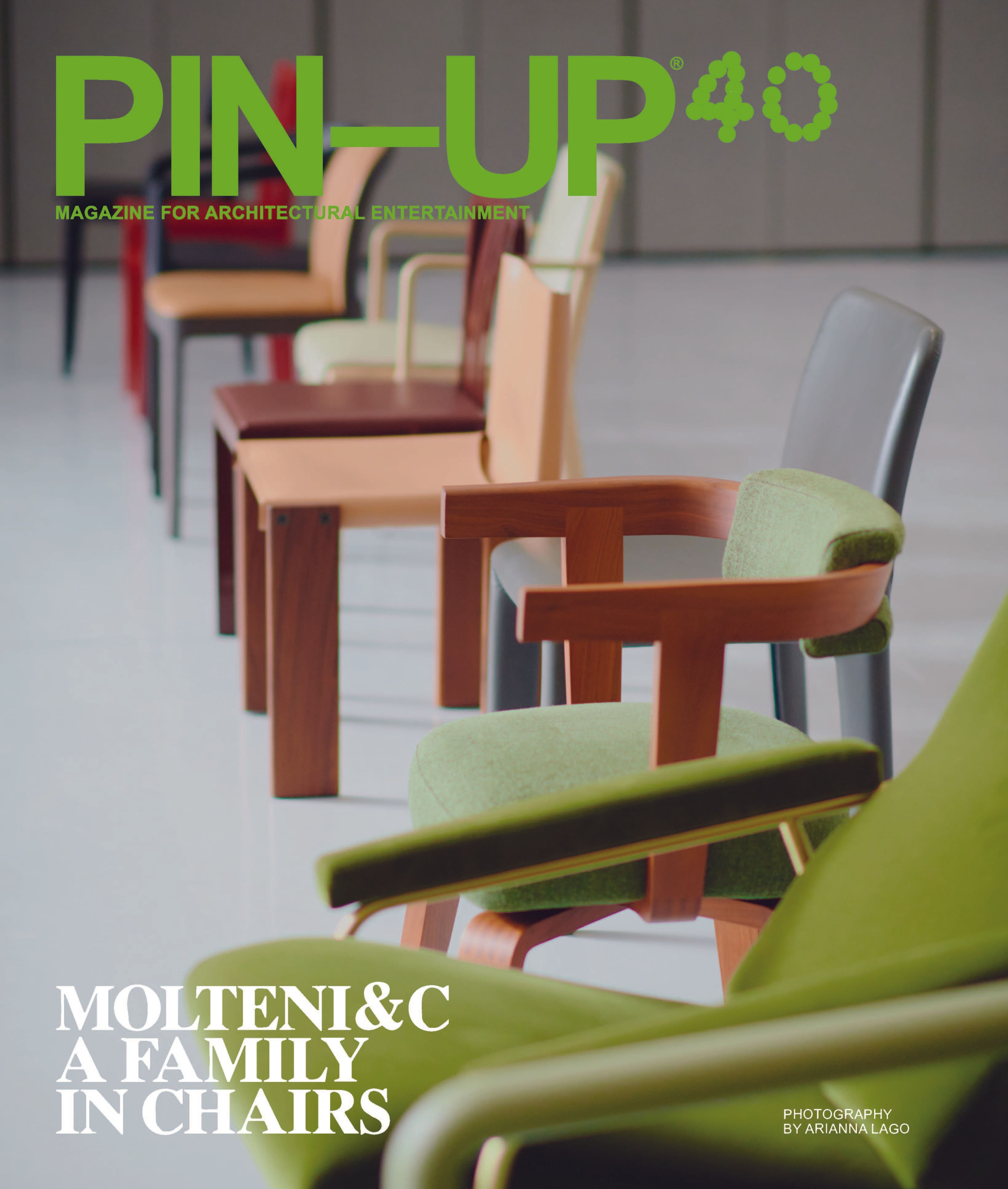
Molteni&C: A Family in Chairs, available in PIN–UP 40, Spring Summer 2026.


Photography by Arianna Lago
Creative Direction by Felix Burrichter
Production by Irene Tamagnone and Stefy Pocket
Photography Assistant Davide Carlini
Orignally published in PIN–UP 40