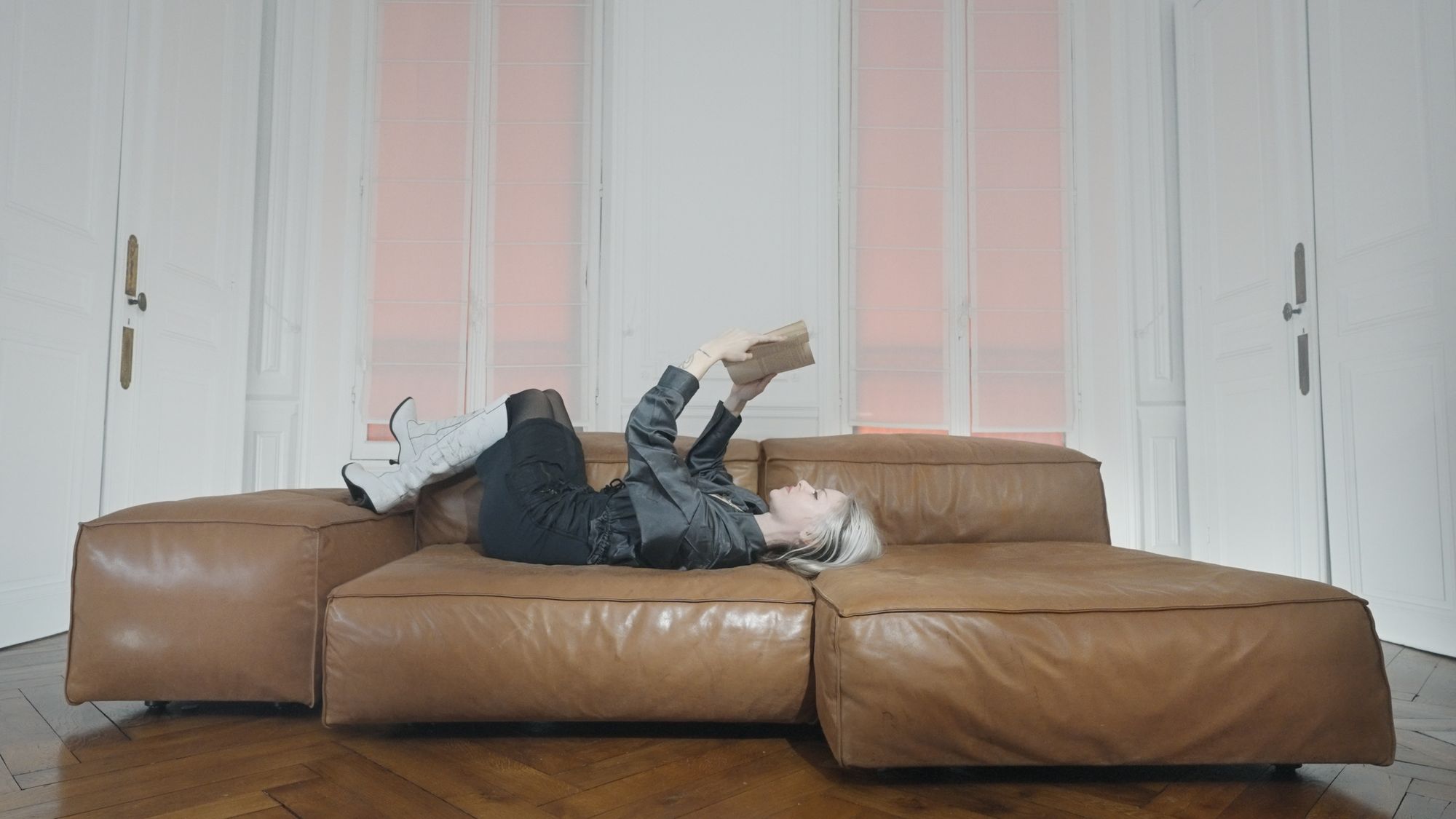
In a composition by filmmaker Margaux Esclapez, the Extrasoft sofa takes center stage in a Paris interior, with model Bryn Taubensee draping herself across the cushions, a copy of Gaston Bachelard’s The Poetics of Space in hand.
Sofas can behave like miniature architectures of authority. They establish a clear front and back, a correct posture, sometimes even an implicit social order. And then there is Extrasoft, the modular system designed by Piero Lissoni for Living Divani. Introduced in 2008, Extrasoft isn’t even a sofa in the classic sense. It was conceived not as a fixed piece of furniture but as an open-ended landscape of upholstered modules that can be rearranged according to users’ changing needs and moods, resisting the conventional hierarchy of seating. Its low, supple geometry mirrors a culture increasingly shaped by the quiet dissolution of boundaries in 21st-century interiors, and beyond. (An outdoor version exists as well.)
But Extrasoft wasn’t always soft. “It’s an evolution of the Extra Wall,” recalls Living Divani’s CEO Carola Bestetti, describing the earlier 2002 iteration as a more hard-edged, minimalist proposition, also designed by Lissoni. Bestetti has only been CEO since 2020, yet few know the company’s evolution as intimately. As the daughter of founders Renata Pozzoli and Luigi Bestetti, she famously rollerbladed through Living Divani’s factory in Brianza as a teenager.
In a composition by filmmaker Margaux Esclapez, the Extrasoft sofa takes center stage in a Paris interior, with model Bryn Taubensee draping herself across the cushions, a copy of Gaston Bachelard’s The Poetics of Space in hand.
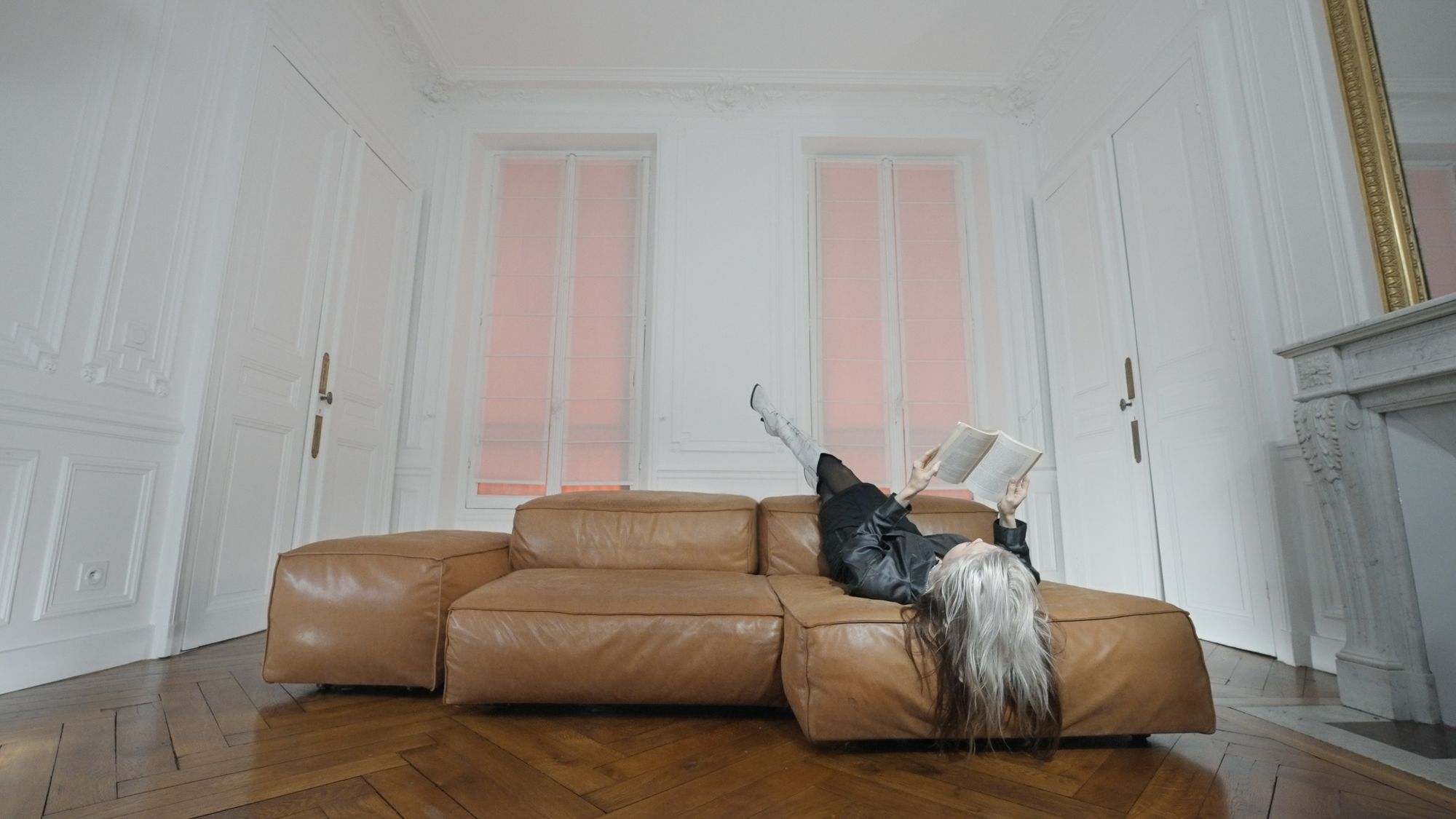
Photography by Margaux Esclapez for PIN–UP 40.
The ongoing success of Extrasoft is therefore also the story of a generational shift within the nearly 60-year-old company. Under her leadership, Living Divani has sharpened its environmental commitments — from responsibly sourced leathers to lower-impact dyeing processes — while maintaining a cultural nimbleness rare for a heritage brand, working with creatives like David Lopez Quincoces, Lanzavecchia + Wai, and Stephen Burks, to name but a few. Lissoni’s Extrasoft captures this balancing act: a 21st-century interpretation of comfort that is fluid, collective, and adaptable.
Bestetti has, of course, a strong ally in Piero Lissoni, Living Divani’s de facto creative director, whom she has known since childhood. Today one of the kings of the Milan design scene, Lissoni began collaborating with Living Divani in the late 1980s, when his vision of refined minimalism came to shape the brand’s direction, and that of design culture more broadly. “A sofa should not dictate behavior. It should offer a field of possibilities,” he says, and few of his designs embody this ethos more clearly than Extrasoft.
For PIN–UP, filmmaker Margaux Esclapez imagined Extrasoft as a stylish disruptor in a bourgeois Parisian apartment, blending into its surroundings while subtly loosening the space’s formality. Gaston Bachelard wrote in The Poetics of Space that “the house shelters daydreaming.” If the home is architecture’s envelope for reverie, the Extrasoft makes for its softest playground.
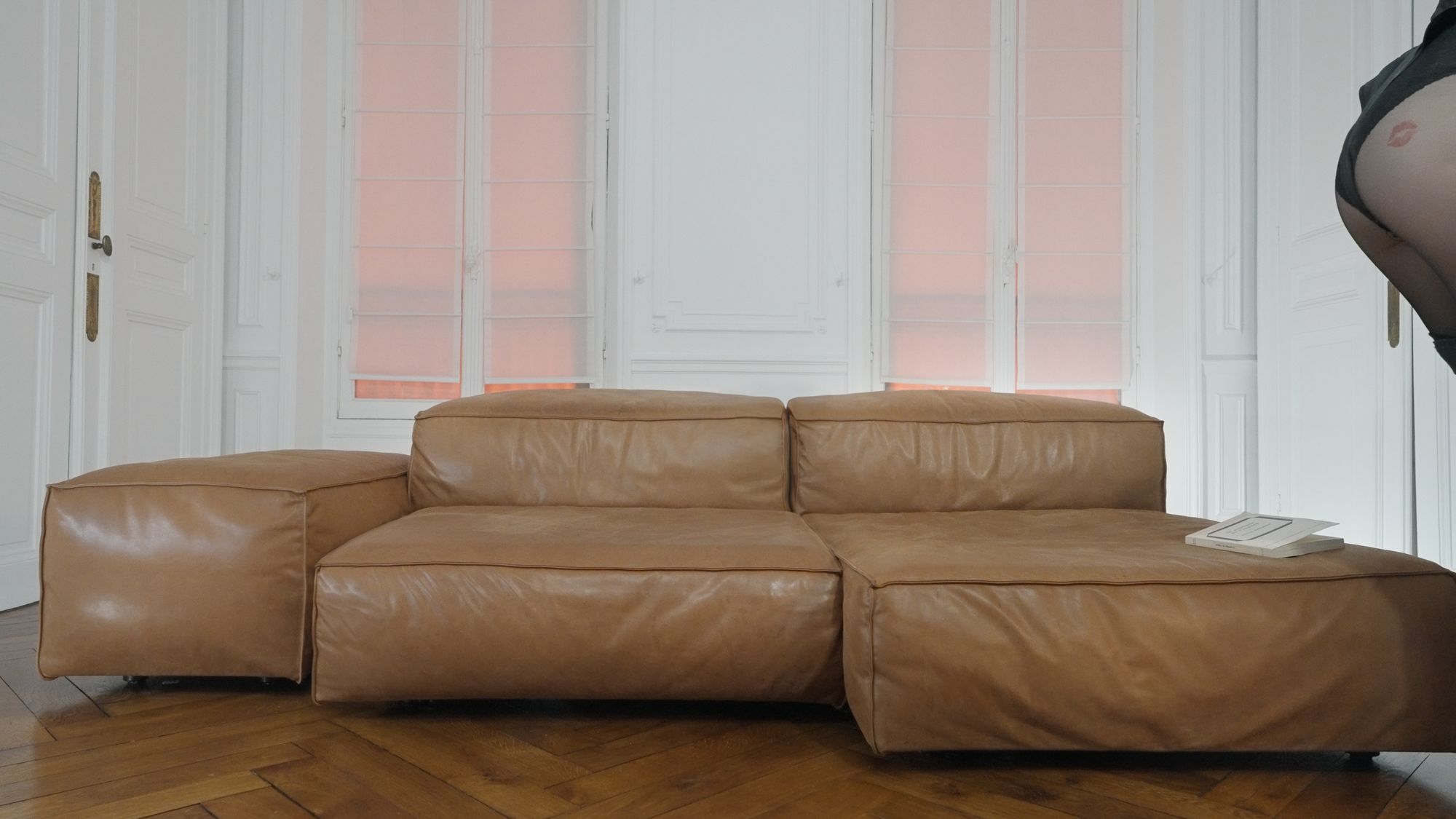
The Extrasoft sofa by Piero Lissoni for Living Divani. Photography by Margaux Esclapez for PIN–UP 40.
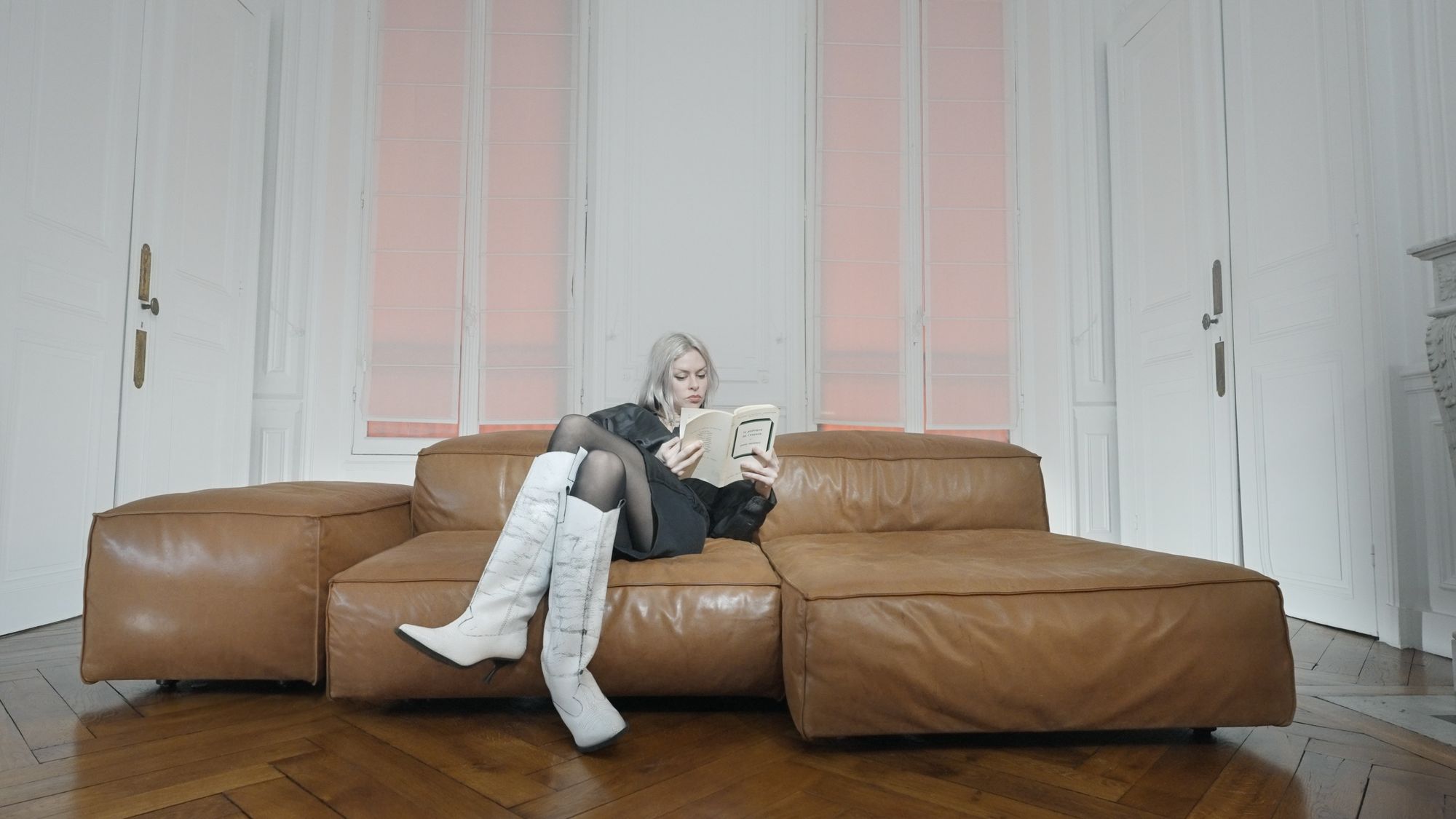
Photography by Margaux Esclapez for PIN–UP 40.