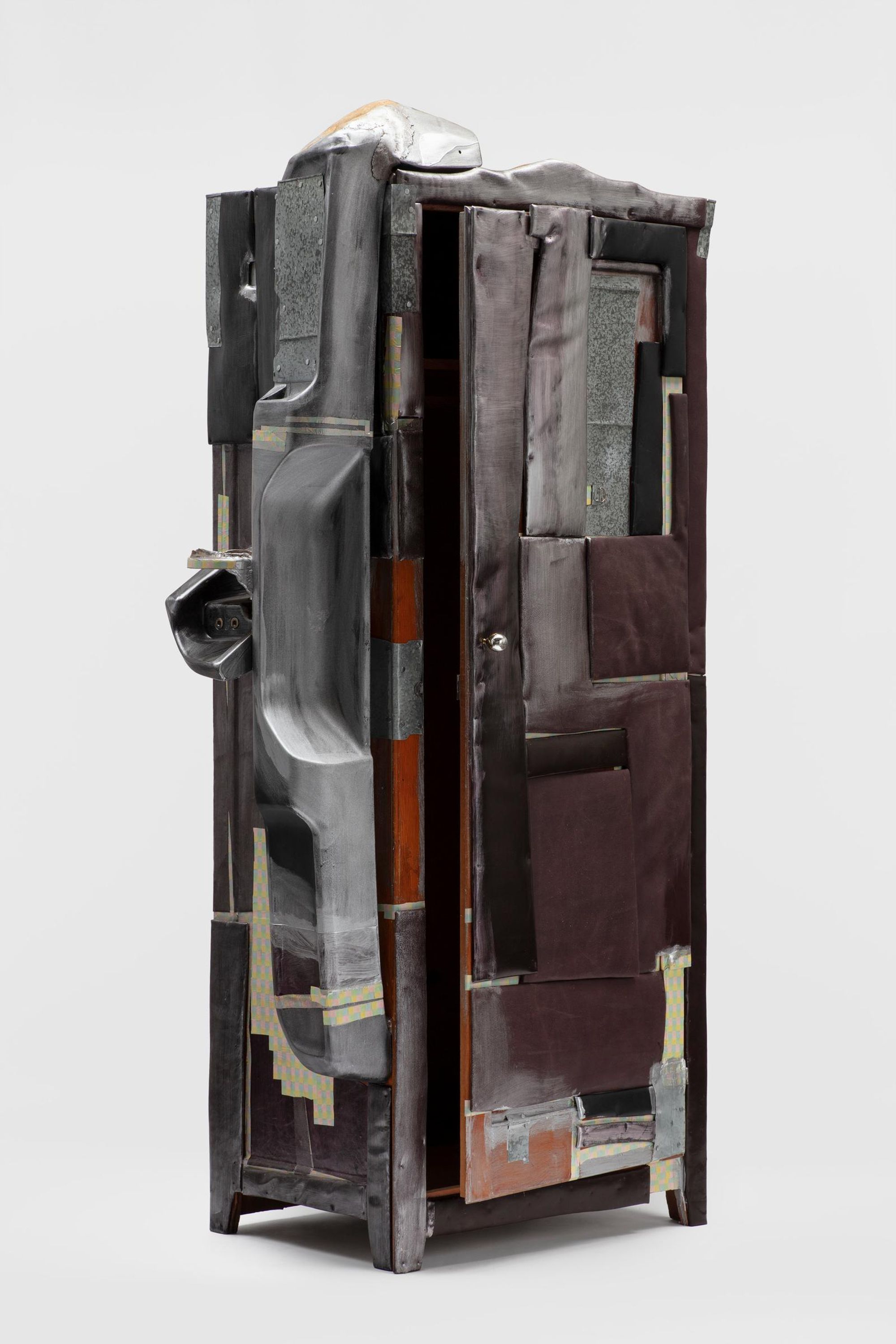
Jessi Reaves, Uncarved block, 2023/2025; wood, leather, cotton batting, MDF, wrapping paper, vinyl, silicone, sawdust, wood glue, aluminum, urethane paint. 83 x 24 x 39 in. Courtesy the artist and Bridget Donahue, New York. Photo: GC Photography.
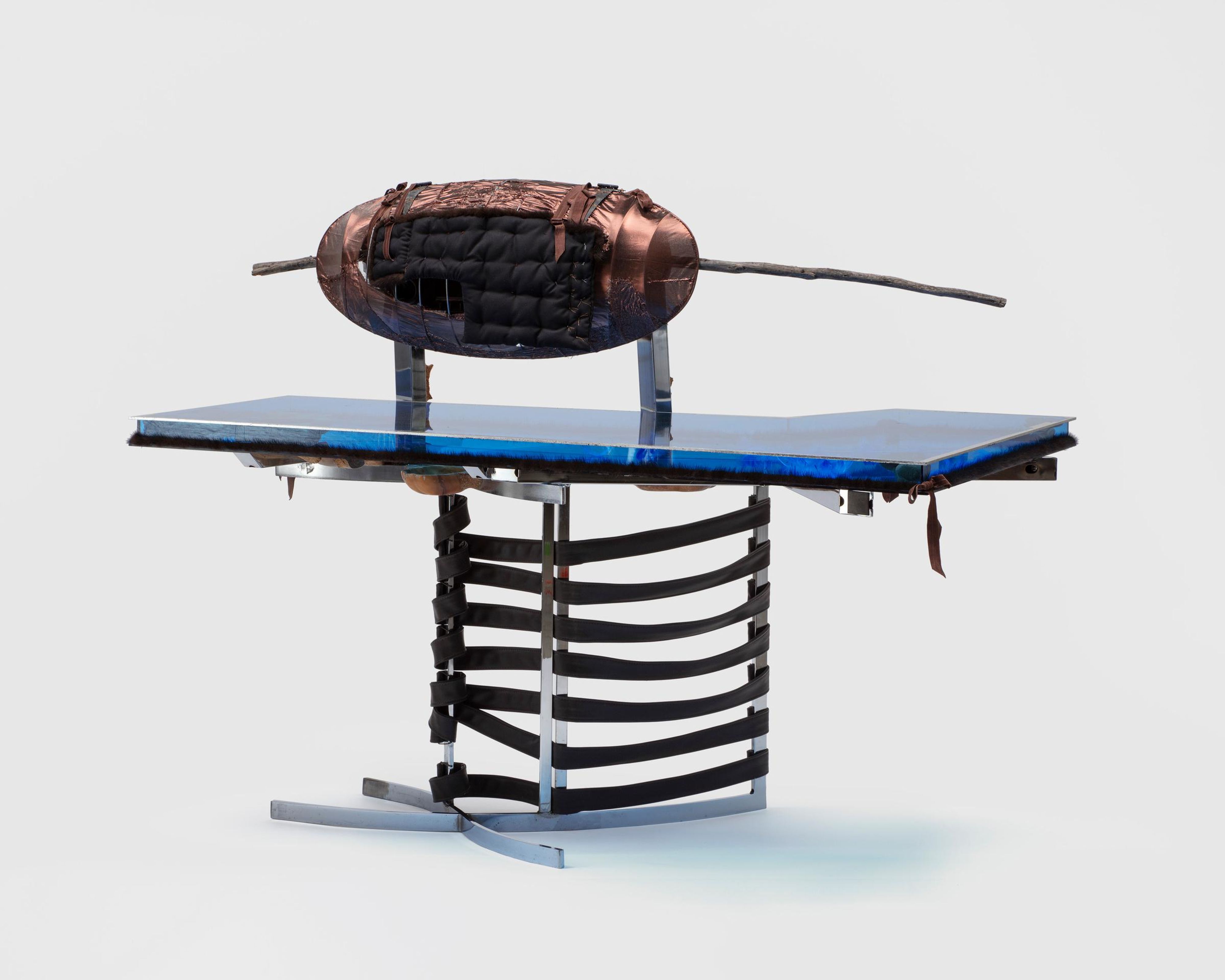
Jessi Reaves, Big vanity with modesty flap, 2025; plexiglass, steel, wood, sawdust, wood glue, fabric, leather, cotton batting, collage, recycled mink fur. 56 x 69 x 39 in. Courtesy the artist and Bridget Donahue, New York. Photo: GC Photography.
Jessi Reaves’s new sculptures conjure ghosts. In her solo exhibition at the Walker Art Center, process invented the mirror (and now on view at the American Academy of Arts and Letters in New York) her trademark furniture Frankensteins form their own off-kilter kibbutz. A eucalyptus-green waist-high curtain traces the perimeter of the large gallery, varying its opacity to reveal glimpses of the corners behind. Rectangles painted in high gloss mark the butter-yellow walls. These soft traces leave you with the nagging feeling that the room was rearranged right before you entered — an absence hangs in the air.
These shifted elements create a stage for 20 twisted assemblages. Used furniture is cut apart, turned on its side, painted over, collaged onto, caned, upholstered, and glazed before becoming a support structure for even more mutated objects. The first piece in the show, Uncarved block, is a wardrobe sprouting tumescent patchwork over every surface. It looks like something that has been mended so many times that the repairs have taken over the character of the original. Its door ajar, it also acts as a vitrine for another sculpture dangling on its closet rod inside: the barely visible Hanger is a curved upholstered shape with a built-in hook, anchoring itself like a barnacle on a host.
Jessi Reaves, Uncarved block, 2023/2025; wood, leather, cotton batting, MDF, wrapping paper, vinyl, silicone, sawdust, wood glue, aluminum, urethane paint. 83 x 24 x 39 in. Courtesy the artist and Bridget Donahue, New York. Photo: GC Photography.
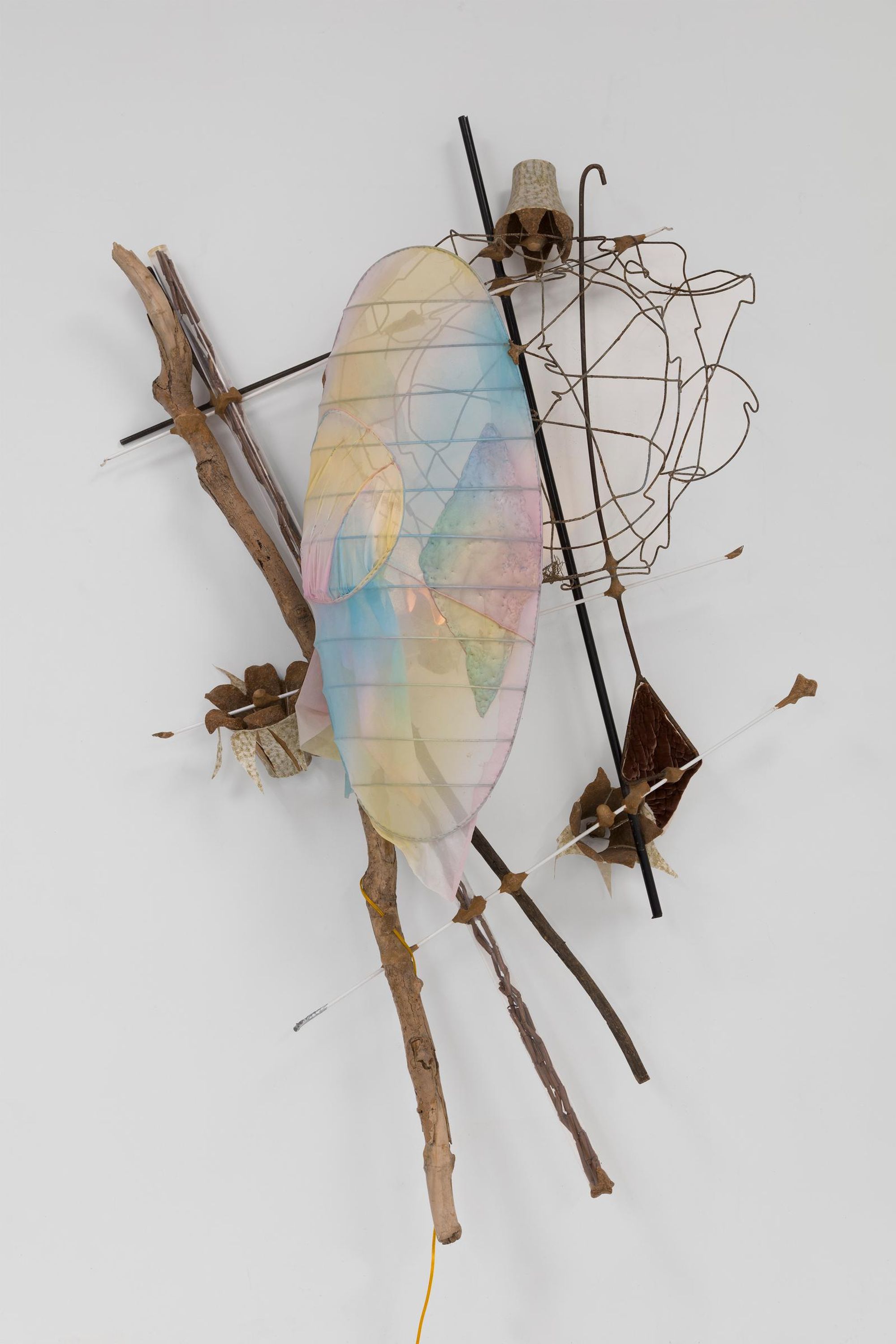
Jessi Reaves, Self poisoning kit, 2025; metal, wood, plexiglass, fabric, sawdust, wood glue, lamp wiring, hardware. 71 x 46 x 18 in. Courtesy the artist and Bridget Donahue, New York. Photo: GC Photography.
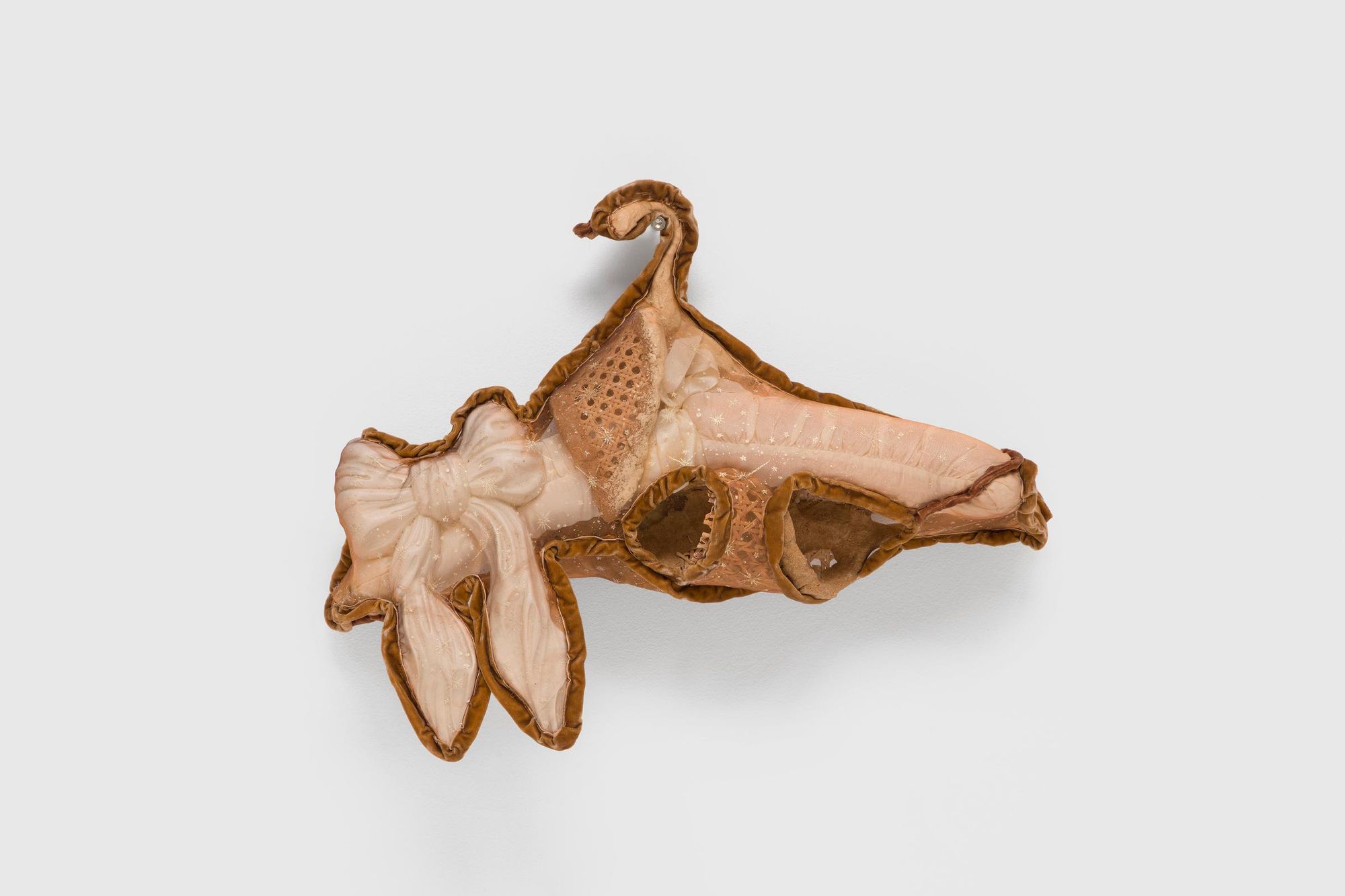
Jessi Reaves, Hanger, 2025. Courtesy the artist and Bridget Donahue, New York. Photo: GC Photography.
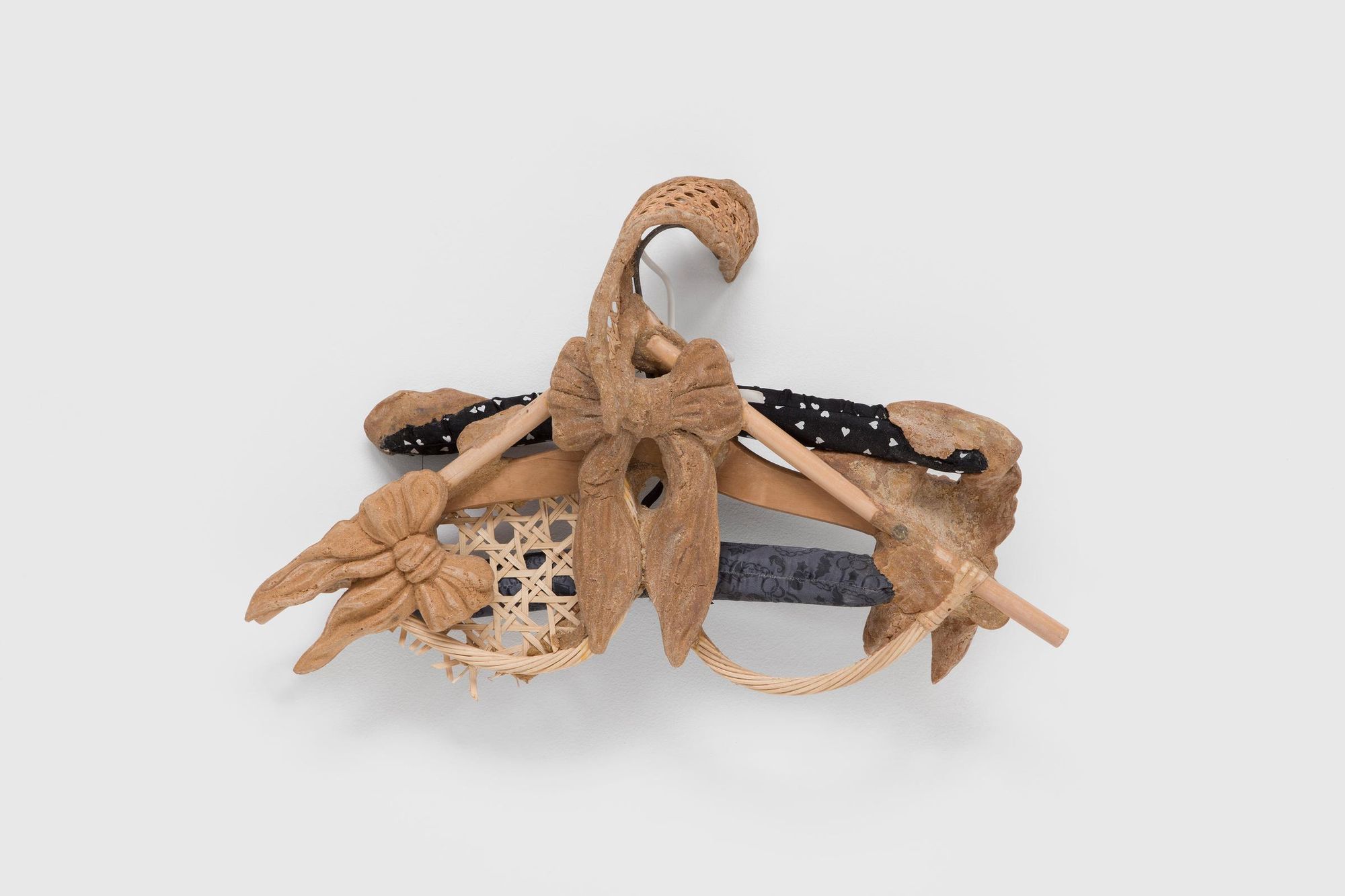
Jessi Reaves, Hanger, 2025; wood, sawdust, fabric. 13 x 20 x 5 in. Courtesy the artist and Bridget Donahue, New York. Photo: GC Photography.
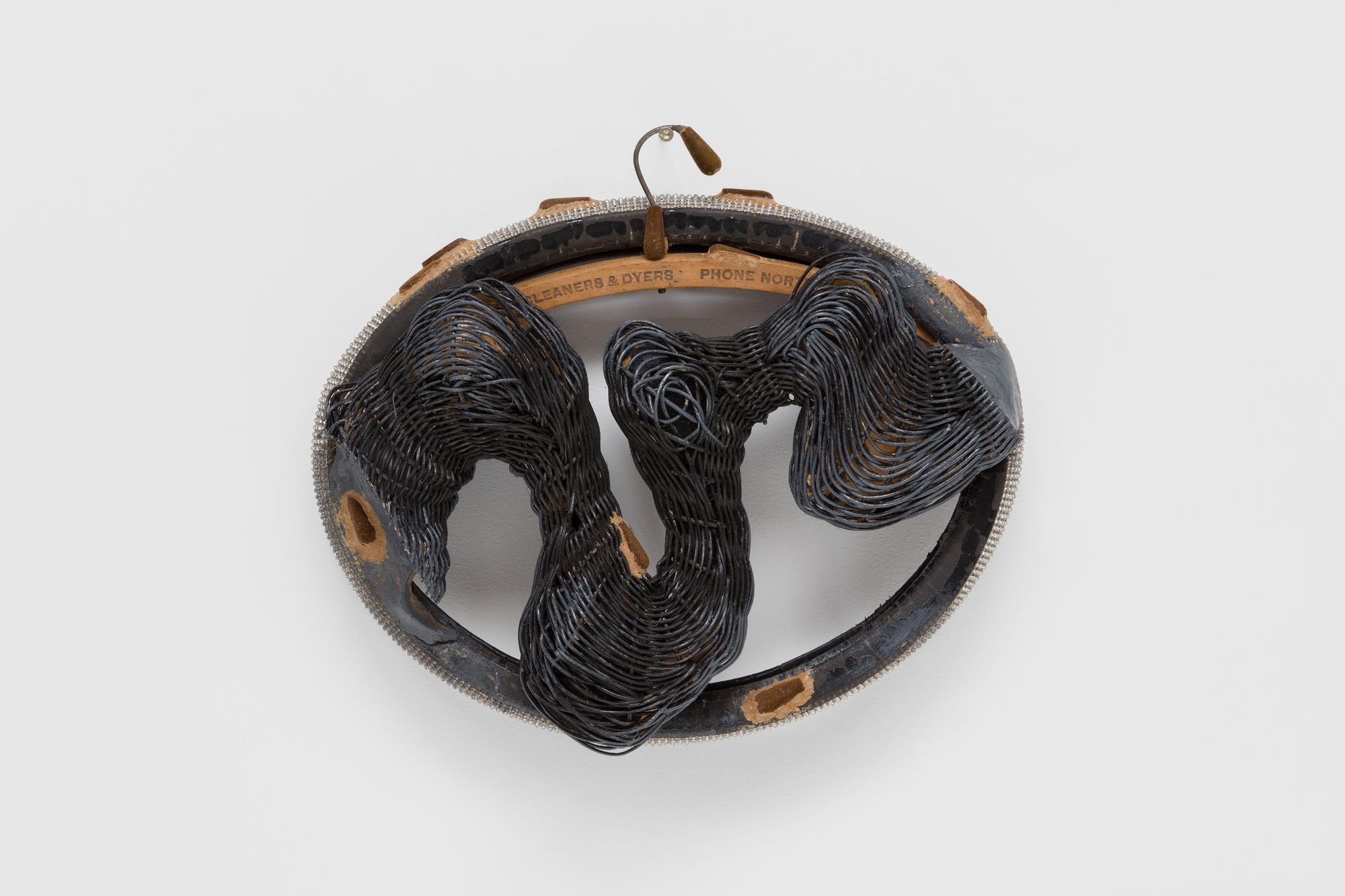
Jessi Reaves, Hanger, 2025. Courtesy the artist and Bridget Donahue, New York. Photo: GC Photography.
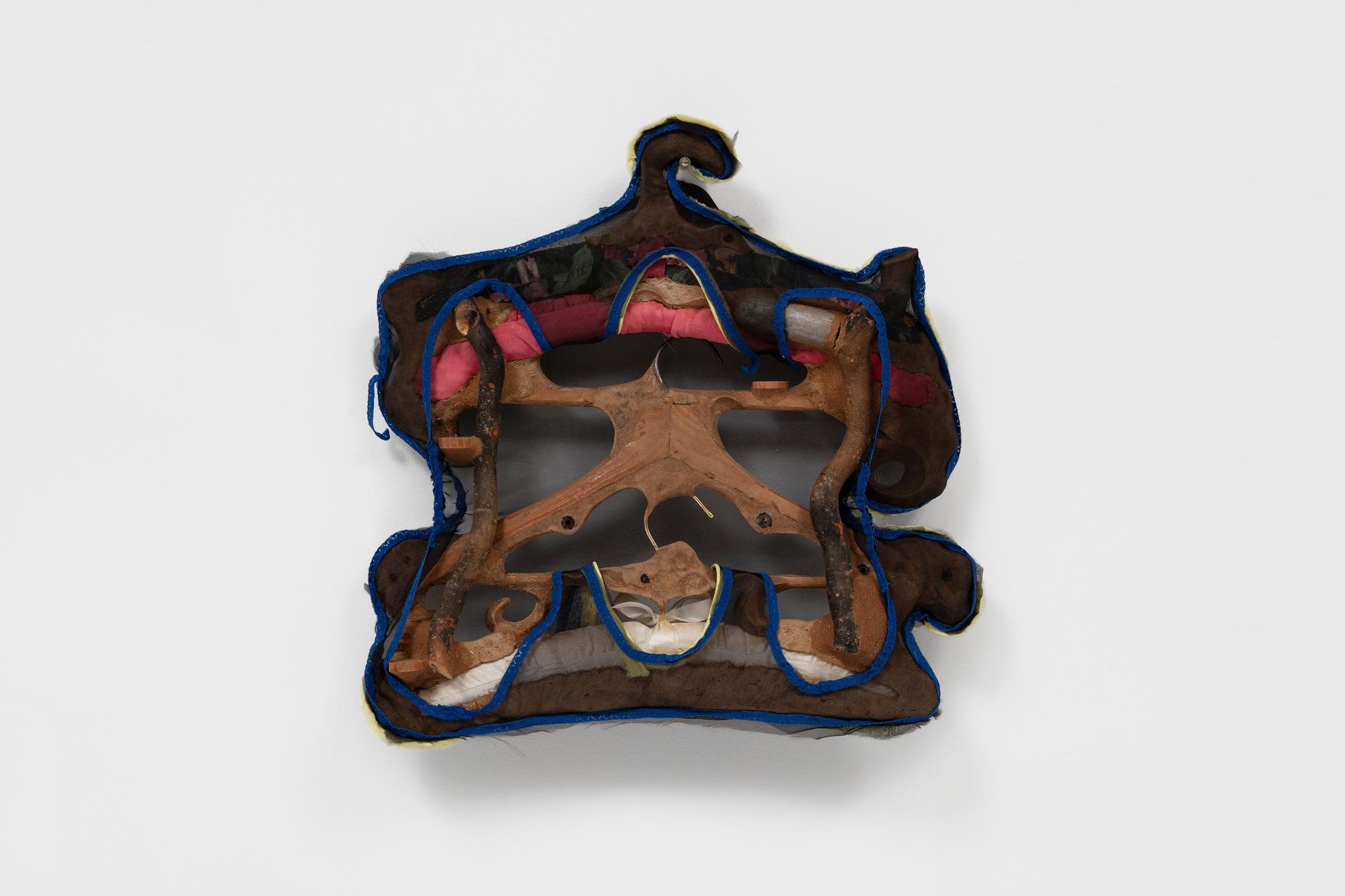
Jessi Reaves, Hanger, 2025; wood, sawdust, fabric, plastic, metal. 18 x 19 x 4 in. Courtesy the artist and Bridget Donahue, New York. Photo: GC Photography.
In these sculptures, a mixture of sawdust and wood glue creates a malleable substrate, forming curves and blending together many of Reaves’s repurposed parts. In Self poisoning kit, these lumps become joints between wooden sticks, metal rods, and plastic tubes, gathering into a wall-mounted bouquet covered by a ribbed fabric lozenge. The plasticity of this material imbues the joints with a sense of life; used to adhere a wire to a branch, it looks like a tree growing to engulf an adjacent fencepost. This combination is also cast into shapes, like in Being serious and in Wearing a costume. Here, the wood pulp is pressed into the form of flowers, which then adhere wooden bowls together to create the surface of a low seat. The effect is grotesque, like pieces of steak being put back together with meatloaf. This technique is repeated in Big vanity with modesty flap, where the material makes it look like wasps have built nests around wooden bowls in the shiny legs of a desiccated Barcelona chair.
Images of birds recur throughout the show. A hinged triptych is collaged with bird images on its wing panels, displacing a vanity’s angled mirrors. Bird cutouts are pasted on water bottles, roosting in an overturned bookshelf. One of the highlights of the show is Decoy world (after Ruhlmann), where sculpted swan necks are bundled around a low shelf, almost entirely obscuring it. Invoking Émile-Jacques Ruhlmann’s exquisitely crafted art deco furniture, here we are left with just a decoy, a scrap of faux-burlwood plastic laminate as the distorted shadow of another era’s sense of refinement. This armature is then upholstered in a fabric resembling a figure skater’s costume, with caramel-colored velvet and star-printed tulle. The artworks seem to have been made by birds, reinventing gathered twigs and trash to build their own enigmatic dwellings.
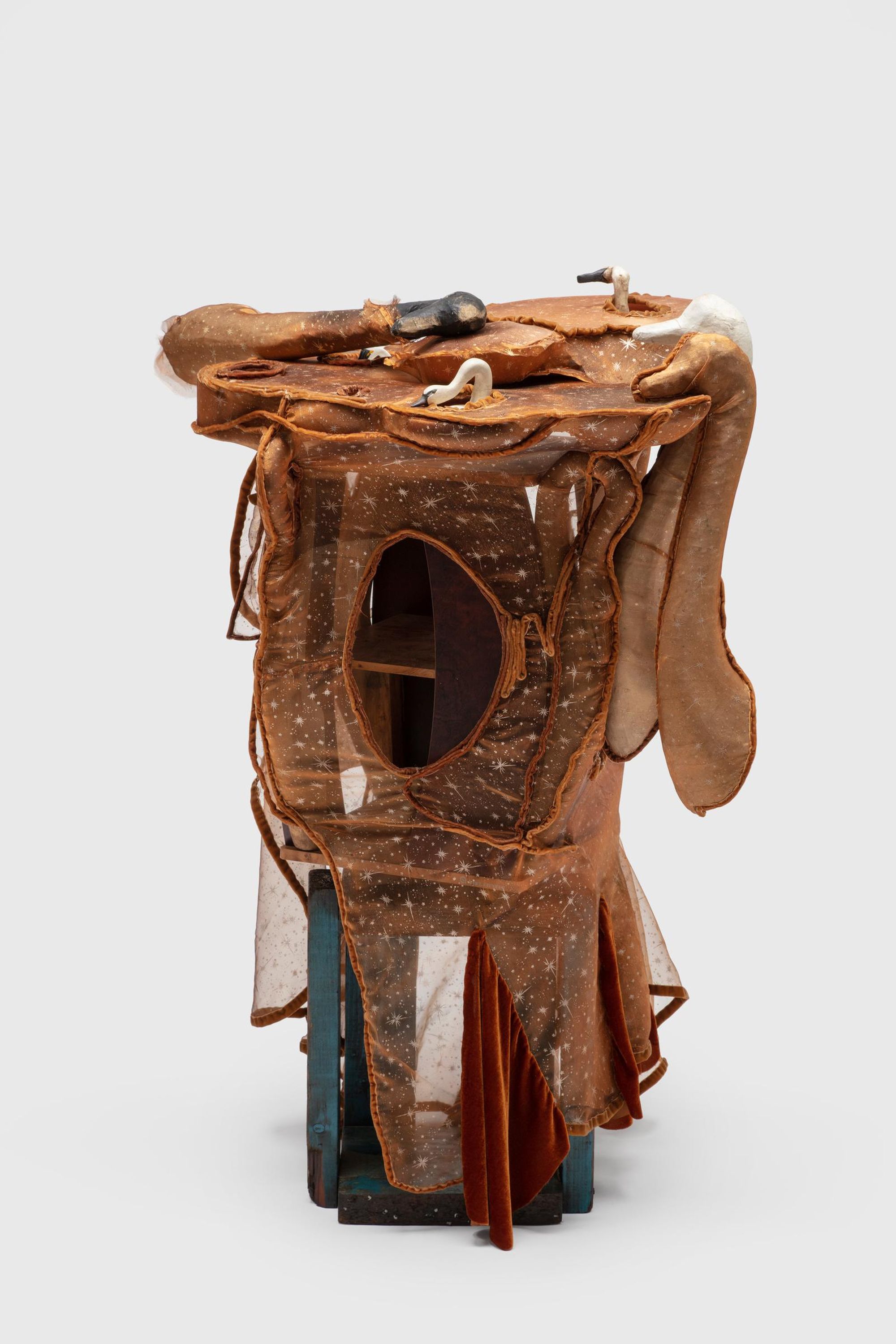
Jessi Reaves, Decoy world (after Ruhlmann), 2025; wood, metal, fiber board, enamel paint, vinyl, fabric, trim, paper, hardware. 44 x 31 x 26 in. Courtesy the artist and Bridget Donahue, New York. Photo: GC Photography.
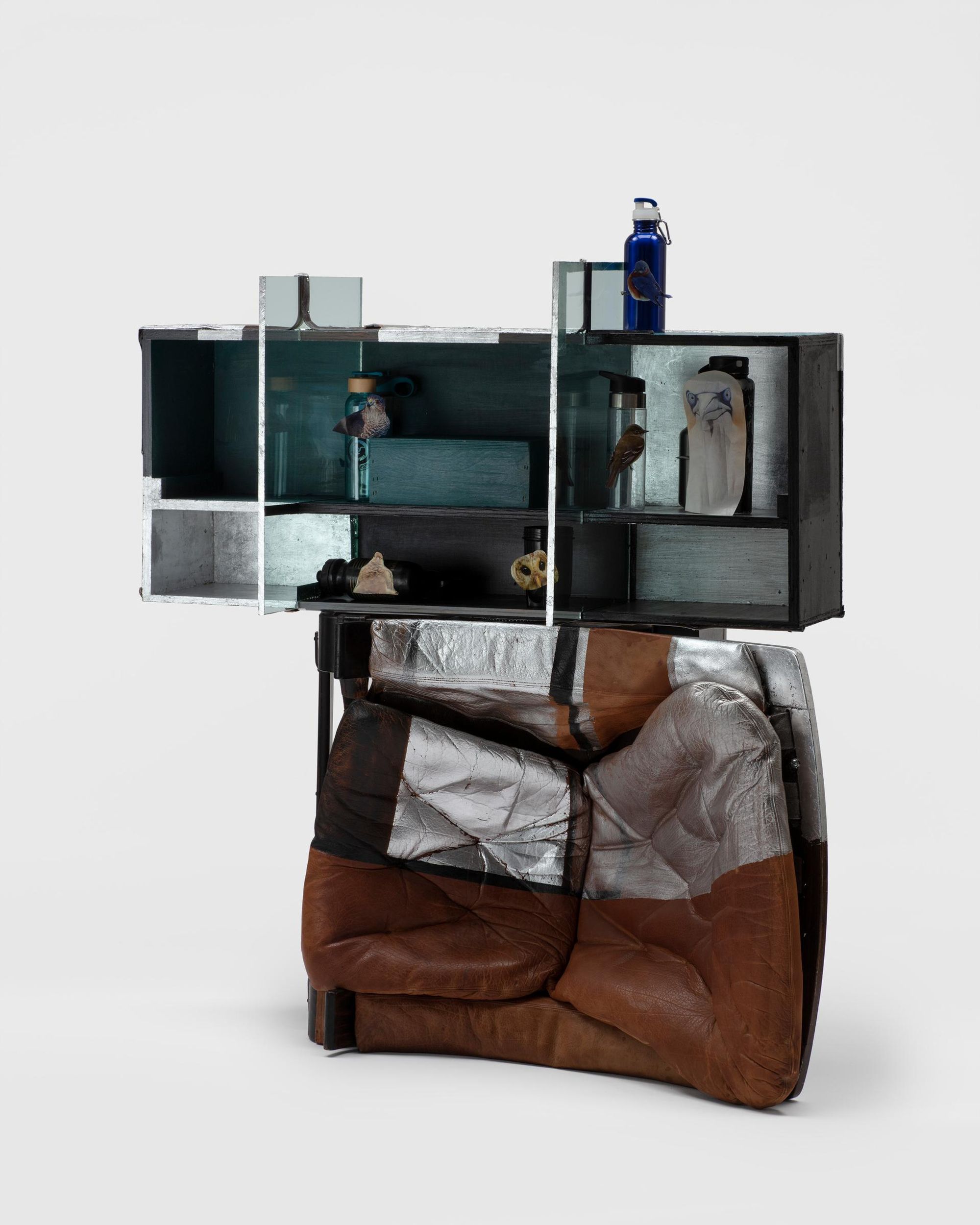
Jessi Reaves, What do people do around here, 2025; plywood, vinyl, leather, fabric, silver leaf, acrylic paint, enamel paint, plastic, steel, hardware, water bottles, paper. 56 x 49 x 29 in. Courtesy the artist and Bridget Donahue, New York. Photo: GC Photography
Reaves’s sculptures are described as furniture, a label that doesn’t exactly translate in this public presentation, especially when a white Formica gallery bench in the room reveals through contrast how estranged and complicated these forms have become. From a practical perspective, Reaves’s pieces are furniture as much as any sculpture with a horizontal surface could technically be used to put something on. Rather, insisting on their status as furniture suggests how they are meant to be lived with: a more intimate, open, and evolving framework instead of a closed form.
The world these sculptures inhabit is fleshed out by an accompanying video, Her job, shown mounted on a media console draped in scraps of leather. Her job follows a little girl playing dress-up in a teal linen blazer many sizes too large as she stumbles through the woods in oversized high heels. “Is this something that has always been in your family?” intones an unseen TV host, trying to uncover the garment’s history as speakers discuss taking it apart and reconstructing it for new use. The little girl dons a bunny hat and begins sweeping out a large nest-like enclosure made of piled sticks. Suddenly, it’s winter, and she is wading through knee-high snowdrifts. Over howling wind and dissonant music, she seeks refuge in the icicle-encrusted Timberline Lodge, the haunted hotel in Stanley Kubrick’s The Shining. She wanders its corridors alone, curling up on a couch and finding a mural depicting three blocky stone carvers.
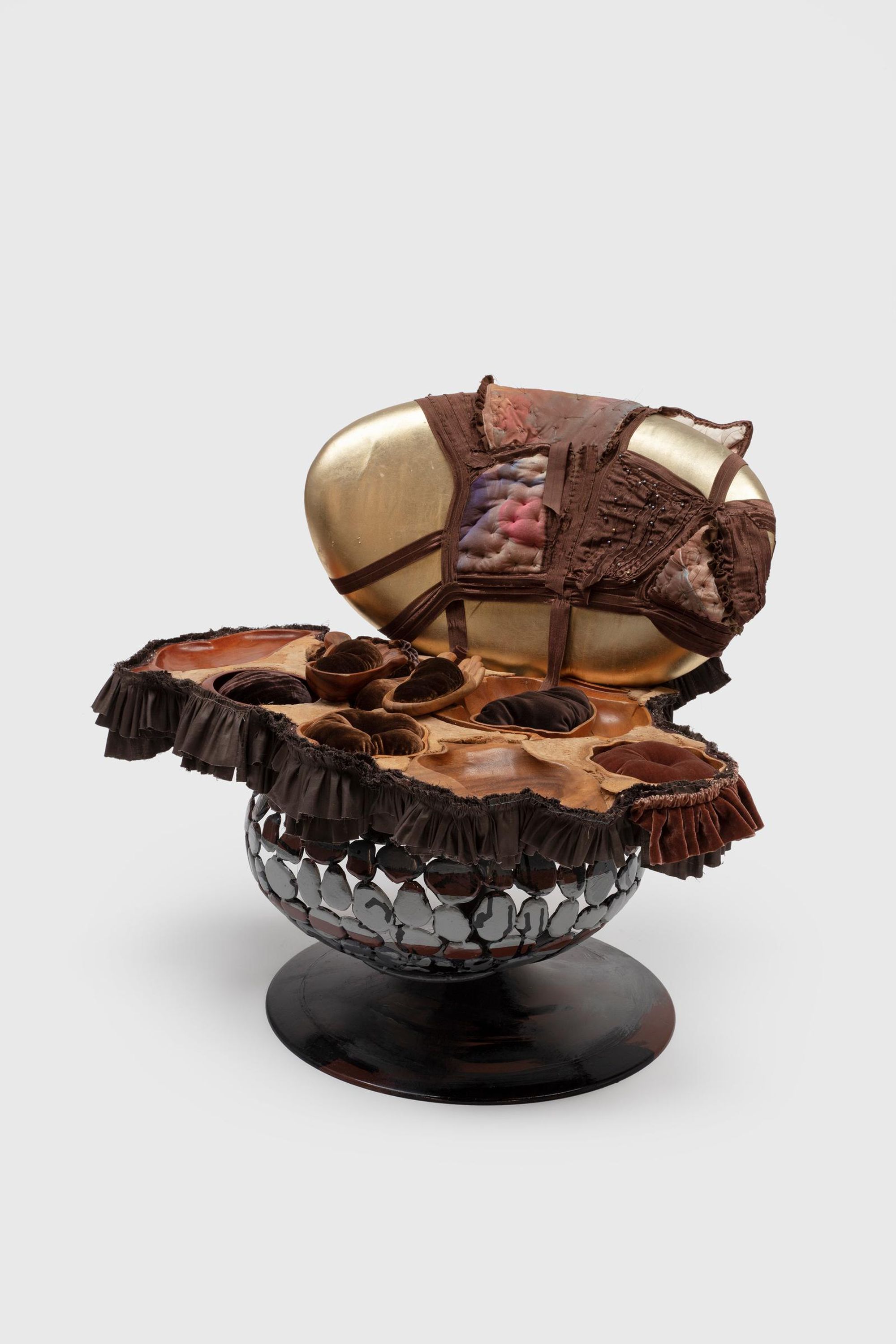
Jessi Reaves, Being serious, 2025; plastic, metal, leather, fabric, cotton batting, sawdust, wood glue, wood, velvet, hardware, elastic, beads. 26 x 21 x 17 in. Courtesy the artist and Bridget Donahue, New York. Photo: GC Photography.
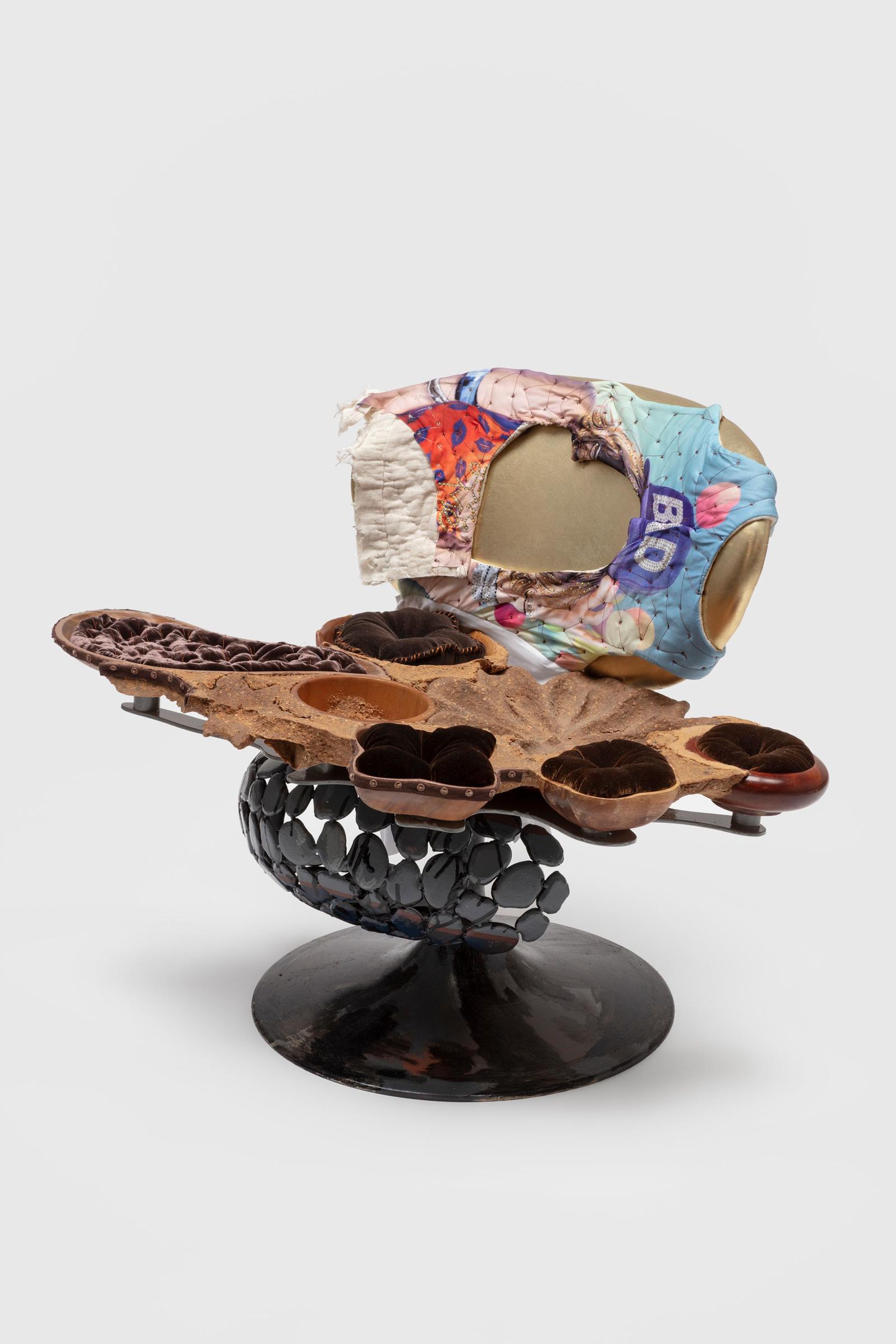
Jessi Reaves, Wearing a costume, 2025; plastic, metal, leather, fabric, cotton batting, sawdust wood glue, wood, velvet, hardware, beads, elastic. 26 x 21 x 17 in. Courtesy the artist and Bridget Donahue, New York. Photo: GC Photography.
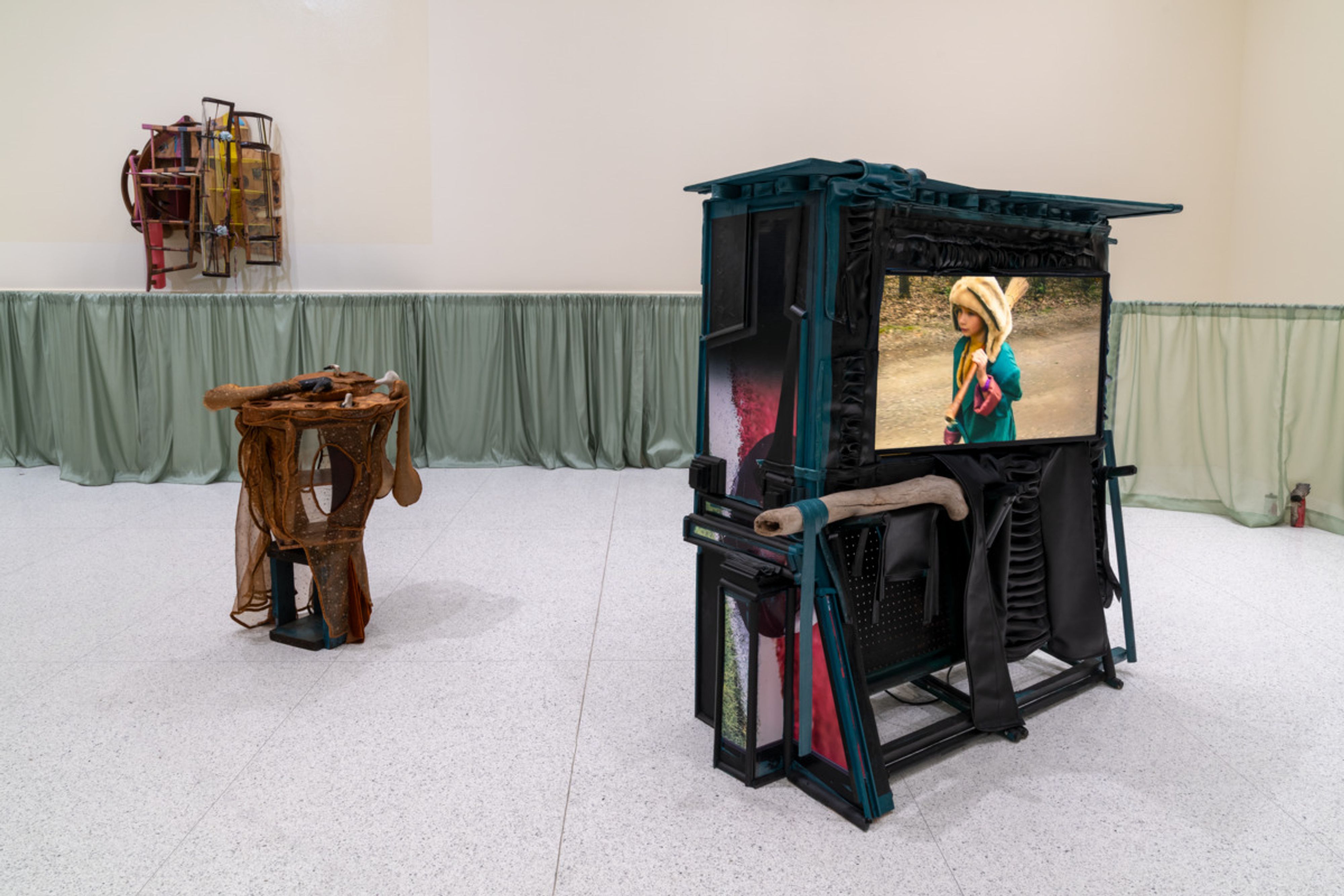
Installation view, Jessi Reaves: process invented the mirror. Top left: Your room is the same as when you left, 2025; plywood, plexiglass, collage, acrylic and enamel paint, hardware. 66 x 44 x 22 in. Bottom left: Decoy world (after Ruhlmann), 2025; wood, metal, fiber board, enamel paint, vinyl, fabric, trim, paper, hardware. 44 x 31 x 26 in. Right: Reflection in black plastic, 2025; wood, leather, flatscreen TV, vinyl, cardboard, mdf, hardware, with video edition "Her job", 2025. 67 x 75 x 32 in. Courtesy the Walker Art Center, Minneapolis.
A similar mural painted in a social-realist style takes on a bloated scale high on the gallery’s walls. Based on a New Deal-era West Virginia post office mural of laborers, the piece invokes a time when art, unafraid to be polemical or ideological, was deeply integrated with architecture and had a public address. Reaves’ rendition, stretched horizontally and wrapped around a corner, creates a warped, vertiginous perspective. Reproduced by local muralist Whitney Terrill in greyscale, it feels firmly rooted in the past, a visiting ghost. These effects evoke the child’s disoriented wanderings as she tries to make sense of an alienating world in clothes that weren’t made for her.
Following the green curtain out of the gallery, the exhibition continues around a corner into a dark, dead-end hallway. This low room is a postscript of sorts, where another small hanging sculpture is displayed alongside a video of a child’s hand rattling mismatched clothes hangers back and forth along a bar in a metal-lined closet. This awkward building stub is the result of the Walker’s 2005 expansion, which created this small vestigial space where the new galleries didn’t quite line up with the old. This misfit alcove is the perfect condition for Reaves’s work: creating nests in the rafters of institutions, leveraging misalignment to find something new.
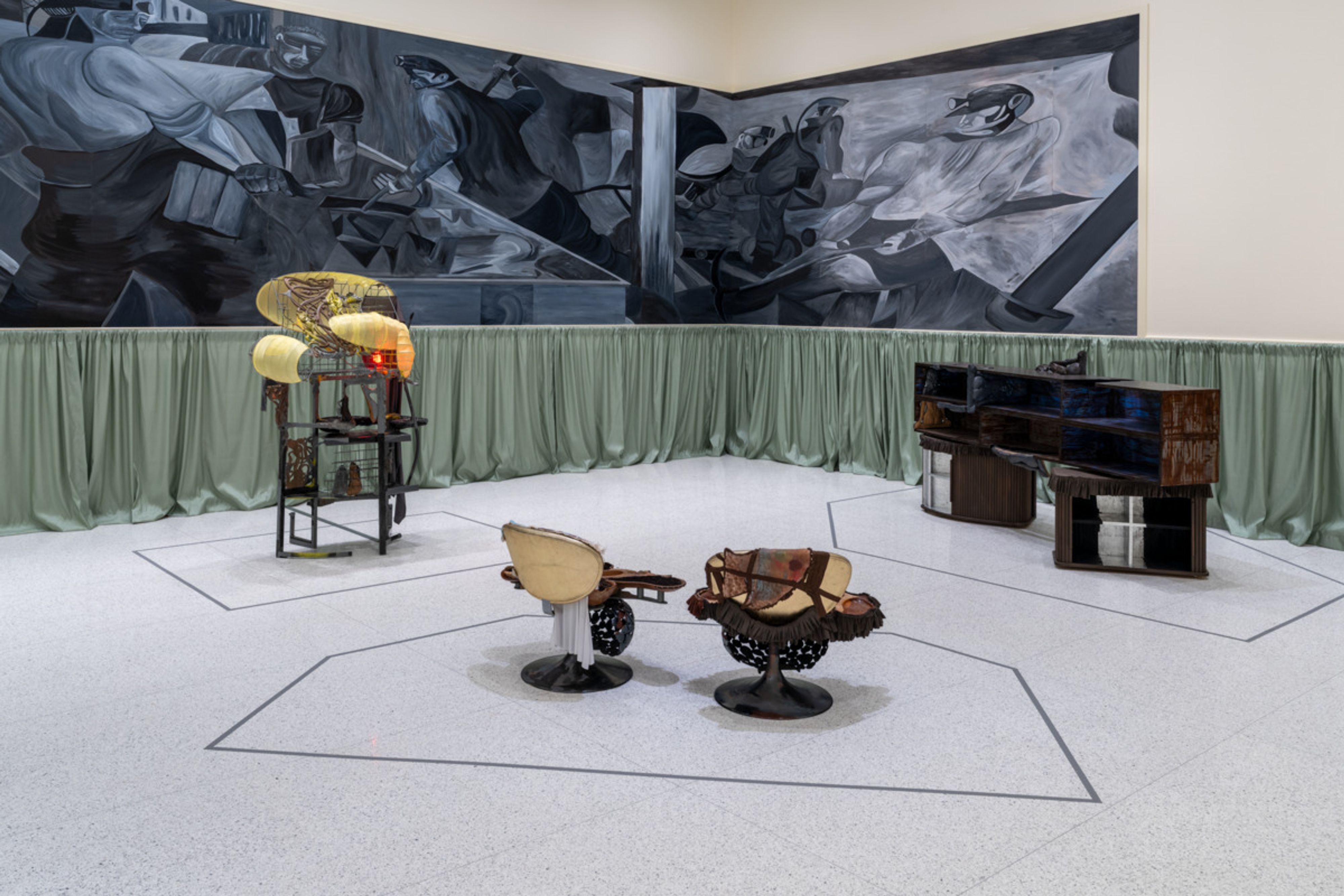
Installation view, Jessi Reaves: process invented the mirror. Left: Street Lamp, 2025; steel, enamel paint, fabric, lamp wiring, plastic, sawdust, wood glue. 60 x 53 x 29 in. Middle: Being serious, 2025; plastic, metal, leather, fabric, cotton batting, sawdust, wood glue, wood, velvet, hardware, elastic, beads. 26 x 21 x 17 in. Right: We've seen the moodboard, 2025; plywood, sawdust, wood glue, hardware, acrylic paint, metal, fabric, silver leaf. 44 x 97 x 21 in. Photo by Eric Mueller, courtesy Walker Art Center, Minneapolis.