FAMILY AFFAIR

Benjamin Paulin on Creative Silos, Inheritance, and the Magic of Pierre Paulin

by Jordan Richman

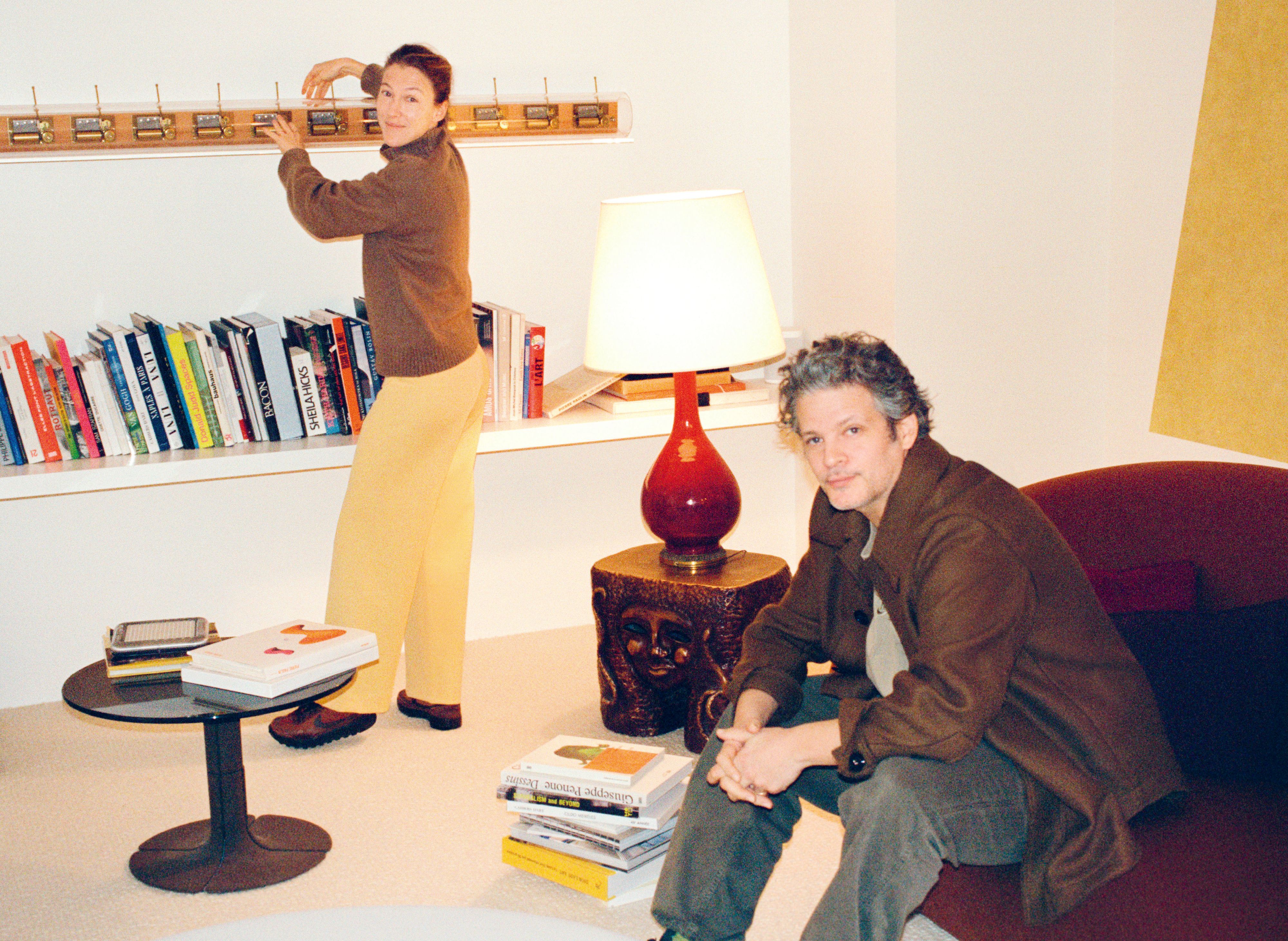
Benjamin and Alice Paulin photographed at their home in Paris. The four-level residence was originally designed by Jean-Pierre Wilmotte for Benjamin’s parents, the late designer Pierre Paulin (1927–2009) and his wife, Maïa Wodzislawska-Paulin. Today, the house functions as both a domestic interior for the young family and a space devoted to music, with instruments scattered throughout and a professional recording studio in the basement. In the living room, Alice plays John Cage’s wall-mounted Extended Lullaby (1994), a composition of twelve music boxes housed in a transparent acrylic cylinder. Portrait by Philippe Jarrigeon (Total World) for PIN–UP 40.

Since the death of French furniture and interior designer Pierre Paulin in 2009, the afterlife of his work has largely been guided by his family — a task that inevitably raises the question of where legacy ends and interpretation begins. Under the Paulin, Paulin, Paulin brand, Maïa, Benjamin, and Alice Paulin — Pierre’s wife, son, and daughter-in-law — have recovered prototypes and projects such as the Ensemble Dune system and the Déclive seating series. Photographs abound of celebrities splayed across Pierre Paulin’s richly surreal, futuristic designs, pushing them to the fore of pop culture: Frank Ocean sleeping on a dark teal Dune sofa, Rick Rubin meditating on a weathered olive Tapis-Siège chaise, and Travis Scott lounging on a white Dune in sporty shoulder pads. Benjamin Paulin has also put his own spin on his father’s legacy, intertwining his sonic practice and love of music — particularly rap, which he briefly pursued at 15 — with the brand. In 2022, the family worked on Brad Pitt and Damien Quintard’s all-white Miraval Studios in the South of France, furnishing it with a Big C sofa rendered in Nike Flyknit fabric. Last year they launched Sounds Like Paulin, a music studio and record label that brings together musicians and creators from diverse backgrounds, fostering unlikely collaborations backdropped by furniture — an ode to the longstanding relationship between music, furniture, and the domestic realm. As 2027 approaches — marking a century since Pierre Paulin’s birth — the family is preparing to open up about the brand’s history, approach, and future. For PIN–UP, Benjamin Paulin reflects on the strange position of inheriting a designer’s vision — and the delicate question of how far one can carry it forward before it becomes something else entirely.

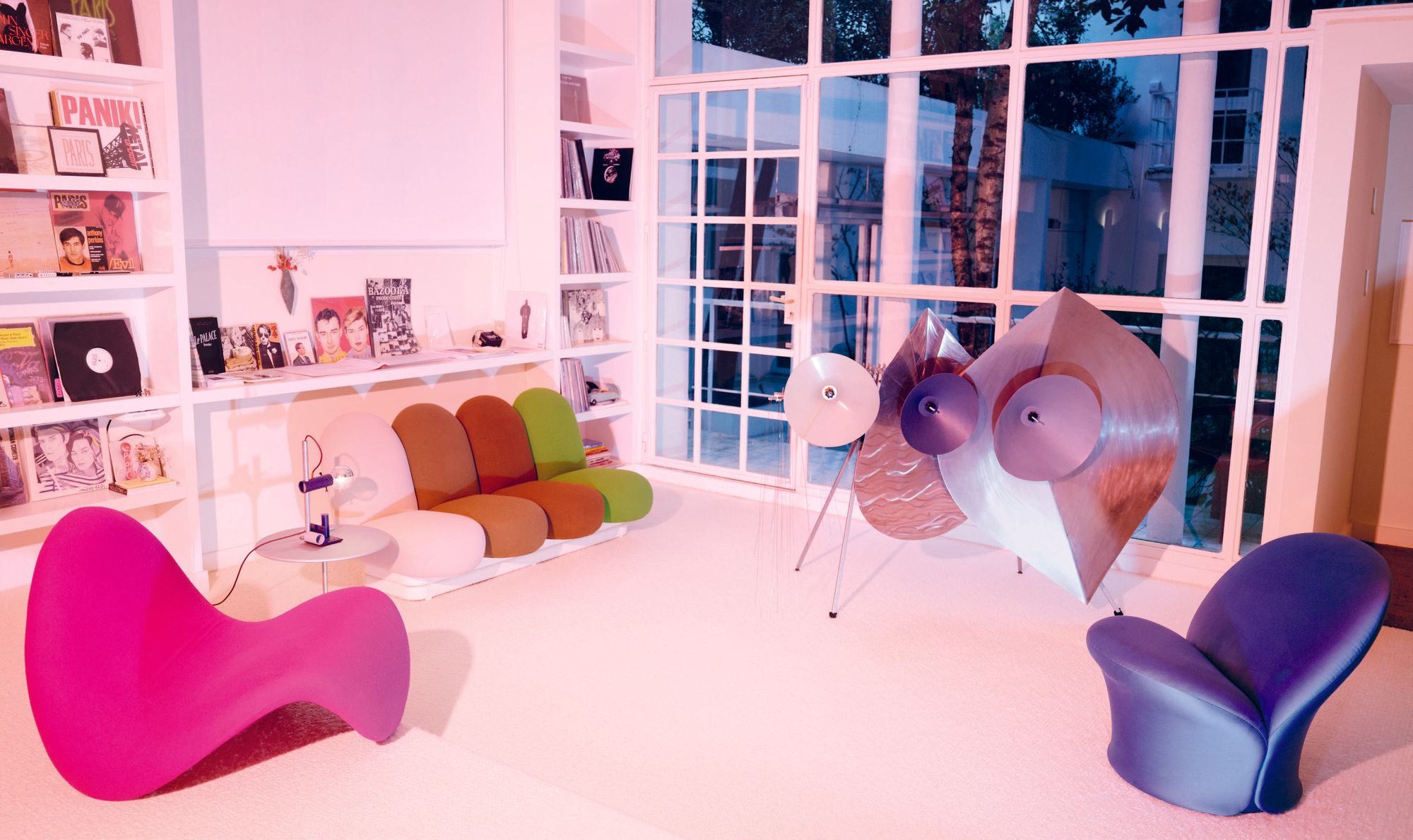
The Cristal Baschet (1980), a stainless-steel sound structure by Bernard and François Baschet, takes pride of place in the Paulin’s home. Equipped with a water-filled resonator and 56 crystal glass rods that amplify sound when stroked, the instrument sits among Pierre Paulin classics such as the blue F572 Lounge Chair (1976), alongside pieces reissued by Paulin, Paulin, Paulin in September 2025, including the fuchsia Tongue Chair (1967) and the Blublub sofa (center left).

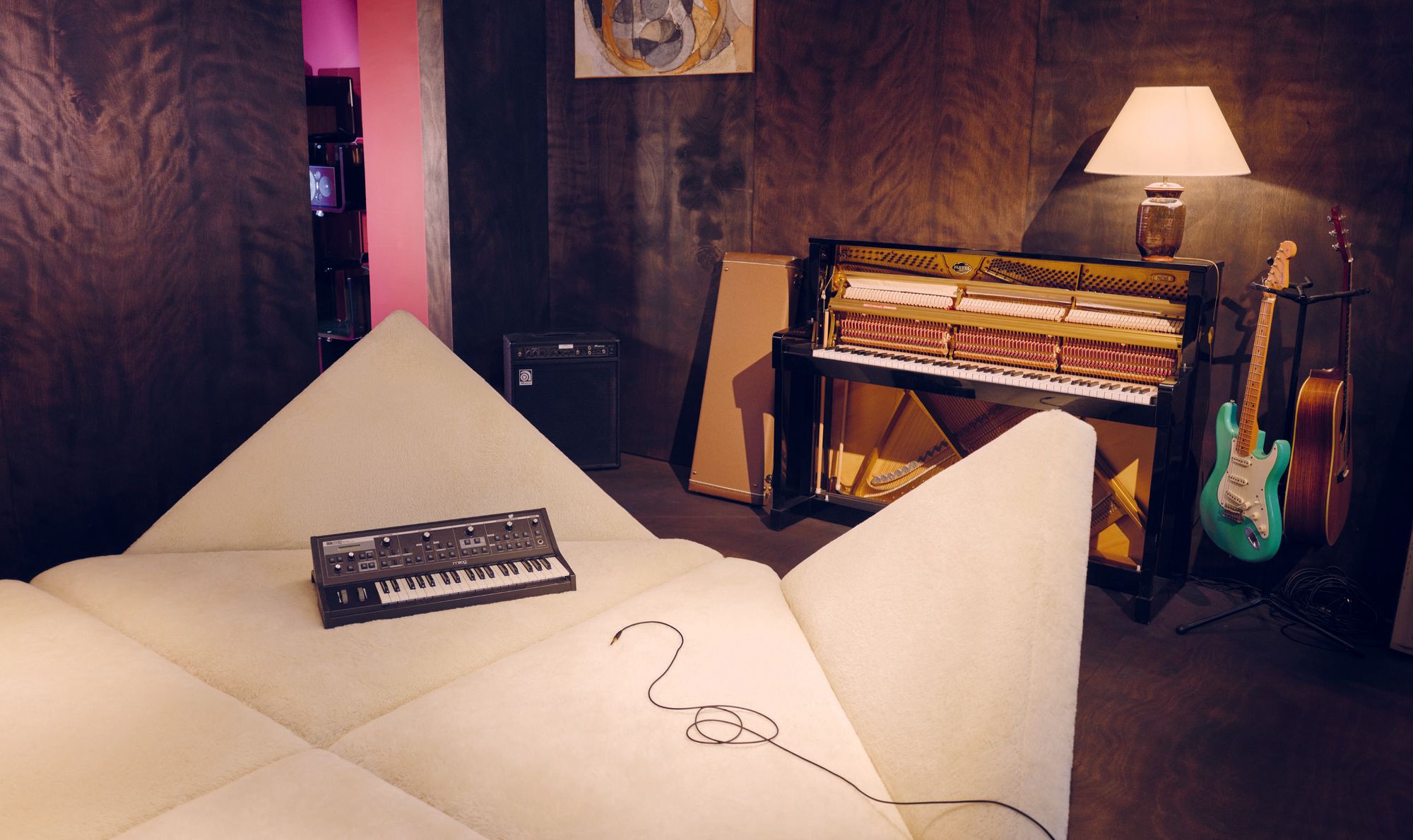
Designed in 1985 as part of an immersive environment centered on sound and video, Pierre Paulin’s Vidéo Barnum chaise continues to resonate with musical culture today. It now serves as a center piece in the Sounds Like Paulin recording studio, surrounded by instruments ranging from a piano and guitars to a Moog synthesizer. Photography by Philippe Jarrigeon (Total World) for PIN–UP.

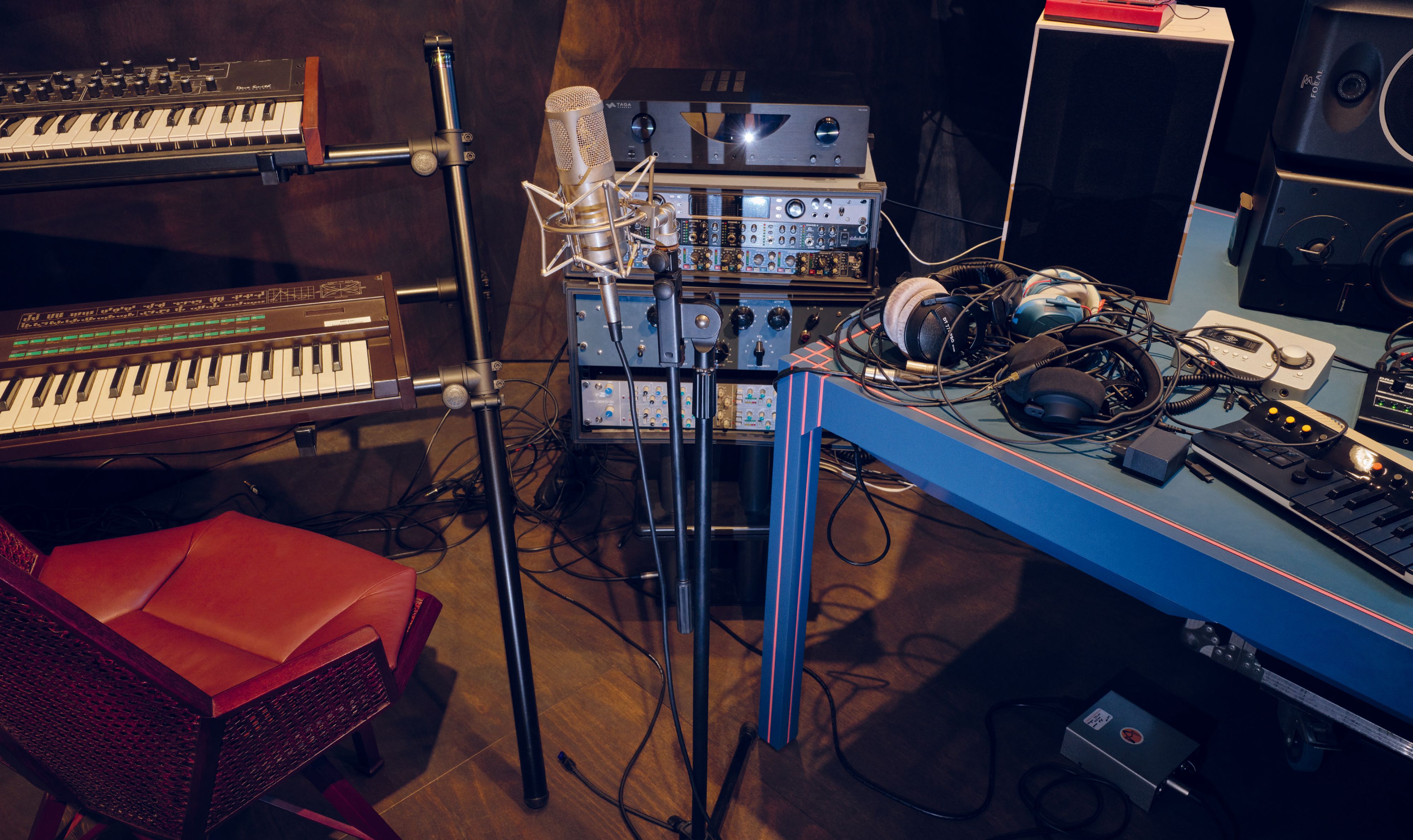
Commissioned from Pierre Paulin in 1983, this desk was originally designed for the President of the French Republic and now sits, somewhat casually, in the Sounds Like Paulin recording studio. Finished in lacquered aluminum and wood, it is rendered in Bleu de France with inset stripes of vivid Tyrian pink. The accompanying Mitterrand desk chair extends this national reference, its hexagonal shell alluding to the geographic outline of France. Photography by Philippe Jarrigeon (Total World) for PIN–UP.

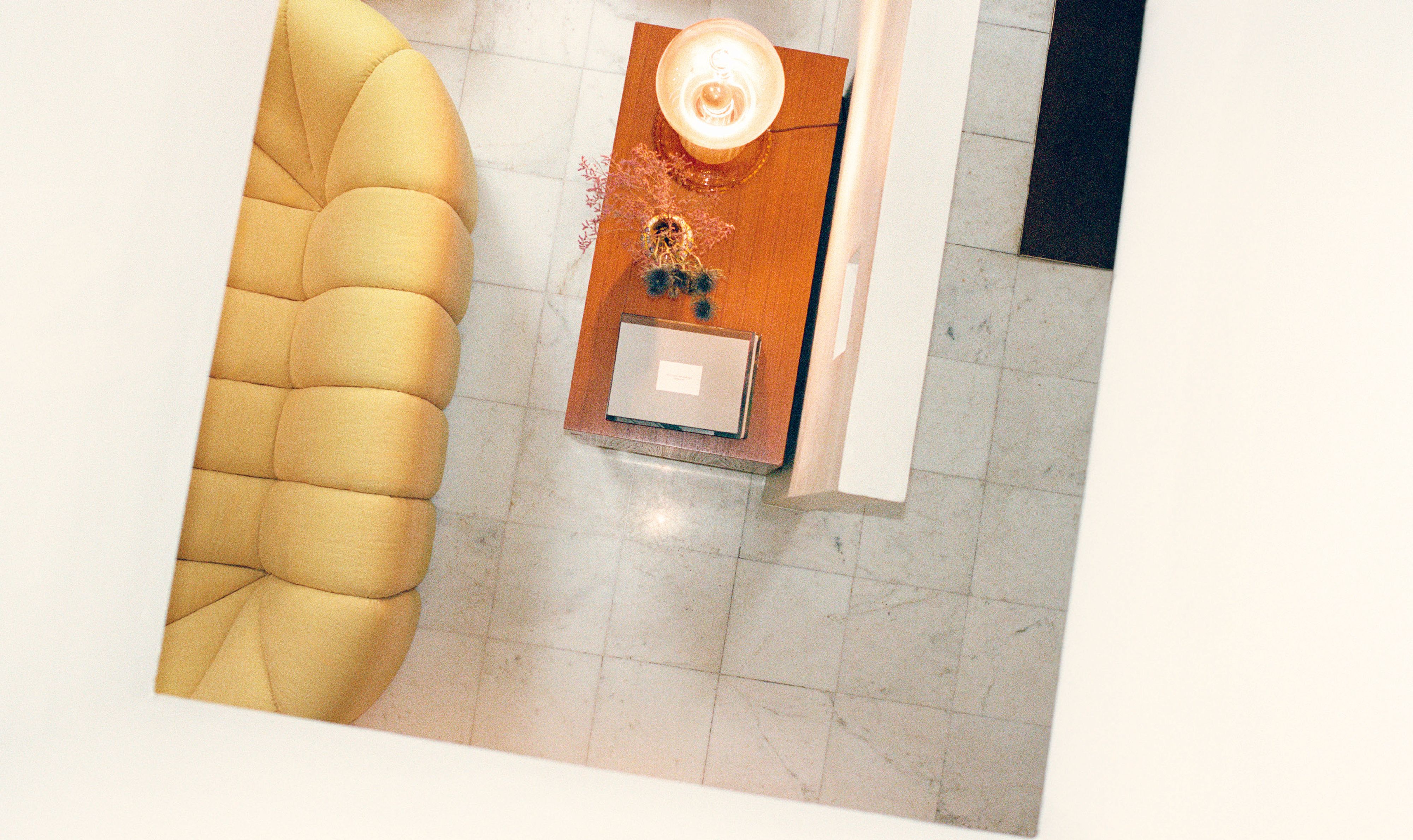
Designed in 1972 for the private apartments of the Élysée Palace, Pierre Paulin’s Alpha sofa — seen here in vivid yellow — turns organic, petal-like forms into sculptural comfort. Photography by Philippe Jarrigeon (Total World) for PIN–UP.

Jordan Richman: Let’s start by discussing the mythology of your father, Pierre Paulin.

Benjamin Paulin: My father was born to a Swiss German mother and Franco-Italian father in Paris, but he grew up in the industrial north of France. He was obsessed with two of his uncles: Freddy Balthazar Stoll, who was his great-uncle on his mum’s side, and Georges Paulin, his father’s brother. Stoll was a sculptor and student of Auguste Rodin and part of his atelier. Because of him, my father grew up also wanting to be a sculptor and even went to study in Vallauris, but his hand got paralyzed in a fight and he had to give up those dreams. Georges was a genius car designer who invented Peugeot’s opening roof in the 1930s. He designed some of the most beautiful models for Bentley, Rolls Royce, and Delage. He was also part of MI6, so he was killed by the Nazis at 32. He was my father’s hero. When my father went to study furniture design at Ècole Camondo in Paris, these uncles influenced his style. He borrowed the tubular structure from the car industry and the Bauhaus to make skeletons, which he then covered with a stretch fabric to create these functional, organic shapes. He had this superpower-like vision, where he could imagine three-dimensional objects from all angles. He was one of the first designers to stretch elastic fabric over a padded frame to form smooth, seamless surfaces, allowing the furniture to be viewed from any angle like a sculpture. Because my father grew up during the Second World War, he was really thinking about his role in the world, and wanted to make something important that would help people. People were trying to rebuild a country after seeing all those horrors of the war, figuring out how to bring back some joy.

There must be a heft to your father’s legacy. Did starting Paulin, Paulin, Paulin feel like something you were shaping rather than just inheriting?

I don’t think I would have ever worked with my father because he was very tough to collaborate with. I didn’t plan to do this. When I started, I just wanted to create a new relationship with my father. I grew up in his world and, of course, I loved it, but I never intellectualized it. It was just there, and he was just my father. After he passed, I went into the archives and realized how different and brilliant his work was. I realized that few people had seen all the prototypes and rejected pieces, so I wanted to exhibit them and tell this untold story. it was never my intention to make it into a business. That all started thanks to Galerie Azzedine Alaïa, who helped us produce the first exhibition [Pierre Paulin, 2007]. Then Louis Vuitton realized our big exhibition, [Playing with Shapes, during Design Miami] in 2014. We met Emmanuel Perrotin there, which led to the amazing Pierre Paulin exhibition [at Galerie Perrotin] in 2016. It was like an avalanche. We didn’t have the time to question it. And when I say we, I’m talking about Alice, my wife — we do everything together — and my mother, Maïa Paulin. Sometimes, people say to me, “It’s great that you’re continuing your father’s legacy.” But, to be honest, I’m continuing my mother’s legacy. She was my father’s partner and associate. She helped him develop his clientele, manage the projects, and do everything. Of course we design spaces sometimes, but we’re not designers and we don’t want to be. We want to celebrate the unknown and utopic parts of Pierre Paulin’s design and vision. We’re just happy to give a life to this story that was not able to exist for economic reasons.

Your home in the twelfth arrondissement of Paris now functions as a workspace, exhibition venue, and creative laboratory all at once. How do you think about the house as part of your work?

Although it’s now the home of Paulin in the sense that we are creating worlds using the designs, the house is part of our work, not Pierre Paulin’s work. We’re trying to create a life in the house because design is meant to be used. It’s not something that you just look at in a showroom. I hate showrooms, I don’t want to do showrooms. I want things to happen. I want people to get inspired. I want people to have an emotional memory of the moment they spent seated there with someone. To me, that’s the force and superpower of Pierre Paulin. And that is what we want to celebrate in the house.

And within the house there’s a music studio, Sounds Like Paulin.

We started that project a year ago — time is going so fast. We had worked on Miraval Studios in the South of France, and we had some very cool musicians in the entourage, so we said, “Let’s make this studio!” And now, it’s becoming a real record label. We’ve recorded albums with Bryce Dessnet and Steve Reich, and composer Marc Chouatain, who used a Cristal Baschet [a crystal harmonic instrument], among others. There is a recording happening there as we speak. It’s invitation only, so friends and artists that we like and support can come meet each other in the space. Steve Reich could meet Travis Scott here! They might not make music together, but they could talk and learn that they have the same taste in furniture, architecture, or contemporary art. We’re really excited to propose something different in that sense. I come from rap music culture — I quit school at 15 to make rap music — and I always felt that it was siloed, that “urban music,” or whatever they call it, shouldn’t mix with other things. I don’t agree with that. Creative people should be together. Today, with social media, this interconnection is possible, and we want to make it happen. Towards the end of the year we’re going to release a Sounds Like Paulin compilation album with some songs by some amazing rap and jazz musicians.
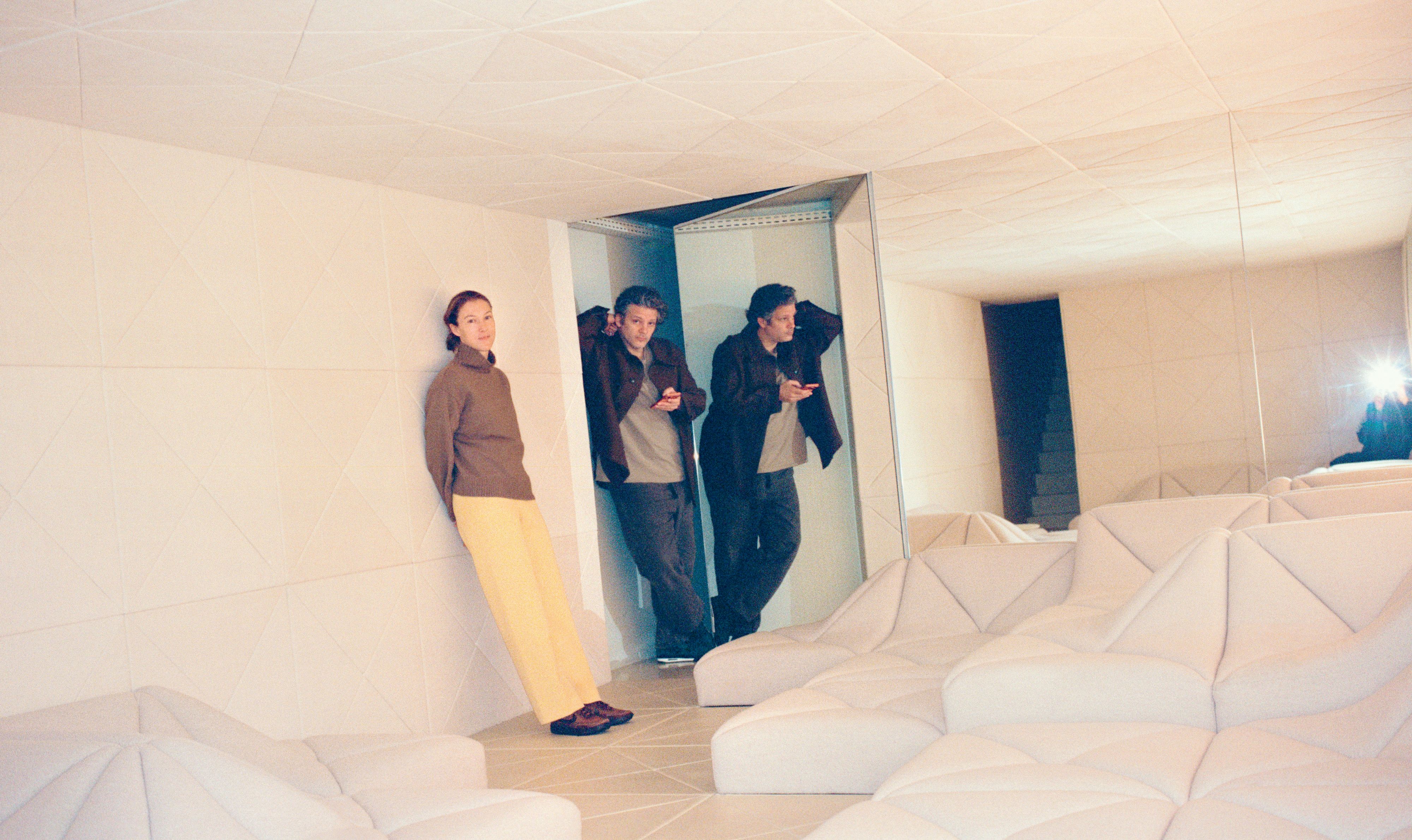
Alice and Benjamin Paulin photographed with the total Ensemble Dune wall, floor, ceiling, and seating system. The now-iconic “sofa” entered pop culture after Frank Ocean was photographed sleeping on an early teal prototype in the family’s house, a scuffed sample he later acquired for his New York apartment. Photography by Philippe Jarrigeon (Total World) for PIN–UP.

The furniture of Paulin, particularly the Dune sofa, has become a status symbol in hip-hop artist’s homes. Who was the first musician to start collecting Paulin?

Frank Ocean.

Did that happen organically or through the architects he works with, like Michael Abel and Nile Greenberg of ANY?

I only met his architects later. One day, my friend Raquel called me, saying, “My friend ‘Frank’ is in Paris, and he wants to meet you.” Frank called me and I gave him my address and told him to come by some time. Suddenly, Is tarted getting tons of messages from my neighbors, saying, “Frank Ocean is in the courtyard, looking for you.” That’s when I realized it was Frank Ocean. We didn’t meet then, but a few months later he called me back and we went to an art fair together. He later came to the house, where Raquel took that amazing picture of him on the Dune sofa that he posted on Tumblr. It was a dirty prototype with pencil traces from my kids all over it, and he said, “I want this one.” Ten hours later, it was in his apartment in New York. He’s an amazing person. It’s very rare to meet people that can see beyond the trends and other people’s opinions.

Are there certain people you’ve been approached by or seen the work in their homes and cringed?

Yes. And generally, it’s because they have fake Paulin. You can only buy these Paulin models from us, so we know each and every one of our clients. And generally, they are also our friends, because we love and respect everyone we produce pieces for. Sometimes I see a cheap copy in a famous person’s interiors, and it makes me sad. But I also believe that sometimes they don’t know that they’re fake. I try to contact them and get them the real thing, but it doesn’t always work. It never works, actually. [Laughs.]

This reminds me of the feud between Kim Kardashian and The Judd Foundation.

I can say that Kim Kardashian’s Dune sofa is a real Dune sofa.

I have to say that I admire how strongly The Judd Foundation stood on business.

I don’t think she was aware. I think it was a sad situation.

Speaking of the Judd lawsuit reminds me of Rainer Judd, Donald Judd’s daughter, and how she describes her and her siblings growing up in Judd’s vision, which was quite extreme. [Laughs.]

I’m sure. [Laughs.]

Can you relate to that at all? Do you have memories of life being dictated by your father’s designs?

When I was a kid, our apartment was furnished with my father’s rejected prototypes, so the only sofas in the house were two Tapis-Siège, so sometimes it was very strange to have people come over. I remember when Jacques Chirac, the mayor of Paris at the time, came to the house and had to sit on the floor. Some people found it very disturbing, but by the end, it always created a nice and intimate moment. But as a kid, I didn’t find it extreme. I thought our house was the coolest house.

“Sometimes, people say to me, ‘It’s great that you’re continuing your father’s legacy.’ But, to be honest, I’m continuing my mother’s legacy. She was my father’s partner and associate.”

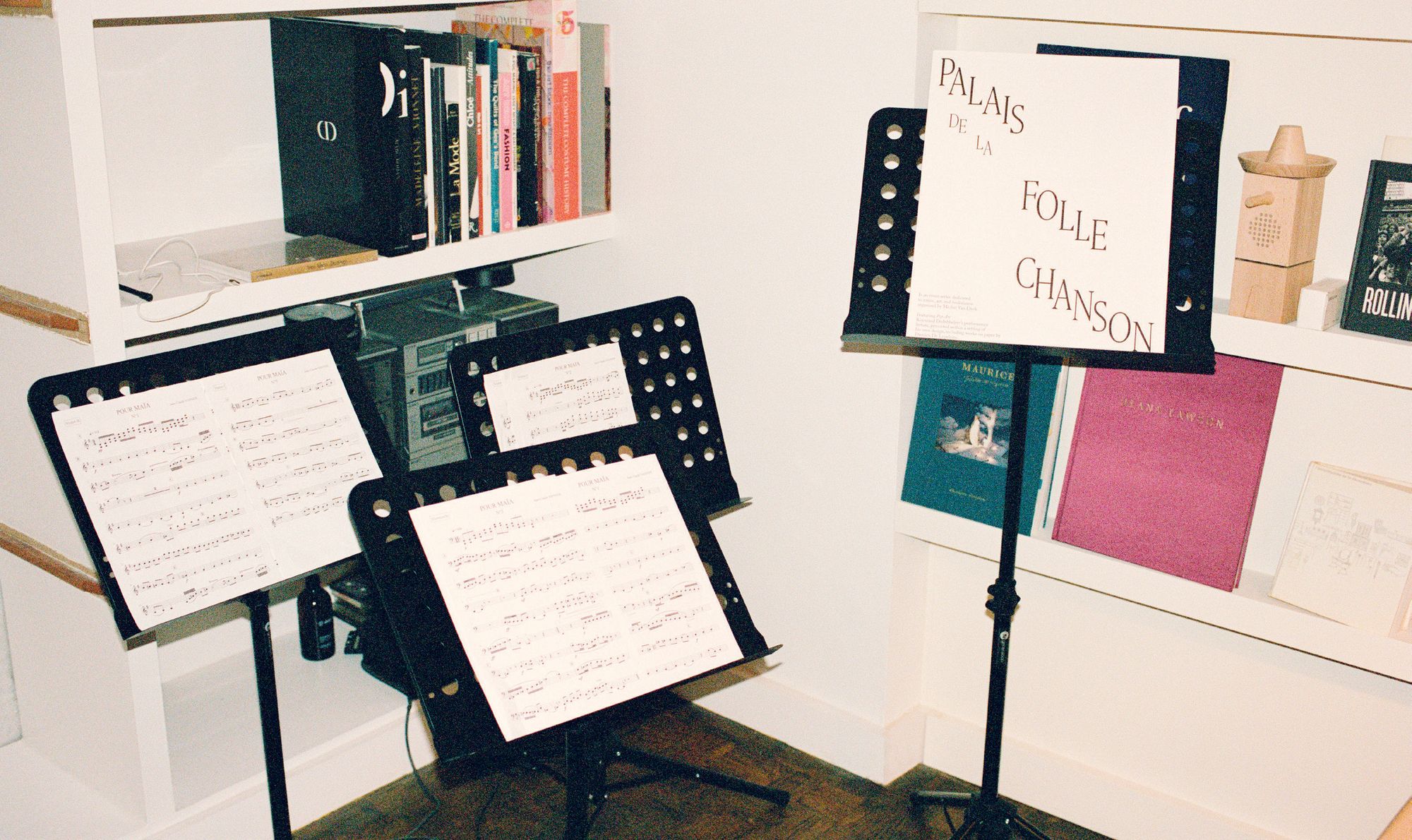
Design is music to the ears, at least in the Paulin family. Shown here is a score composed by Jean-Claude Vannier for the Sounds Like Paulin initiative and dedicated to Benjamin Paulin’s mother, Maïa Paulin. Photography by Philippe Jarrigeon (Total World) for PIN–UP.

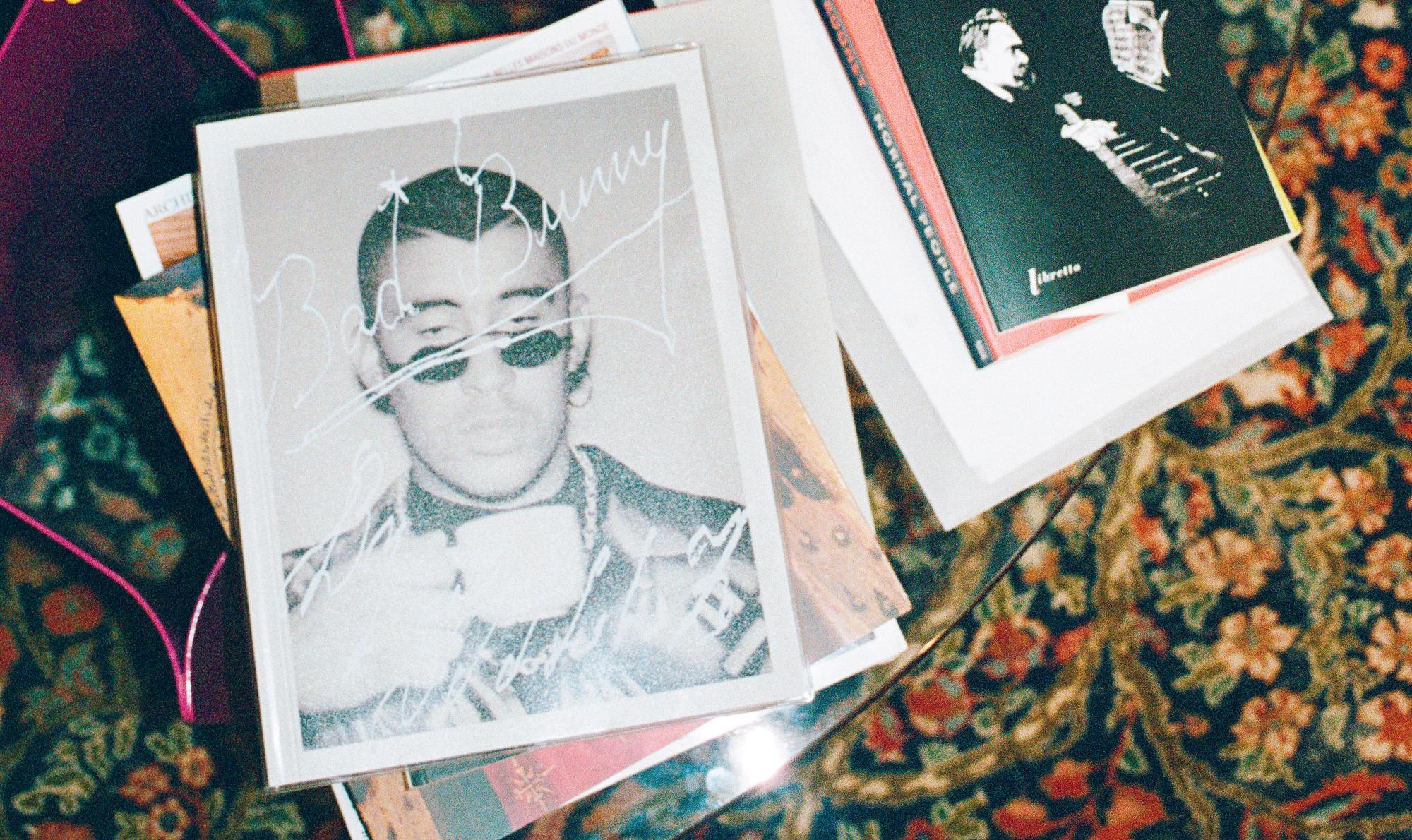
On the glass top of Pierre Paulin’s Rosace low table (1972) rests a signed copy of Bad Bunny 2019–2025 by Colombian-American photographer and filmmaker Stillz, published following an event co-organized with Sounds Like Paulin. Photography by Philippe Jarrigeon (Total World) for PIN–UP.

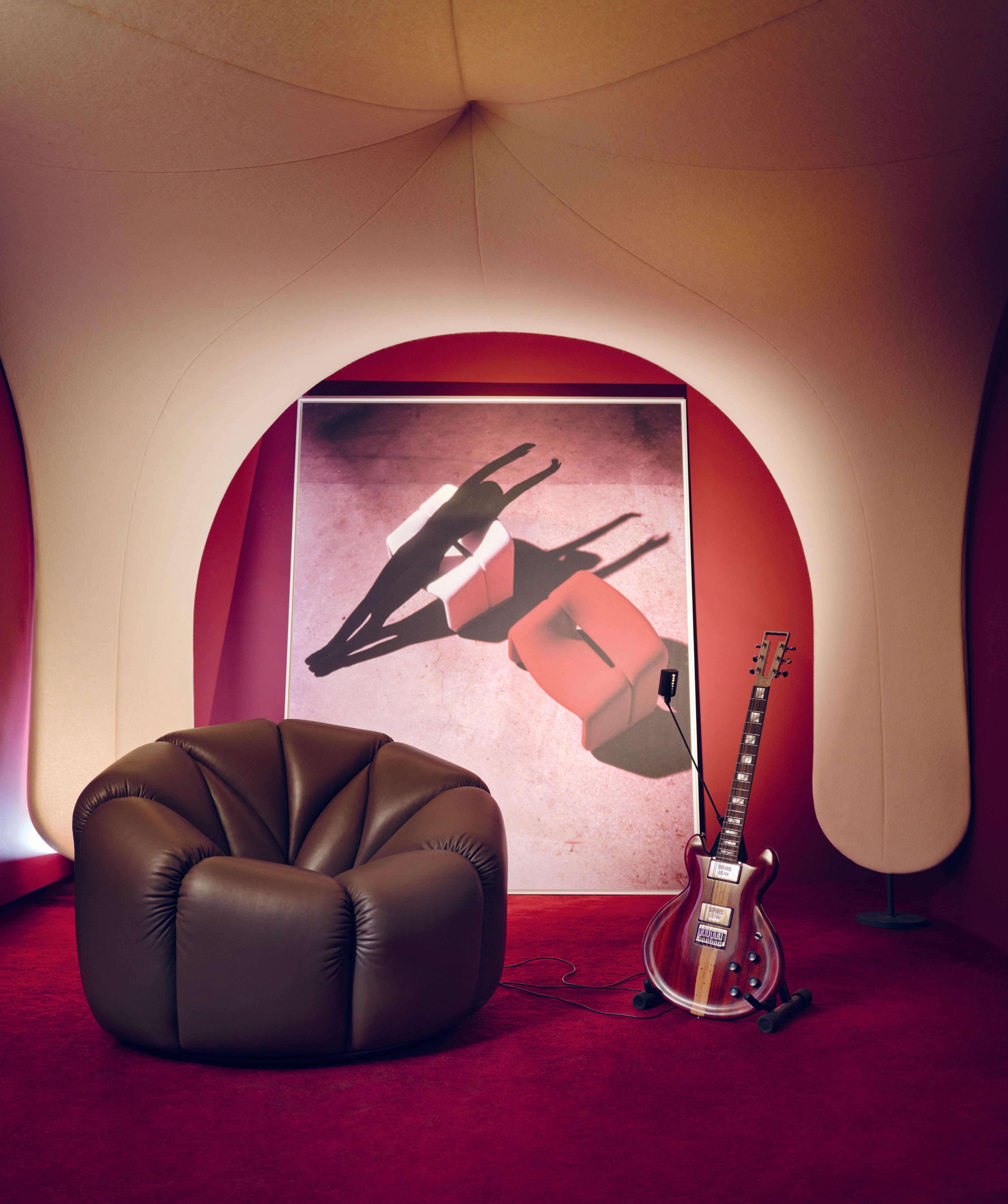
In a room adjoining the recording studio stands a prototype of Pierre Paulin’s Tent (1966), alongside a leather-clad version of the Alpha club chair. The large print in the background comes from a recent campaign for Paulin, Paulin, Paulin, photographed by Thibaut Grevet. Photography by Philippe Jarrigeon (Total World) for PIN–UP.

As Paulin, Paulin, Paulin expands and your father’s work reaches a much larger audience, especially through this relationship to celebrity, how do you protect the legacy?

You have to produce books and exhibitions and educate people on his career. And we’re preparing for that. We have a huge vintage collection which we’ve built over the last twelve years. We’re working on a museum project in the South of France and we have other exhibitions coming up. The first one will be in Montpellier in a few months. Next year [2027] will be a huge year for us because it’ll mark a century of Pierre Paulin. There will be so many big and exciting things.

I remember many years ago I would see Paulin’s furniture in this fantastic design gallery in Chelsea in New York.

Demisch Danant? It’s an amazing gallery. Suzanne [Demisch, the co-founder] is an amazing curator with incredible vision and taste, and Stéphane Danant found the best pieces. They are very passionate people. Part of the reason Paulin, Paulin, Paulin exists is because they were the ones telling all the American collectors, billionaires, and art collectors about it. They really were the ones who helped us.

Back in the day, on weekends, it was fun to go shop at Balenciaga and then go upstairs to Demisch Danant.

Exactly! That’s how Nicolas Ghesquière discovered the Pierre Paulin Alpha sofa.

There’s a playfulness to the work that people often respond to. I remember when we met, my friend was playing on the sofa like it was a children’s slide. How important is it to maintain this sense of play with these serious pieces?

Play is just an inherent part of it. With the Déclive or Tapis-Siège or Dune, there is no one way to sit. What I love about those pieces is that they bridge the gap between beds and sofas. Those pieces are meant for when you’re reading a book in a chair but want to be as comfortable as you are in bed. They were heavily influenced by Arabian and Japanese cultures, where people have a very intimate connection to the floor. What I love about those pieces is that they encourage you to play and have fun, but they also encourage very free discussion. I like to make those types of rooms — not TV or music rooms, but discussion rooms. That’s what we need today.

Do you still ever hear your father’s voice?

He doesn’t talk to me, but my voice sounds like his, so when I talk, I hear his voice sometimes. It feels very strange, because as a kid you copy how your parents speak, and now I really do sound like him.

What would Pierre think of Paulin, Paulin, Paulin?

I think he would be proud and very happy for five minutes. And then he would see all the things he doesn’t like. That was how my father was. He was the type of person that was never happy with what he had — that’s how he stayed creative. When you’re happy, you die. You stop having ideas because you get content. He always needed to go to the next thing, which, of course, is not the happiest life, but it’s necessary.

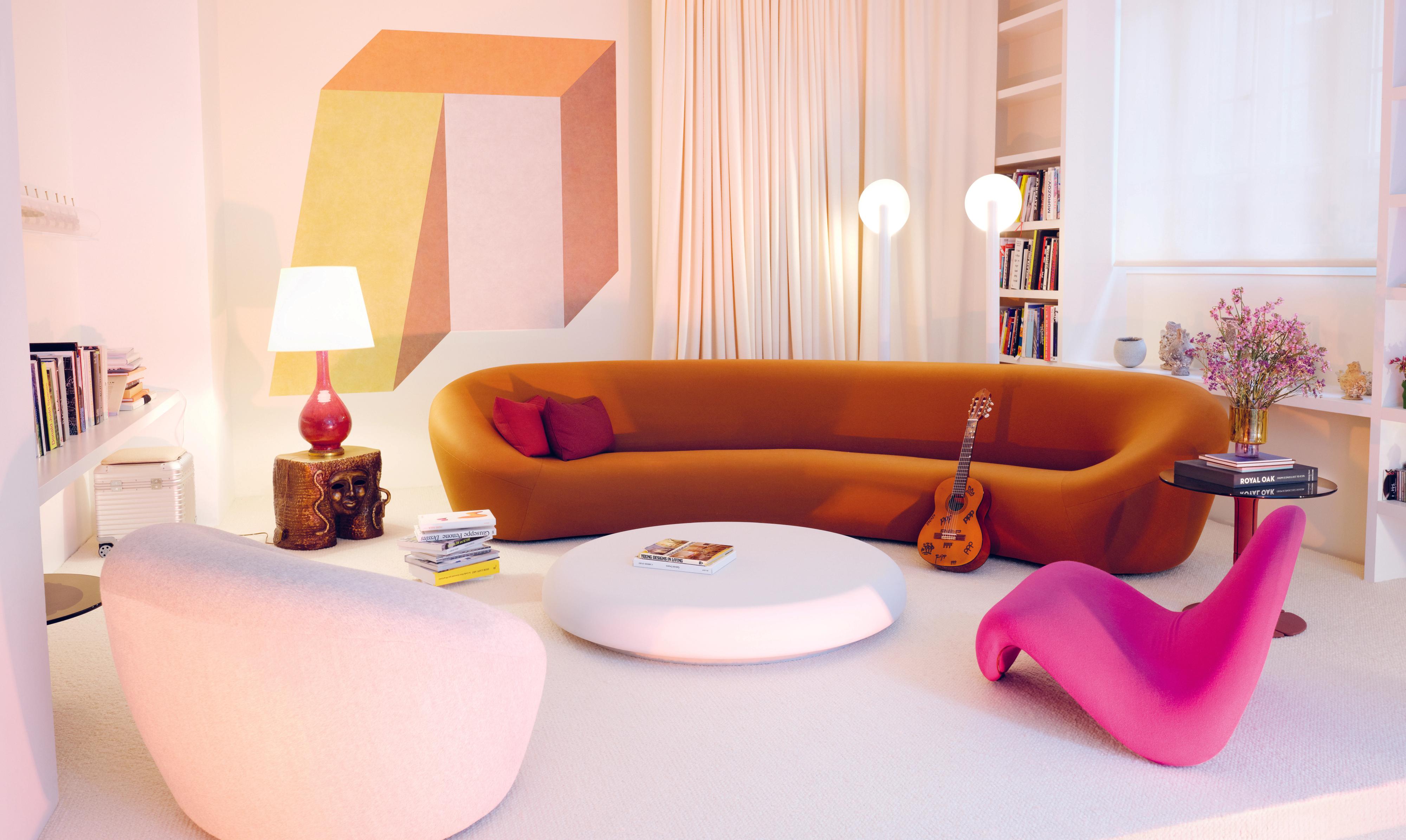
While not formally a showroom, the Paulin’s Paris home nonetheless shows off a heirloom collection of Paulin family furniture. From left to right: the Club C sculptural seat (1968–72), Table Moon (1968–72), Big C sofa (1968–72), Élysée lamps and table (1972), and the Tongue Chair (1967), all set against the backdrop of a striking Sol LeWitt wall work. Photography by Philippe Jarrigeon (Total World) for PIN–UP.